Culture · Austin
How The Austin Chronicle Became Part of Austin’s Alternative Media Tradition
Founded in 1981, The Austin Chronicle grew from a biweekly paper into a weekly publication covering Austin news, state affairs and the city’s cultural life.
By KLGBT News Desk ·
The Austin Chronicle occupies a distinctive place in Austin’s local media landscape: an alternative weekly with roots in the city’s film and counterculture communities. The paper was founded in 1981 by Nick Barbaro and Louis Black, with help from others connected largely through the graduate film studies program at the University of Texas at Austin.
Its first issue was distributed on September 4, 1981. The publication began as a biweekly and later shifted to a weekly schedule. According to the supplied account, it is published on Thursdays and distributed free through newsstands, including locations such as local restaurants and coffee houses associated with its intended readership.
The Chronicle’s format followed a model associated with the alternative press of the 1960s. Its stated editorial character combines a progressive perspective with an irreverent voice. Coverage extends beyond government and public affairs to the parts of Austin’s cultural life that help define the city’s identity: food, film, theater, art and music. The paper also reports on local and state news.
The Chronicle followed an earlier Austin publication, the Austin Sun, which had operated as a biweekly for four years before ending publication in 1978. That predecessor provided a stylistic and structural reference for the newer paper, but The Chronicle developed its own place in Austin’s weekly news and culture routine.
Barbaro and Black are also identified as co-founders of the South by Southwest Festival. The festival is described as a separate company from the newspaper, a distinction that matters when considering the Chronicle’s history: the two institutions share founders but are not presented as the same organization.
The paper’s distribution model is central to its identity. Rather than relying only on paid circulation, it has been made available at free newsstands and in gathering places such as eateries and coffee houses. That approach places the publication in everyday public spaces and connects its journalism with the city’s social and cultural patterns.
The supplied information reports a weekly readership of 545,500 in 2001. It also identifies The Austin Chronicle as part of the Association of Alternative Newsmedia, linking the Austin publication to a broader network of alternative weeklies.
For readers interested in Austin’s independent and community-oriented media history, The Austin Chronicle offers a useful case study. Its origins in film studies, its connection to the alternative press tradition and its broad mix of news and cultural coverage all point to a publication shaped by the city it covers.
Source and reuse information This automatically generated backgrounder adapts text from “The Austin Chronicle” on Wikipedia: https://en.wikipedia.org/wiki/The_Austin_Chronicle The adapted text is released under the Creative Commons Attribution-ShareAlike 4.0 International license (CC BY-SA 4.0): https://creativecommons.org/licenses/by-sa/4.0/. The source article’s linked references are provided below where available. This story has not been independently reviewed or fact-checked.
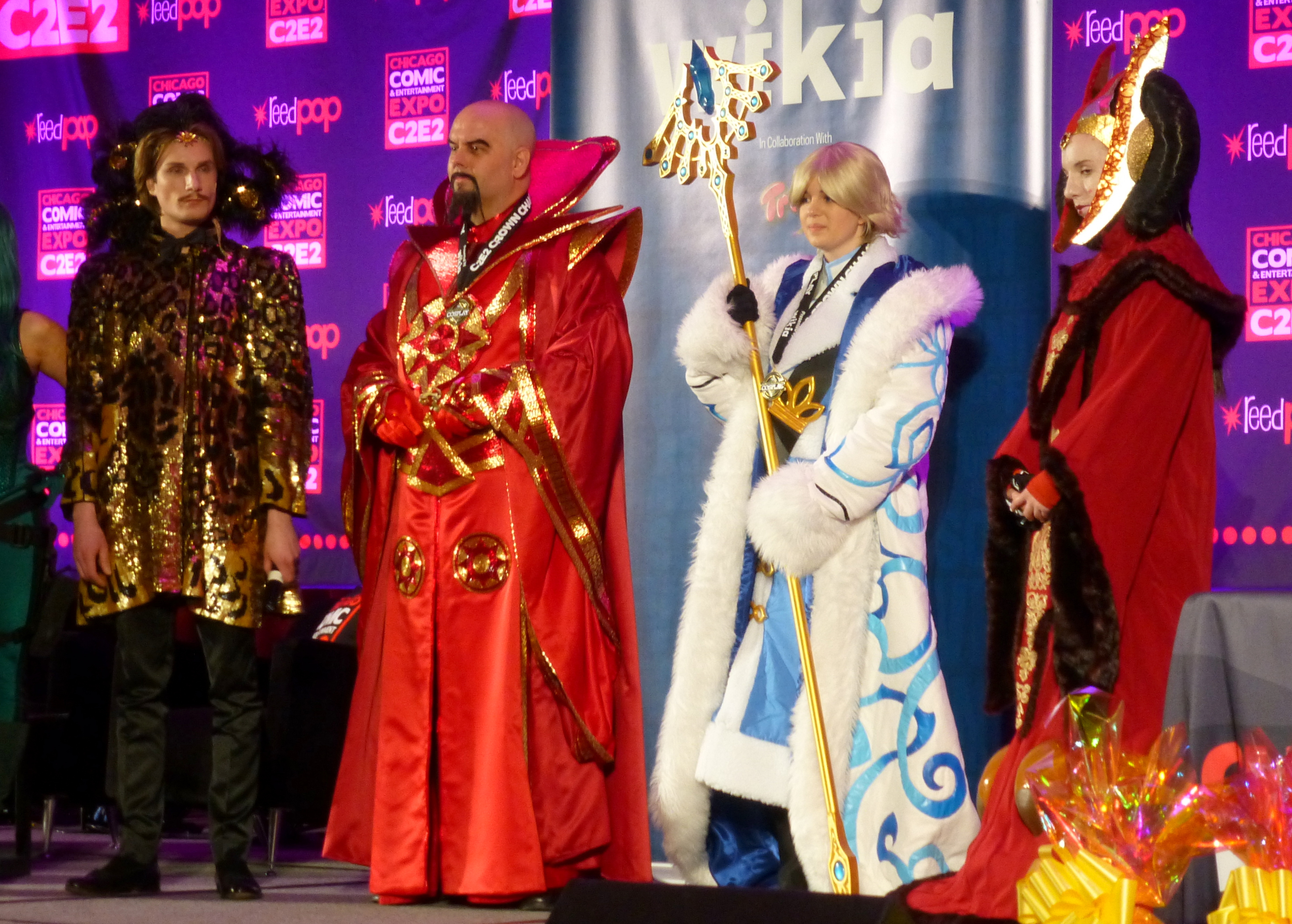
Further links listed by the Wikipedia page (not independently checked): - https://web.archive.org/web/20090106213805/http://governor.state.tx.us/music/files/directory/2001-tmid.pdf - https://api.semanticscholar.org/CorpusID:168061685 - https://doi.org/10.1080%2F14241277.2014.974244 - https://hdl.handle.net/2152%2F23140 - https://www.austinchronicle.com/best-of-austin/ - https://www.austinchronicle.com/hot-sauce/ Image rights Photograph description: Some of the finalists in the First Annual Chicago Comic & Entertainment Expo (C2E2) Crown Championships of Cosplay in 2014. From left to right: Austin Scarlett (a judge), Ming the Merciless (Trent Thornton, winner of the comics category), Fai D Flowright (Remi d'Arda, winner of the anime category), Queen Amidala (Lisa Hale, winner of the TV/movie category). Creator: GabboT. License: CC BY-SA 2.0 (https://creativecommons.org/licenses/by-sa/2.0). Original image page: https://commons.wikimedia.org/wiki/File%3AC2E2_2014_Contest_-_Finalists_(14109023225).jpg. The image was resized for display; no other changes were made.