Beyond the Bay · Austin
Walnut Creek Metropolitan Park: An Austin Outdoor Space With Room to Roam
Northeast Austin’s 293-acre Walnut Creek Metropolitan Park combines wooded trails, recreation facilities, a swimming pool and a large off-leash dog area.
By KLGBT News Desk ·
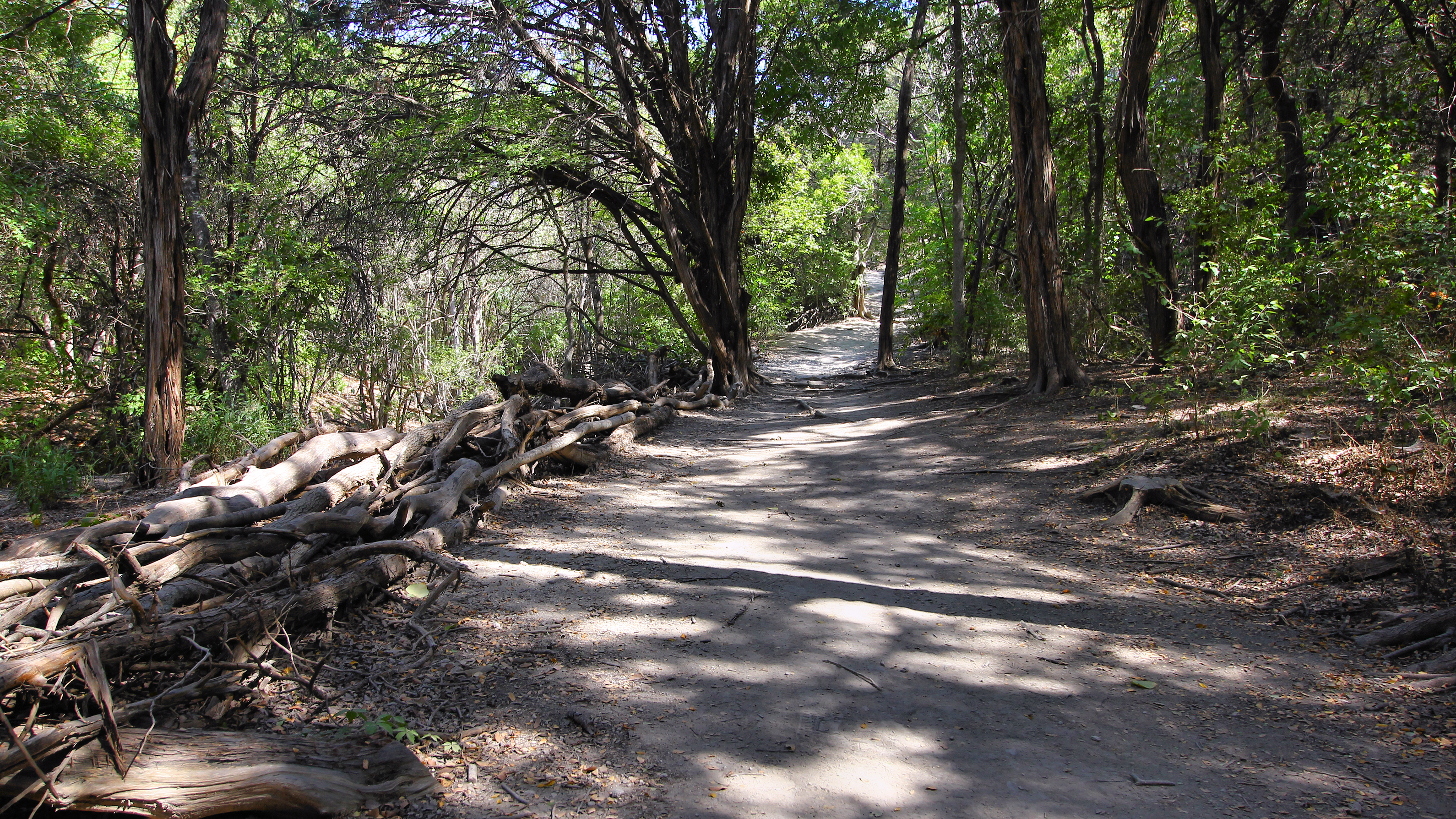
For Austin residents seeking an outdoor setting within the city, Walnut Creek Metropolitan Park offers a broad mix of recreation and open space. The 293-acre public park in Northeast Austin includes about 15 miles of hiking trails, multiple softball fields, a swimming pool, a playground and areas equipped with barbecue pits and picnic tables.
The park’s layout gives visitors several ways to spend time outdoors. Its trail system moves through hilly, wooded terrain and has helped make the park a destination for local mountain bikers. A large off-leash area provides a separate draw for people visiting with dogs. The park also reaches Walnut Creek and the limestone bluffs around it, adding natural features to a site that includes formal sports and gathering areas.
For LGBTQ Austinites, the park can be understood as one part of the city’s public landscape: a place where individuals, friends and families may choose to gather, exercise or spend time outside. The available information does not identify LGBTQ-specific programming or amenities at Walnut Creek Metropolitan Park, so its relevance here is as a general Austin public space rather than as a designated queer venue.
The land also has a history that predates the park itself. The area was historically inhabited by the Tonkawa people, and archaeological finds have been reported there. Before becoming parkland, part of the property belonged to the Gracy family and formed part of their farm. The city of Austin purchased the land in 1964.
That combination of recreational infrastructure and layered history distinguishes Walnut Creek Metropolitan Park from a simple sports field or neighborhood playground. Its trails, creek, wooded hills and limestone bluffs coexist with softball facilities, picnic infrastructure, a pool and a playground. Visitors can therefore encounter the park as a place for active recreation, casual outdoor time or a walk through a landscape connected to Austin’s earlier history.
As an evergreen reference point for Northeast Austin, Walnut Creek Metropolitan Park is notable for its size and variety. It offers a substantial public setting without being defined by a single activity: hiking, mountain biking, swimming, softball, play, picnicking, barbecuing and dog walking all have a place within the park’s 293 acres.
Source and reuse information This automatically generated backgrounder adapts text from “Walnut Creek Metropolitan Park” on Wikipedia: https://en.wikipedia.org/wiki/Walnut_Creek_Metropolitan_Park The adapted text is released under the Creative Commons Attribution-ShareAlike 4.0 International license (CC BY-SA 4.0): https://creativecommons.org/licenses/by-sa/4.0/. The source article’s linked references are provided below where available. This story has not been independently reviewed or fact-checked.
Further links listed by the Wikipedia page (not independently checked): - https://www.austinparks.org/parks/Walnut%20Creek%20Metropolitan%20Park/ - https://geohack.toolforge.org/geohack.php?pagename=Walnut_Creek_Metropolitan_Park¶ms=30.4_N_97.686_W_type:landmark_region:US-TX_dim:2000 Image rights Photograph description: A trail in Walnut Creek Metropolitan Park in Austin, Texas, United States. Creator: Larry D. Moore. License: CC BY 4.0 (https://creativecommons.org/licenses/by/4.0). Original image page: https://commons.wikimedia.org/wiki/File%3ATrail_Walnut_Creek_Metro_Park_Austin_Texas_2022.jpg. The image was resized for display; no other changes were made.