LGBTQ+ · Chicago
Artemis Singers: Chicago’s Lesbian Feminist Choral Tradition
Founded in 1980, Artemis Singers is a Chicago-based lesbian feminist chorus whose repertoire and organizing model center women’s creative work and collective participation.
By KLGBT News Desk ·
Artemis Singers is a Chicago-based lesbian feminist chorus with roots in the city’s cultural and LGBTQ+ history. Founded in 1980, the group is among the earliest lesbian feminist choruses in the United States. Its work combines choral performance with an explicitly stated aim of influencing cultural attitudes toward women and women artists while making lesbian feminists more visible.
The ensemble takes its name from Artemis, the Greek goddess. Its identity is also reflected in a distinctive artistic policy: Artemis performs music written by women, with lyrics by women, or arranged by women. That commitment places the creators of its repertoire at the center of each performance rather than treating representation as separate from musical programming.
Over the years, the chorus has performed work by women associated with the women’s music movement, including Holly Near and Kay Gardner. The group’s repertoire therefore connects its local performance history with a broader tradition of music created within and around feminist cultural organizing.
Artemis also has a place in the development of lesbian and gay choral networks in the United States. In 1983, it was the only lesbian chorus to participate in the first national gay and lesbian choral festival, Come Out and Sing Together. The group is a member of Sister Singers Network, a feminist chorus cooperative, linking its Chicago work to an organized network of related ensembles.
Its internal structure has changed over time. During its early years, Artemis used a conventional music-director arrangement, with Susan Schleef serving in that role. The group later moved toward a self-organized, non-hierarchical approach. Today, several members serve as music directors for individual performances, distributing musical leadership among the chorus rather than assigning it permanently to one person.
That evolution in leadership is part of Artemis’s broader significance. The ensemble’s mission is expressed not only through whom it represents onstage and whose work it performs, but also through how members share responsibility. Its history shows one way a community chorus can connect artistic practice, feminist values and lesbian visibility.
In 2008, Artemis Singers was inducted into the Chicago Gay and Lesbian Hall of Fame. That recognition places the chorus within Chicago’s documented LGBTQ+ cultural history. More than four decades after its founding, Artemis remains notable for the combination of its city-based identity, women-centered repertoire and collective approach to making music.
Source and reuse information This automatically generated backgrounder adapts text from “Artemis Singers” on Wikipedia: https://en.wikipedia.org/wiki/Artemis_Singers The adapted text is released under the Creative Commons Attribution-ShareAlike 4.0 International license (CC BY-SA 4.0): https://creativecommons.org/licenses/by-sa/4.0/. The source article’s linked references are provided below where available. This story has not been independently reviewed or fact-checked.
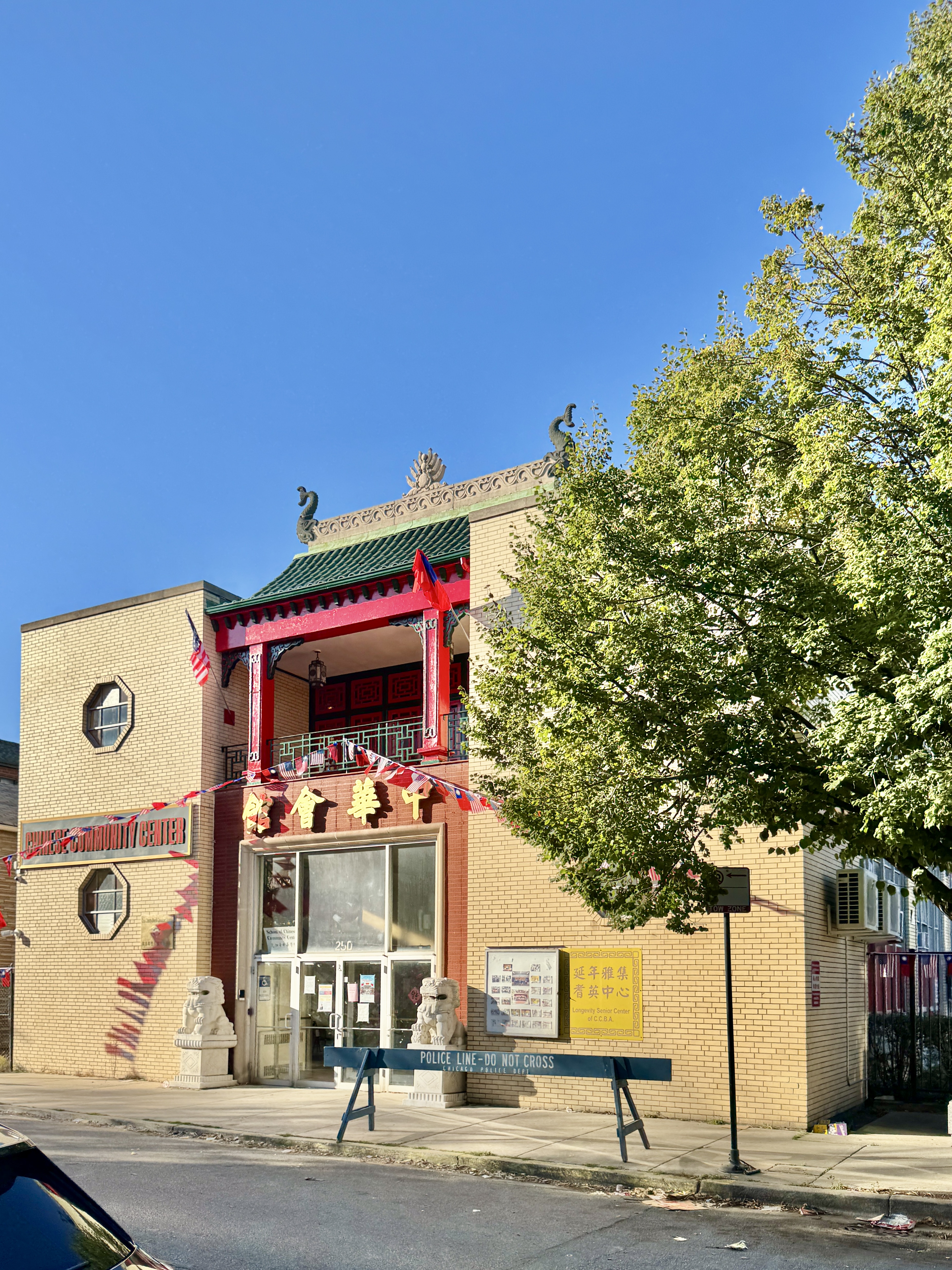
Further links listed by the Wikipedia page (not independently checked): - https://web.archive.org/web/20160814052139/http://www.centeronhalsted.org/arts2.html - https://web.archive.org/web/20160812110937/http://chicagolgbtservices.org/place_tags/artemis-singers/ - https://artemissingers.org/ - https://artemissingers.org/herstory/ - https://artemissingers.org/2015/11/10/dream-with-us/ - https://www.sistersingers.net/listings-alphabetical Image rights Photograph description: Built in 1956, this Modern and Chinese-style building was constructed to serve as a community center and auditorium for the Chinese community of Chicago. The building is clad in buff brick with octagonal windows at the outer bays of the front facade, a green terra cotta tile roof with decorative trim at the center of the front facade, a recessed second-story porch with decorative trim above the ma Creator: Warren LeMay from Chicago, IL, United States. License: CC BY-SA 4.0 (https://creativecommons.org/licenses/by-sa/4.0). Original image page: https://commons.wikimedia.org/wiki/File%3AChinese_Community_Center%2C_22nd_Place%2C_Chinatown%2C_Chicago%2C_IL_(54839376801).jpg. The image was resized for display; no other changes were made.