LGBTQ+ · Chicago
Before Mattachine, Chicago Helped Shape Early Gay Rights Organizing
The Mattachine Society became one of the United States’ earliest national gay rights organizations, but its history is connected to an earlier Chicago group: the Society for Human Rights.
By KLGBT News Desk ·
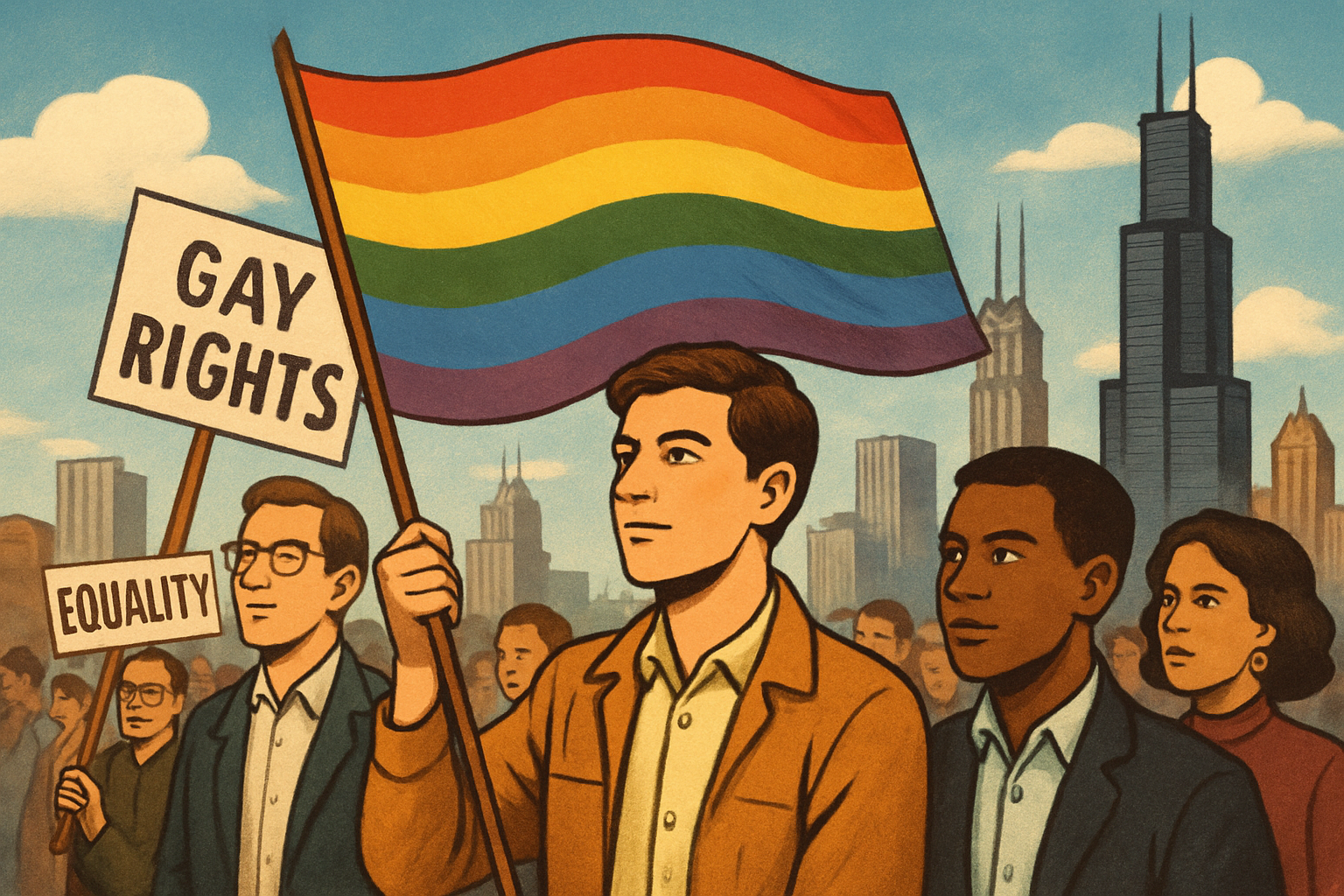
The Mattachine Society is often remembered as one of the first national organizations dedicated to gay rights in the United States. Its story also points back to Chicago, where the Society for Human Rights was among the organizations that came before it.
Founded in 1950, Mattachine began in Los Angeles when communist and labor activist Harry Hay brought together a group of male friends. Their goal was to protect and improve the rights of gay men at a time when organized advocacy was still developing and many groups operated covertly. The organization was part of a broader early movement that included both underground and more open efforts, including Chicago’s Society for Human Rights.
The Chicago connection matters because it places the city within the movement’s earliest national history—not simply as a later site of LGBTQ+ organizing, but as home to an organization that preceded Mattachine. The available historical account identifies the Society for Human Rights alongside other early groups that helped establish the foundation for gay rights activism in the United States.
Mattachine expanded beyond Los Angeles as branches formed in other cities. That national growth did not last as a single unified structure, however. By 1961, the Society had broken into regional organizations, reflecting a shift away from one centralized body and toward separate local or regional groups.
The organization also became involved in international human rights protests. In 1965, reports about prison labor camps in Cuba for homosexual people prompted Mattachine to organize demonstrations at the United Nations and the White House. Those actions came during the early period of gay rights protests and showed the group connecting the treatment of gay people abroad with public political advocacy in the United States.
Even the organization’s name carried a historical reference. Hay chose “Mattachine” after James Gruber suggested the name, drawing on Hay’s study of French medieval and Renaissance performance traditions. The name referred to a type of masque group associated with secret fraternities of unmarried townsmen.
For Chicago readers, the significance of Mattachine’s history is inseparable from the earlier local organizing that helped precede it. The Society for Human Rights is part of the record of how gay men began creating organizations for visibility, protection and rights before the modern LGBTQ+ movement had taken shape. Mattachine’s later expansion, regional splintering and public protests illustrate how those early efforts developed from small groups into broader political activity.
Source and reuse information This backgrounder adapts factual material from “Mattachine Society” on Wikipedia: https://en.wikipedia.org/wiki/Mattachine_Society The adapted text is released under the Creative Commons Attribution-ShareAlike 4.0 International license (CC BY-SA 4.0): https://creativecommons.org/licenses/by-sa/4.0/. This story has not been independently reviewed or fact-checked.
Further links listed by the Wikipedia page (not independently checked): - https://web.archive.org/web/20110718122702/http://www.rainbowhistory.org/msw.htm - https://books.google.com/books?id=FnrlybSVp0sC - https://web.archive.org/web/20060221073022/http://williamapercy.com/pub-Stonewall.htm - https://web.archive.org/web/20060222150409/http://williamapercy.com/pub-EncyHom.htm - https://viaf.org/viaf/125595211 - https://d-nb.info/gnd/127614-1 Image rights Original illustrative artwork created from story keywords. It is illustrative, not a documentary photograph.