LGBTQ+ · Chicago
Before Stonewall, Chicago Was Home to America’s First Recognized Gay-Rights Organization
Founded in Chicago in 1924, the Society for Human Rights became the first recognized gay-rights organization in the United States and published Friendship and Freedom, an early publication for homosexual readers.
By KLGBT News Desk ·
Long before LGBTQ+ rights became a national political movement, Chicago was the birthplace of an organization that helped establish an American tradition of organized gay-rights advocacy. The Society for Human Rights was founded in the city in 1924 by Henry Gerber and became the first recognized gay-rights organization in the United States after receiving a charter from the state of Illinois.
The group also produced Friendship and Freedom, identified as the first American publication for homosexuals. Although the organization’s existence was brief, its work marked a significant moment in the history of LGBTQ+ organizing: an effort to create a formal association and a publication centered on the lives and rights of homosexual people.
Gerber’s path to founding the society connected Chicago to international movements for sexual-rights reform. He had emigrated from Imperial Germany in 1913 and settled with his family in Chicago, whose large German-speaking population offered a familiar community. After the United States entered World War I, Gerber served in the U.S. Army. Following the war, he worked as a printer and proofreader with the Allied Army of Occupation in Coblenz, Germany, from 1920 through 1923.
During those years in Germany, Gerber encountered the work of Magnus Hirschfeld and the Scientific-Humanitarian Committee. That organization sought to reform German law, including Paragraph 175, which criminalized sex between men. Gerber was also influenced by the Bund für Menschenrecht, an organization in Berlin associated with Friedrich Radszuweit and Karl Schulz.
Those European examples gave Gerber models for pursuing legal and social change through organized advocacy. Back in Chicago, he put that experience into practice by helping form the Society for Human Rights and creating a publication for a community that had few public avenues for communication or self-representation.
The society’s Illinois charter gave its work an official status unusual for its time. Its existence also demonstrates that Chicago’s LGBTQ+ history includes not only nightlife and community spaces, but early efforts to build institutions, circulate information and challenge discriminatory laws.
The Society for Human Rights is therefore an important part of both Chicago history and the broader history of LGBTQ+ rights in the United States. Its founding linked local organizing with international reform movements, while Friendship and Freedom established an early precedent for LGBTQ+ publishing in America.
Source and reuse information This backgrounder adapts factual material from “Society for Human Rights” on Wikipedia: https://en.wikipedia.org/wiki/Society_for_Human_Rights The adapted text is released under the Creative Commons Attribution-ShareAlike 4.0 International license (CC BY-SA 4.0): https://creativecommons.org/licenses/by-sa/4.0/. This story has not been independently reviewed or fact-checked.
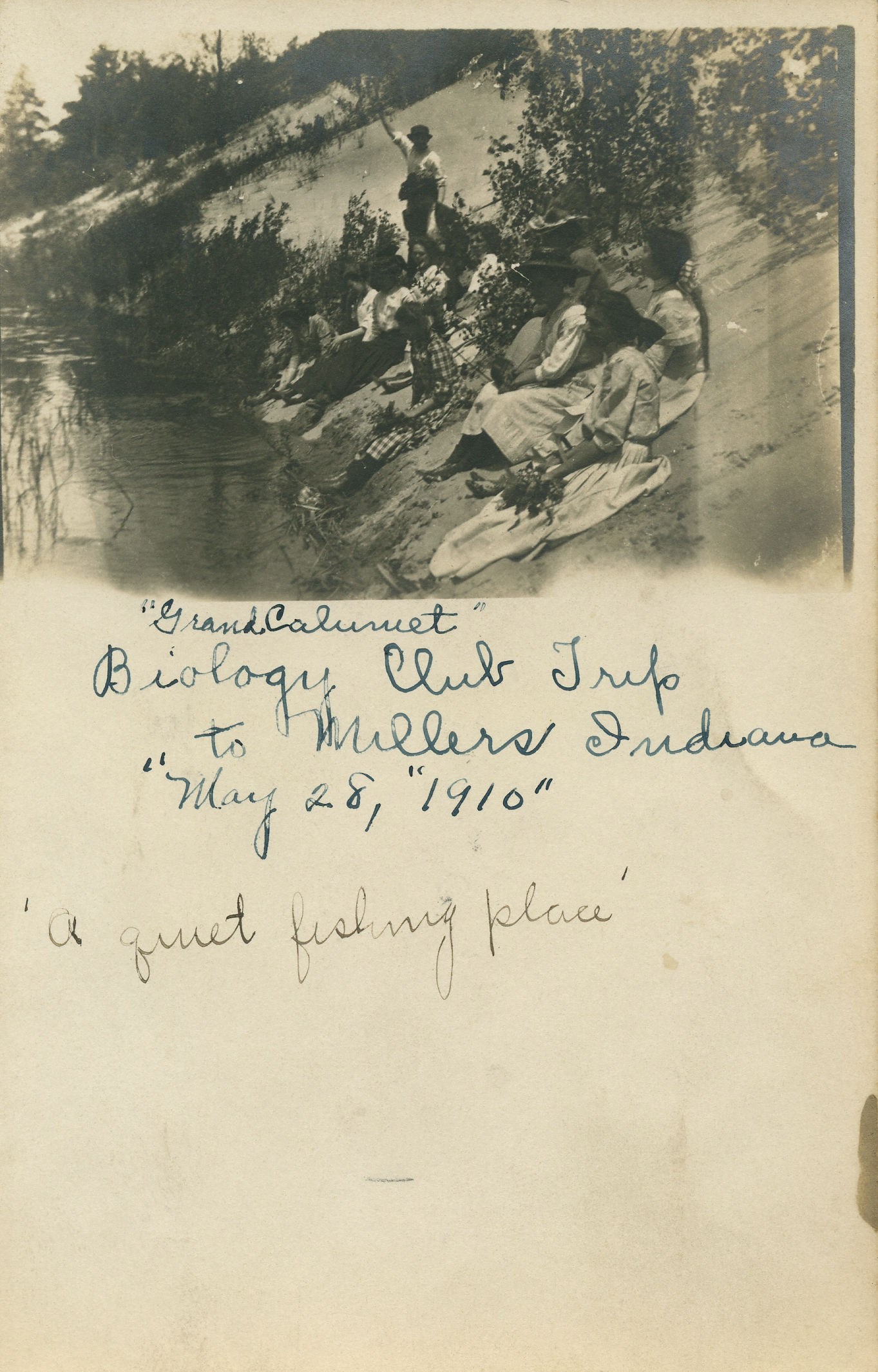
Further links listed by the Wikipedia page (not independently checked): - https://web.archive.org/web/20090703190650/http://www.glhalloffame.org/index.pl?todo=view_item&item=18 - https://web.archive.org/web/20081025165104/http://www.cityofchicago.org/Landmarks/G/GerberHouse.html - https://web.archive.org/web/20150701002259/http://chicago.suntimes.com/news/7/71/705597/old-town-site-nations-first-gay-rights-group-designated-national-landmark - https://web.archive.org/web/20091029162017/http://www.gerberhart.org/about.html - https://guides.loc.gov/lgbtq-studies/before-stonewall - https://viaf.org/viaf/268821580 Image rights Photograph description: "Grand Calumet" Biology Club Trip to Millers Indiana "May 28, 1910" "A quiet fishing place" Date: May 28, 1910 Source Type: Postcard Publisher, Printer, Photographer: Unknown Postmark: None Collection: Steven R. Shook Remark: Miller, Indiana, is a neighborhood within the municipal boundaries of Gary, Indiana. At the time that this photograph was taken, the communities of Hammond, Gary, and Whiting Creator: Steve Shook from Moscow, Idaho, USA. License: CC BY 2.0 (https://creativecommons.org/licenses/by/2.0). Original image page: https://commons.wikimedia.org/wiki/File%3AGrand_Calumet%2C_Biology_Club_Trip%2C_May_28%2C_1910_-_Miller%2C_Indiana_(31530930712).jpg. The image was resized for display; no other changes were made.