Politics · Chicago
Before the Freedom Rides, James Farmer Helped Build CORE in Chicago
James Farmer’s Chicago organizing helped create CORE, the interracial civil rights group that challenged segregation through nonviolent action and launched the first Freedom Ride.
By KLGBT News Desk ·
Long before James Farmer became nationally known as a civil rights leader, he was helping organize against segregation in Chicago.
In 1942, Farmer and George Houser co-founded the Committee of Racial Equality in Chicago with James R. Robinson, Samuel E. Riley, Bernice Fisher, Homer Jack and Joe Guinn. The organization later became known as the Congress of Racial Equality, or CORE. Its purpose was to confront racial segregation through nonviolent action.
Farmer served as CORE’s national chairman from 1942 to 1944. The group’s early work established a model of interracial organizing and direct action that would become central to the broader Civil Rights Movement. Farmer’s Chicago connection is therefore not a footnote to his career; it is part of the organization’s origin story.
Born in Marshall, Texas, on January 12, 1920, Farmer grew up under a system in which racial discrimination was written into law across the Southern states. As an adult, he became an advocate of nonviolent protest as a way to dismantle segregation. His approach placed him in the same national movement as Martin Luther King Jr., and by the 1960s Farmer was recognized as one of four major civil rights leaders alongside King, NAACP leader Roy Wilkins and Urban League head Whitney Young.
Farmer’s most prominent organizing achievement came in 1961, when he initiated and organized the first Freedom Ride. The rides challenged segregation in interstate transportation, and the campaign ultimately contributed to the desegregation of that system in the United States.
The Freedom Rides are often remembered through images of buses, interracial groups and violent resistance. But the campaign also reflected years of organizational development. Farmer’s earlier work with CORE in Chicago helped create the structure and philosophy that made such coordinated protest possible.
For Chicagoans, Farmer’s legacy offers a reminder that national civil rights victories were shaped by local organizing. The city was an important setting in the formation of an organization committed to ending segregation, while Farmer’s later leadership carried that mission onto the national stage.
Farmer died on July 9, 1999. His life connected Chicago-based organizing with one of the most consequential campaigns of the Civil Rights Movement, demonstrating how a locally formed commitment to nonviolence could become a national challenge to segregation.
Source and reuse information This backgrounder adapts factual material from “James Farmer” on Wikipedia: https://en.wikipedia.org/wiki/James_Farmer The adapted text is released under the Creative Commons Attribution-ShareAlike 4.0 International license (CC BY-SA 4.0): https://creativecommons.org/licenses/by-sa/4.0/. This story has not been independently reviewed or fact-checked.
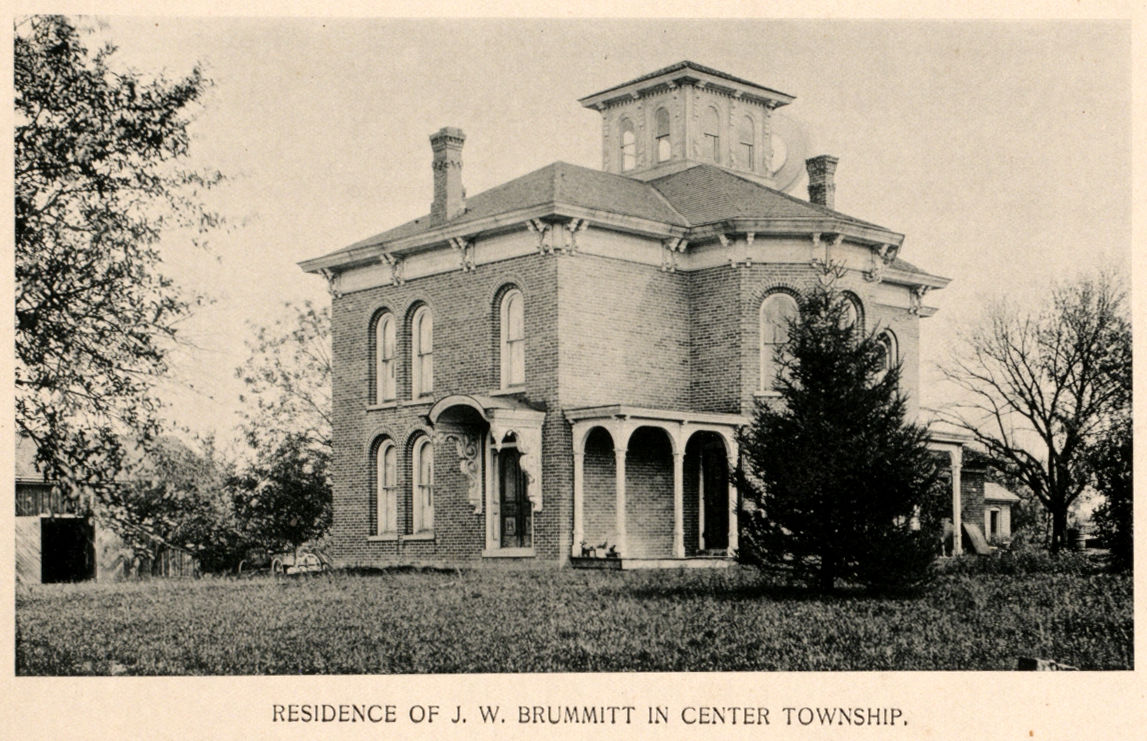
Further links listed by the Wikipedia page (not independently checked): - https://archive.org/details/openmind_ep892 - https://viaf.org/viaf/22162973 - https://www.newspapers.com/clip/2464589/naacp_celebrates_90th_birthday/ - https://www.idref.fr/028841492 - https://www.nytimes.com/1999/07/13/classified/paid-notice-deaths-farmer-james.html - https://www.nytimes.com/1999/07/10/us/james-farmer-civil-rights-giant-in-the-50-s-and-60-s-is-dead-at-79.html?pagewanted=all&src=pm Image rights Photograph description: RESIDENCE OF J. W. BRUMMITT IN CENTER TOWNSHIP. Date: 1895 Source Type: Photograph Publisher, Printer, Photographer: Lee and Lee Postmark: Not Applicable Collection: Steven R. Shook Remark: This house still stands [2023] at the SW¼ of SW¼ of SE¼ of Section 10 in Center Township, northeast of the intersection of present day Froberg Road and Vale Park Road. This photograph is facing southeast. Const Creator: Steve Shook from Moscow, Idaho, USA. License: CC BY 2.0 (https://creativecommons.org/licenses/by/2.0). Original image page: https://commons.wikimedia.org/wiki/File%3AResidence_of_John_W._Brummitt%2C_1895_-_Center_Township%2C_Porter_County%2C_Indiana_(50527874611).jpg. The image was resized for display; no other changes were made.