LGBTQ+ · Chicago
Chicago’s Leather Archives & Museum Preserves Queer Leather and Kink History
In Rogers Park, the Leather Archives & Museum documents leather, kink, BDSM and fetish communities through its collections, library, research support and educational mission.
By KLGBT News Desk ·
Chicago’s Leather Archives & Museum is a community archive, library and museum in the city’s Rogers Park neighborhood. Established in 1991 by Chuck Renslow and Tony DeBlase, the institution focuses on preserving and sharing the histories of leather, kink, BDSM and fetish communities.
The museum was created during a period when AIDS-related loss threatened both community members and the records of their lives. Its founding was also shaped by the death of Dom Orejudos, Renslow’s partner of 40 years, from complications related to AIDS. Before Orejudos died, Renslow had begun selling some of Orejudos’ art to help cover medical treatment. The museum emerged from that history of loss, care and concern that important cultural material could disappear or remain suppressed.
Today, the Leather Archives & Museum’s work includes conservation, research, education and community engagement. The organization is particularly known for its holdings in queer erotic art. Its permanent collection includes much of the work of Bill Schmeling and many works by Dom Orejudos, two major twentieth-century LGBTQ artists identified in the museum’s collection.
The institution is more than an exhibition space. It maintains an archive and library, and research assistance is available by request. That combination gives the museum a role in helping people study visual art, community history and the development of leather and fetish cultures through preserved materials.
The Leather Archives & Museum is a nonprofit organization recognized under section 501(c)(3) of the federal tax code. It is also a member of the Reciprocal Organization of Associated Museums, known as ROAM. The museum admits patrons who are at least 18 years old.
According to the supplied museum history, the facility temporarily closed on May 24, 2026, for a renovation project expected to last one year. The closure is part of the institution’s current background for anyone seeking to visit or conduct research in person; the source does not provide a reopening date or further details about the renovation.
For Chicago’s LGBTQ community, the museum represents a dedicated place where materials connected to leather, kink, BDSM and fetish life are collected rather than discarded or hidden. Its holdings and research services connect cultural preservation with the lived history of communities whose art and records have faced loss and suppression.
Source and reuse information This automatically generated backgrounder adapts text from “Leather Archives & Museum” on Wikipedia: https://en.wikipedia.org/wiki/Leather_Archives_%26_Museum The adapted text is released under the Creative Commons Attribution-ShareAlike 4.0 International license (CC BY-SA 4.0): https://creativecommons.org/licenses/by-sa/4.0/. The source article’s linked references are provided below where available. This story has not been independently reviewed or fact-checked.
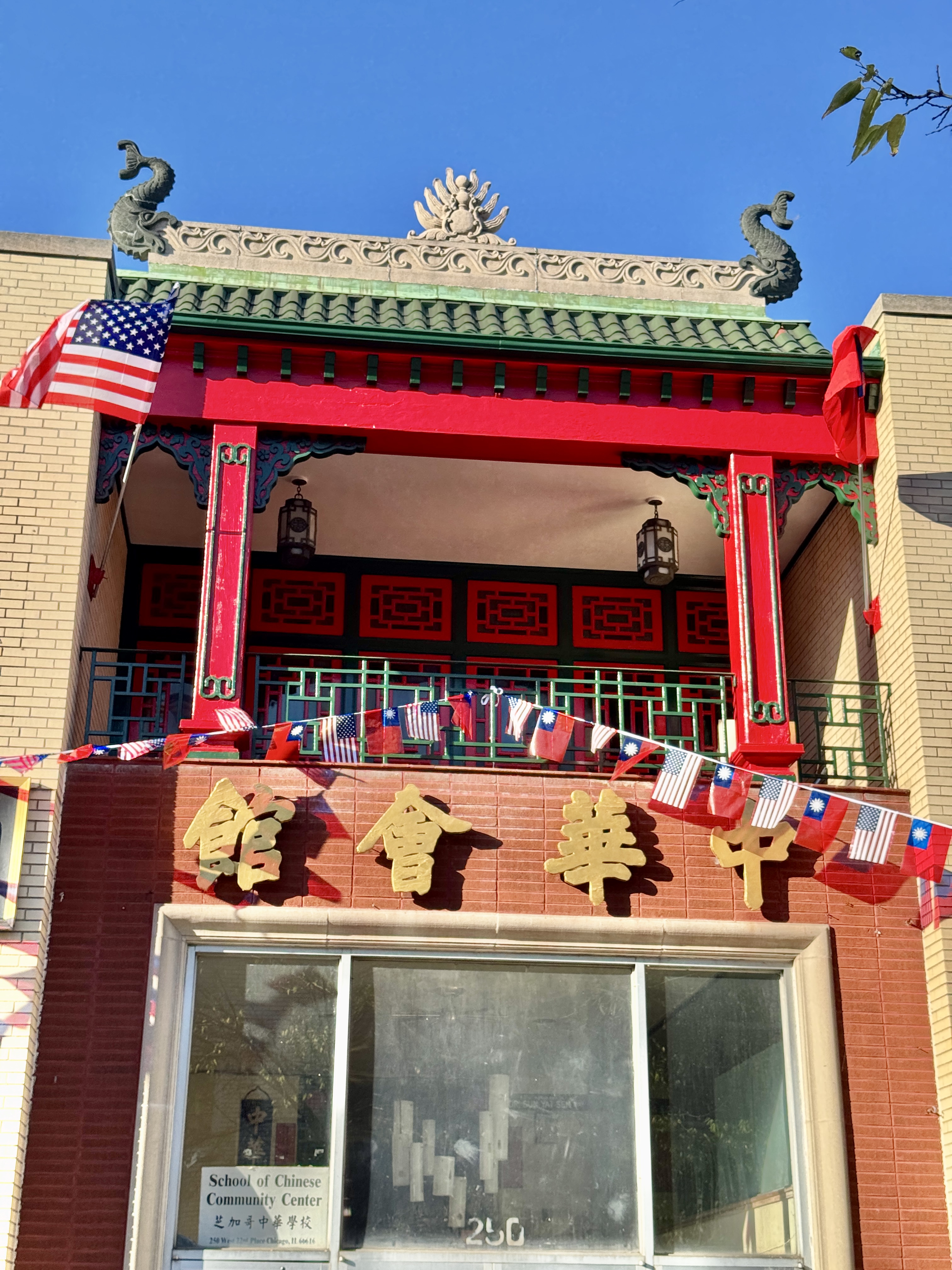
Further links listed by the Wikipedia page (not independently checked): - https://viaf.org/viaf/139877622 - https://twitter.com/leatherarchives/status/1914629639 - https://www.smithsonianmag.com/museumday/venues/museum/leather-archives-museum/ - https://leatherhalloffame.com/index.php/inductees.html - https://leatherarchives.org/the-etienne-auditorium - https://www.sfldg.org/all-programs/2014/10/22/on-the-road-with-the-leather-archives-museum-rick-storer Image rights Photograph description: Built in 1956, this Modern and Chinese-style building was constructed to serve as a community center and auditorium for the Chinese community of Chicago. The building is clad in buff brick with octagonal windows at the outer bays of the front facade, a green terra cotta tile roof with decorative trim at the center of the front facade, a recessed second-story porch with decorative trim above the ma Creator: Warren LeMay from Chicago, IL, United States. License: CC BY-SA 4.0 (https://creativecommons.org/licenses/by-sa/4.0). Original image page: https://commons.wikimedia.org/wiki/File%3AChinese_Community_Center%2C_22nd_Place%2C_Chinatown%2C_Chicago%2C_IL_(54839376881).jpg. The image was resized for display; no other changes were made.