LGBTQ+ · Chicago
Chicago’s Mark on the Leather Pride Flag
Designed by Chicagoan Tony DeBlase in 1989, the leather pride flag became a banner for leather, kink, fetish and BDSM communities.
By KLGBT News Desk ·
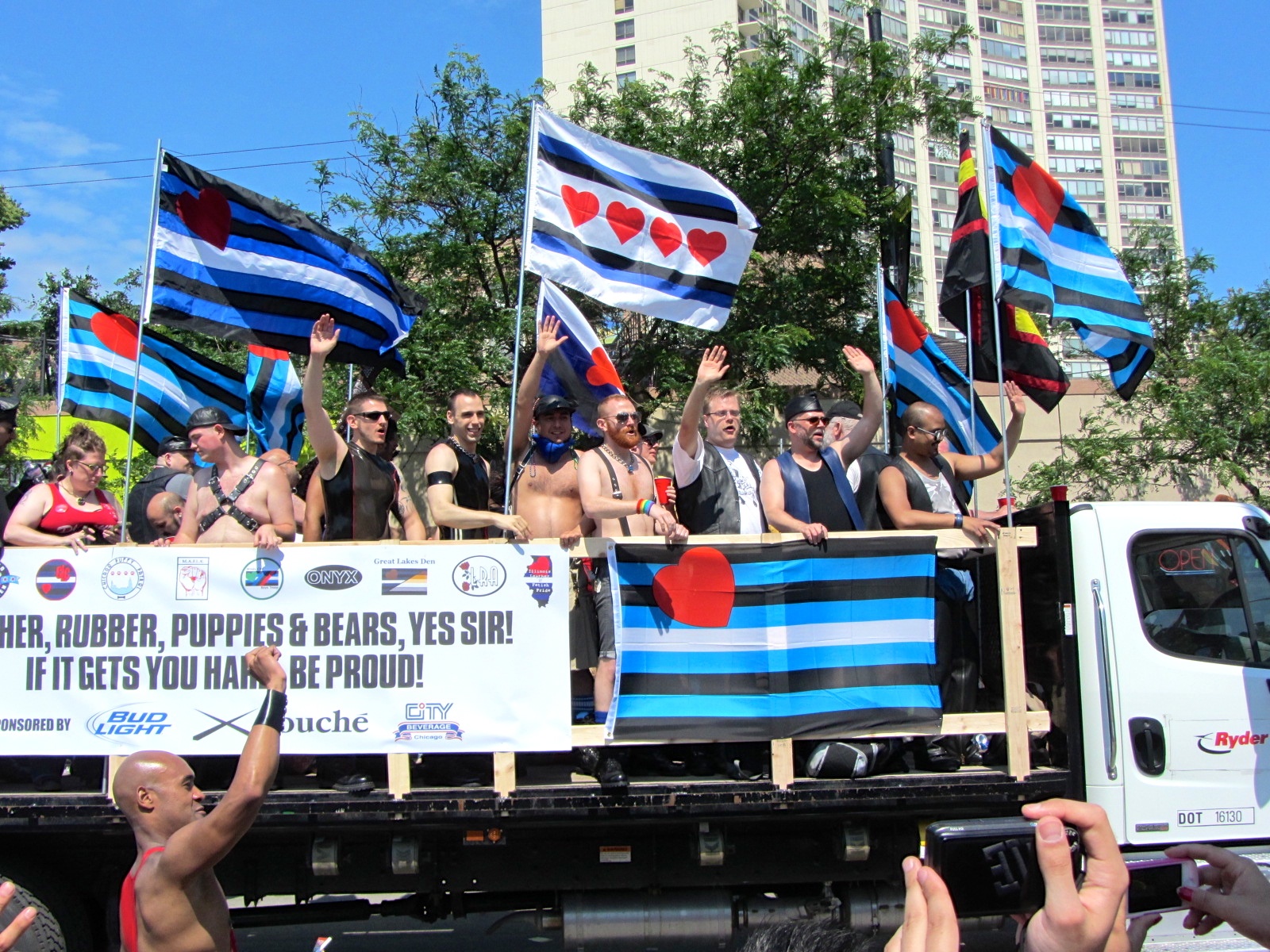
A familiar symbol of leather and kink communities has a Chicago origin. Tony DeBlase designed the leather pride flag in 1989, creating a banner for people connected to leather culture, fetish communities and BDSM.
DeBlase developed the flag around the 20th anniversary of the Stonewall uprising, a moment when LGBTQ+ communities were marking two decades of activism and visibility. He saw an opportunity for leather men and women—who had increasingly appeared at parades and other LGBTQ+ events—to have a recognizable symbol of their own.
The design is built from nine horizontal stripes of equal width. Black and royal-blue stripes alternate from the top and bottom, while a white stripe runs through the center. A large red heart sits in the flag’s upper-left corner.
Its appearance is distinctive, but DeBlase did not assign a fixed meaning to every color or element. Instead, he left the design open to interpretation by the people who use it. That flexibility has allowed the flag to function as a broad emblem rather than a symbol limited to one organization, practice or identity.
DeBlase first showed the flag at International Mr. Leather on May 28, 1989. The presentation came as the design was still being treated as an initial version, rather than a finished standard. Its Chicago connection, however, was already central: the flag’s creator designed it in the city, linking one of the leather community’s most recognizable symbols to Chicago’s longstanding place in LGBTQ+ cultural life.
The flag’s meaning is therefore both specific and expansive. It points to leather communities while also appearing in wider conversations around kink, fetish and BDSM. Those communities are not identical, and the flag does not erase their differences. Instead, it offers a shared visual language for people and groups whose identities or interests have often existed at the edges of mainstream LGBTQ+ representation.
For Chicago, the history is a reminder that local LGBTQ+ culture has helped shape symbols used far beyond the city. A design first presented in 1989 continues to carry the visibility DeBlase sought: a simple, recognizable banner for people participating in LGBTQ+ events and building community through leather and related subcultures.
Source and reuse information This backgrounder adapts factual material from “Leather pride flag” on Wikipedia: https://en.wikipedia.org/wiki/Leather_pride_flag The adapted text is released under the Creative Commons Attribution-ShareAlike 4.0 International license (CC BY-SA 4.0): https://creativecommons.org/licenses/by-sa/4.0/. This story has not been independently reviewed or fact-checked.
Further links listed by the Wikipedia page (not independently checked): - https://leatherandgrace.wordpress.com/an-organization-for-uu-kinksters/ - https://web.archive.org/web/20100803065539/http://www.leatherarchives.org/exhibits/deblase/timeline2.htm#1989 - https://web.archive.org/web/20130502055320/http://www.informedconsent.org.uk/bdsmflag - https://www.leatherarchives.org/pride.html - https://www.jweekly.com/2018/06/21/honoring-gay-leather-culture-with-art-installation-in-soma-alleyway/ - https://web.archive.org/web/20180623221933/https://www.jweekly.com/2018/06/21/honoring-gay-leather-culture-with-art-installation-in-soma-alleyway/ Image rights Photograph description: Bear & Leather Pride Creator: Richie Diesterheft from Santa Barbara, CA, USA. License: CC BY-SA 2.0 (https://creativecommons.org/licenses/by-sa/2.0). Original image page: https://commons.wikimedia.org/wiki/File%3ABear_%26_Leather_Pride_(9183447545).jpg. The image was resized for display; no other changes were made.