LGBTQ+ · Chicago
Legacy Walk Brings LGBTQ History to Chicago’s North Halsted Street
Chicago’s Legacy Walk uses bronze memorials and public education to highlight LGBTQ contributions to world history and culture while challenging the silence that can fuel anti-LGBTQ bullying.
By KLGBT News Desk ·
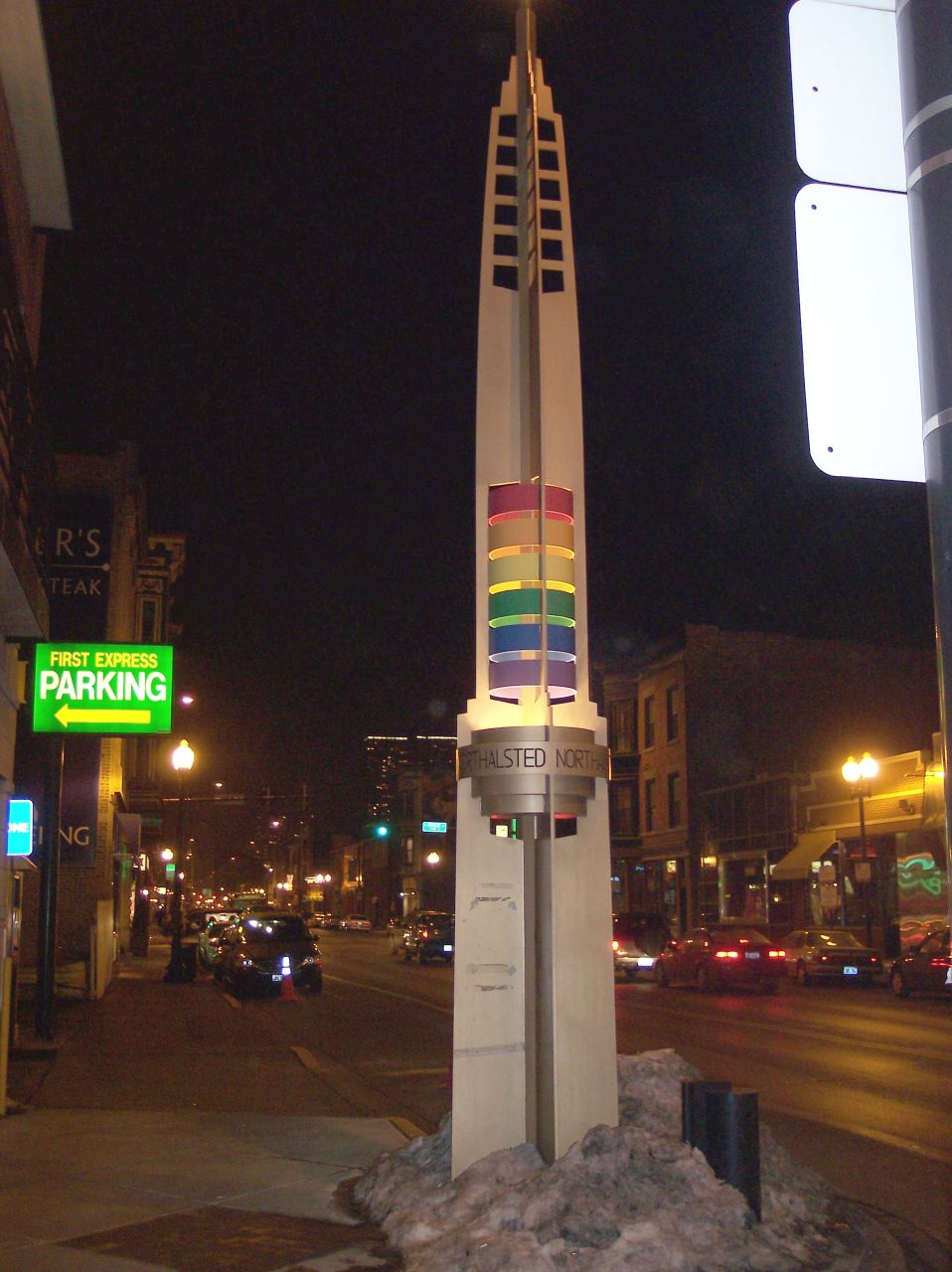
Along North Halsted Street, a series of bronze memorials offers a public lesson in LGBTQ history. Known as the Legacy Walk, the Chicago installation honors LGBTQ people whose contributions have shaped world history and culture, placing that recognition in a neighborhood closely associated with the city’s LGBTQ community.
The project combines an outdoor display with a youth education mission. Its stated goal is not only to preserve historical memory, but also to counter anti-LGBTQ bullying by showing young people that LGBTQ lives and achievements are part of the broader story of civilization. Rather than limiting that history to a classroom, the Legacy Walk presents it in a setting accessible to anyone moving through the street.
The idea grew out of the 1987 National March on Washington for GLBT Civil Rights. Several developments surrounding that period helped inspire the concept: the emergence of the NAMES Project AIDS Memorial Quilt, the first observance that would become National Coming Out Day on October 11, the first ACT UP protest at the U.S. Supreme Court, and the experience of participating in the march itself. Together, those events demonstrated the importance of public remembrance, visibility and organized action.
The creators also saw the need for an alternative to an education system they believed had failed to acknowledge LGBTQ contributions to history and culture. An outdoor installation could reach people beyond traditional school settings and make LGBTQ history visible in everyday life.
Chicago became the project’s natural home. In 1991, the city had established the first Gay and Lesbian Hall of Fame, creating an existing local example of formally recognizing LGBTQ achievement. The Legacy Walk extended that spirit of recognition into a public streetscape, connecting historical commemoration with community education.
The memorials are biographical, meaning each one is designed to identify and tell the story of an individual featured in the walk. Taken together, they form what the Legacy Walk describes as the world’s largest collection of bronze biographical memorials. The project also characterizes itself as the only outdoor museum walk and youth education program focused specifically on celebrating LGBTQ contributions as a way to combat anti-gay bullying.
For Chicago residents and visitors, the Legacy Walk offers more than a collection of plaques. It is a visible argument about whose stories belong in public history—and a reminder that LGBTQ history is not separate from the history of culture, politics, science and society. By placing those stories along North Halsted Street, the project turns a familiar Chicago corridor into an open-air site of learning and remembrance.
Source and reuse information This backgrounder adapts factual material from “Legacy Walk” on Wikipedia: https://en.wikipedia.org/wiki/Legacy_Walk The adapted text is released under the Creative Commons Attribution-ShareAlike 4.0 International license (CC BY-SA 4.0): https://creativecommons.org/licenses/by-sa/4.0/. This story has not been independently reviewed or fact-checked.
Further links listed by the Wikipedia page (not independently checked): - https://web.archive.org/web/20160313200751/http://chicagophoenix.com/2013/10/12/boystown-unveils-new-legacy-walk-lgbt-history-plaques - https://geohack.toolforge.org/geohack.php?pagename=Legacy_Walk¶ms=41_56_43_N_87_38_58_W_type:landmark_region:US-IL_dim:2000 - https://web.archive.org/web/20200421031425/http://www.windycitymediagroup.com/m/APPredirect.php?AID=53131 - https://web.archive.org/web/20150924005142/http://www.edgeboston.com/index.php?ch=travel&sc=&sc3=&id=137135 - https://web.archive.org/web/20141019043727/http://chicago.gopride.com/news/article.cfm/articleid/34183921 Image rights Photograph description: One of the landmark rainbow pylons along North Halsted Avenue in Chicago, Illinois Boystown gay village in Lakeview East. Boystown Creator: Frank Buchalski from Dallas, United States. License: CC BY 2.0 (https://creativecommons.org/licenses/by/2.0). Original image page: https://commons.wikimedia.org/wiki/File%3ABoystown_pylon.jpg. The image was resized for display; no other changes were made.