LGBTQ+ · Chicago
Mountain Moving Coffeehouse: Chicago’s Long-Running Lesbian-Feminist Gathering
For 31 years, Chicago’s Mountain Moving Coffeehouse offered a weekly, alcohol- and drug-free setting for lesbian and feminist music, entertainment, and community.
By KLGBT News Desk ·
Mountain Moving Coffeehouse for Womyn and Children was a Chicago-based lesbian-feminist music venue that operated from 1974 through 2005. Although its events took place locally, the organization became known across the United States, making it part of a wider history of lesbian and feminist cultural organizing.
The coffeehouse was not a permanent club or a single dedicated building. It met once a week, on Saturday nights, in rented rooms at churches located in different North Side neighborhoods. Those changing locations formed the setting for evenings centered on music and entertainment created and presented by women for lesbians and feminists.
The organization’s founders were lesbian-feminist activists who described the gathering as a safe space for cisgender women and their young children. It was also deliberately positioned as an alternative to the lesbian bar scene: the events were free of drugs and alcohol and emphasized a different kind of social environment. The venue’s focus on woman-identified performers and audiences connected cultural programming with feminist community-building.
Its name expressed the political ambitions behind that work. “Mountain Moving” referred to the challenge feminists faced in confronting institutional sexism and homophobia. The spelling “womyn” similarly signaled an effort to define women independently of male-centered traditions. Together, the name and programming reflected the movement’s attempt to create institutions shaped by lesbian and feminist priorities.
Access to the space was defined by a policy limited to what the source describes as womyn-born womyn. The policy included restrictions affecting men, transgender women, and male children older than two. It generated controversy over time. During the 1980s, pressure was placed on the coffeehouse to admit men. The source also identifies controversy in the 1990s, though the available account does not provide further details about that period.
The coffeehouse’s 31-year run places it among Chicago’s enduring lesbian-feminist institutions. Its history illustrates how a recurring cultural event could serve several purposes at once: presenting music, creating a social alternative to bars, supporting feminist politics, and offering a community gathering place. It also shows how debates over who could belong in a designated safe space became part of the institution’s history.
Because the coffeehouse moved among rented church spaces rather than operating from one permanent address, its legacy is tied less to a single venue than to the network of Saturday-night gatherings it sustained across Chicago’s North Side. From 1974 to 2005, Mountain Moving Coffeehouse provided a distinctly lesbian-feminist setting for music, entertainment, and community life.
Source and reuse information This automatically generated backgrounder adapts text from “Mountain Moving Coffeehouse” on Wikipedia: https://en.wikipedia.org/wiki/Mountain_Moving_Coffeehouse The adapted text is released under the Creative Commons Attribution-ShareAlike 4.0 International license (CC BY-SA 4.0): https://creativecommons.org/licenses/by-sa/4.0/. The source article’s linked references are provided below where available. This story has not been independently reviewed or fact-checked.
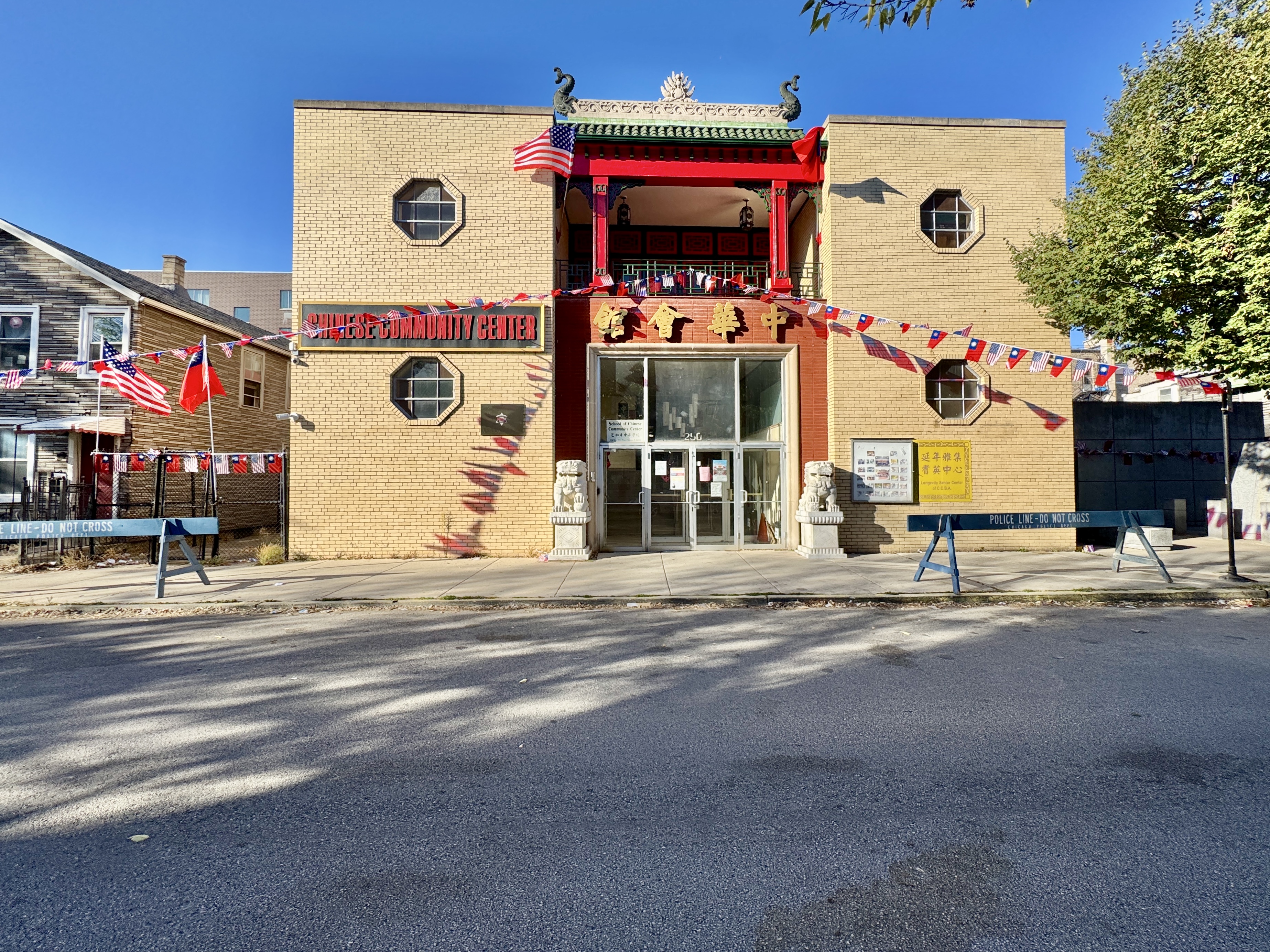
Further links listed by the Wikipedia page (not independently checked): - https://web.archive.org/web/20101105165634/http://www.glhalloffame.org/index.pl?item=41&todo=view_item - https://web.archive.org/web/20151017032241/http://www.glhalloffame.org/index.pl?page=inductees&todo=year - https://archive.org/details/findingmovement01enke - https://books.google.com/books?id=10Osjq7IYo4C&q=%22Mountain+Moving+Coffeehouse%22&pg=PA177 - https://books.google.com/books?id=rJEU4xYiWEEC&q=Mountain+Moving+Coffeehouse&pg=PA127 - https://books.google.com/books?id=9dBioKfdzPcC&q=Mountain+Moving+Coffeehouse&pg=PA245 Image rights Photograph description: Built in 1956, this Modern and Chinese-style building was constructed to serve as a community center and auditorium for the Chinese community of Chicago. The building is clad in buff brick with octagonal windows at the outer bays of the front facade, a green terra cotta tile roof with decorative trim at the center of the front facade, a recessed second-story porch with decorative trim above the ma Creator: Warren LeMay from Chicago, IL, United States. License: CC BY-SA 4.0 (https://creativecommons.org/licenses/by-sa/4.0). Original image page: https://commons.wikimedia.org/wiki/File%3AChinese_Community_Center%2C_22nd_Place%2C_Chinatown%2C_Chicago%2C_IL_(54839605834).jpg. The image was resized for display; no other changes were made.