Culture · Chicago
Studs Terkel’s Chicago Legacy Was Built on Listening
The writer, broadcaster and oral historian spent most of his life in Chicago, turning everyday conversations into an enduring record of American life.
By KLGBT News Desk ·
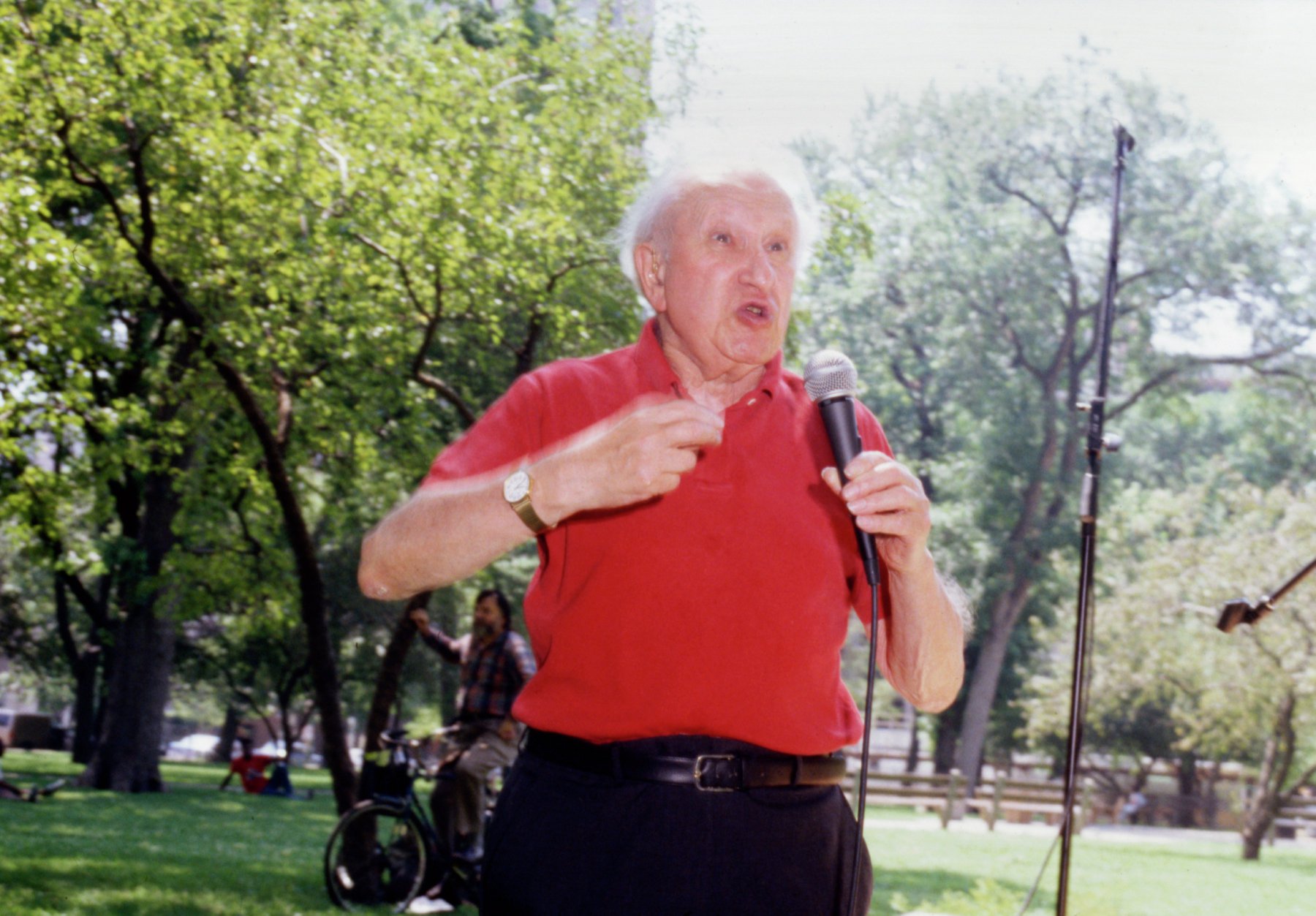
Before Studs Terkel became one of the best-known chroniclers of ordinary Americans, he was a Chicagoan shaped by the city’s chance encounters and crowded public life.
Born Louis Terkel in New York City in 1912, he moved to Chicago with his family when he was eight. His parents, Samuel Terkel and Anna Finkel, were Russian Jewish immigrants. Samuel worked as a tailor, while Anna was a seamstress. The family later ran the Wells-Grand Hotel, a rooming house that operated from 1926 to 1936.
The hotel was more than a place for tenants to sleep. It also became a gathering point for people from many walks of life. Terkel associated his early understanding of human behavior and social connection with the people he encountered there, as well as with those who gathered in nearby Bughouse Square. That experience would become central to the work that defined his career: giving public attention to lives and perspectives that might otherwise be overlooked.
Terkel attended McKinley High School and earned both an undergraduate degree and a law degree from the University of Chicago. He was admitted to the bar, but his lasting public identity developed through writing, broadcasting, acting and historical storytelling rather than legal practice.
He became especially well known for oral histories—books built from conversations with people describing their own experiences. His subjects were not limited to public officials or celebrities. Instead, his work emphasized the voices of common Americans and the complexity of the lives behind major historical events. In 1985, he received the Pulitzer Prize for General Nonfiction for “The Good War,” his account of World War II as remembered through individual experiences.
Terkel also hosted a long-running radio program in Chicago, further establishing him as a familiar presence in the city’s cultural life. His approach was deceptively simple: ask questions, listen closely and allow people room to explain themselves. That method made conversation itself a form of historical record.
For Chicago readers, Terkel’s legacy is tied not only to the books he published or the awards he received, but also to the city environments that influenced him. The rooming house, the public square and the radio studio all offered access to people with different backgrounds and stories. Together, they helped shape a body of work that treated everyday speech as worthy of preservation.
Terkel died in 2008 after spending most of his life in Chicago. His career remains a reminder that a city’s history can be found in institutions and headlines, but also in the testimony of people willing to tell their stories—and in the listeners willing to take them seriously.
Source and reuse information This backgrounder adapts factual material from “Studs Terkel” on Wikipedia: https://en.wikipedia.org/wiki/Studs_Terkel The adapted text is released under the Creative Commons Attribution-ShareAlike 4.0 International license (CC BY-SA 4.0): https://creativecommons.org/licenses/by-sa/4.0/. This story has not been independently reviewed or fact-checked.
Further links listed by the Wikipedia page (not independently checked): - https://soundcloud.com/studsterkel-radio-archive/tracks - https://soundcloud.com/studsterkel-radio-archive/louis-daniel-armstrong-talks-with-studs-terkel-on-wfmt-1962624 - https://soundcloud.com/studsterkel-radio-archive/gwendolyn-brooks-talks-with-studs-pt-1-poetry-month-1967 - https://www.theguardian.com/books/2008/jan/23/history.usa - https://www.nytimes.com/2008/11/01/books/01terkel.html?_r=1 - https://chicagoliteraryhof.org/inductees/profile/studs-terkel Image rights Photograph description: Photograph of Studs Terkel during one of the Bughouse Square Debates of the past. Creator: the Newberry Library. License: CC BY-SA 4.0 (https://creativecommons.org/licenses/by-sa/4.0). Original image page: https://commons.wikimedia.org/wiki/File%3ABughouse_Square%2C_Studs_Terkel%2C_1997_o3.jpg. The image was resized for display; no other changes were made.