LGBTQ+ · Chicago
Vernita Gray’s Chicago Legacy of Lesbian Activism and Community Work
From the civil rights movement to LGBTQ advocacy in Cook County government, Vernita Gray helped shape Chicago’s lesbian and women’s liberation movements. In 2013, she and her partner became the first same-sex partners to marry in Illinois.
By KLGBT News Desk ·
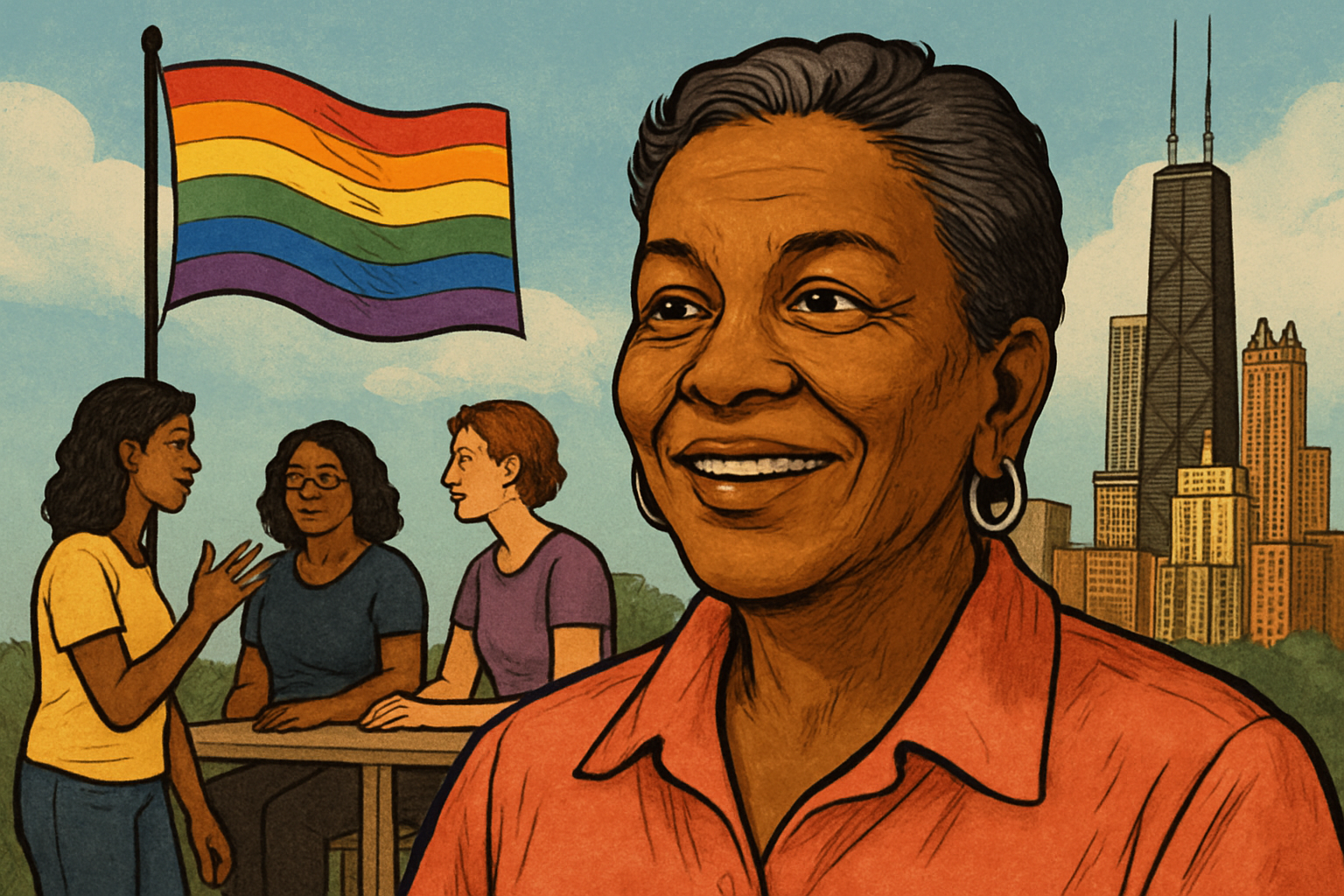
Vernita Gray’s life traced several pivotal chapters in Chicago’s movements for racial justice, women’s liberation and LGBTQ equality. Born in Chicago on December 8, 1948, Gray became politically engaged as a teenager, when the civil rights movement was reshaping the city and the country.
While Gray attended St. Mary’s High School, Martin Luther King Jr. moved into a home a few blocks from hers and began organizing demonstrations. After a friend encouraged her to participate, Gray joined the protests. That early experience placed her in the city’s broader tradition of grassroots organizing and helped set the direction for her later activism.
Gray went on to attend Columbia College Chicago, where she earned a degree in communications and creative writing. Her writing career included work for Lavender Woman, a Chicago newsletter associated with the city’s early lesbian and women’s liberation movements. Through writing and organizing, Gray became part of a generation building spaces for lesbian voices at a time when those communities were fighting for visibility and recognition.
Her activism was also connected to her work in business and public service. Gray owned and operated her own restaurant for nearly a decade, creating another setting in which community life and professional life intersected. She later served as the LGBTQ liaison for the Cook County State’s Attorney’s office, bringing her experience as an activist into a government role.
Gray’s personal life also became part of Illinois LGBTQ history. In 2013, she and her partner became the first same-sex partners to marry in the state. The milestone reflected a long public journey that had begun with civil rights demonstrations, continued through lesbian organizing and writing, and extended into official advocacy within Cook County government.
Gray died in Chicago on March 18, 2014, at age 65. Her legacy is rooted not in a single institution or event, but in the range of places where she worked for change: school and street protests, activist publications, a neighborhood restaurant and county government. For Chicago’s LGBTQ community, her story illustrates how movement history is carried forward by people who combine public advocacy with the everyday work of building community.
Source and reuse information This backgrounder adapts factual material from “Vernita Gray” on Wikipedia: https://en.wikipedia.org/wiki/Vernita_Gray The adapted text is released under the Creative Commons Attribution-ShareAlike 4.0 International license (CC BY-SA 4.0): https://creativecommons.org/licenses/by-sa/4.0/. This story has not been independently reviewed or fact-checked.
Further links listed by the Wikipedia page (not independently checked): - https://www.bostonglobe.com/metro/obituaries/2014/03/20/vernita-gray-illinois-gay-rights-advocate-dies/DYUjPQVHYadu6y6KOLLYCM/story.html - https://www.newspapers.com/clip/20523158/chicago_tribune/ - https://www.newspapers.com/clip/20523256/chicago_tribune/ - https://www.newspapers.com/clip/20523305/gray_vernita_the_chicago_tribune/ - https://www.newspapers.com/clip/20523418/chicago_tribune/ - https://ubuntubiographyproject.com/2017/12/08/vernita-gray/ Image rights Original illustrative artwork created from story keywords. It is illustrative, not a documentary photograph.