Beyond the Bay · Detroit
Detroit’s 1967 Uprising: A Five-Day Crisis That Reshaped the City’s History
The 1967 Detroit uprising began after a police raid on an unlicensed after-hours bar and grew into a five-day confrontation involving residents, local police, state forces and the U.S. Army.
By KLGBT News Desk ·
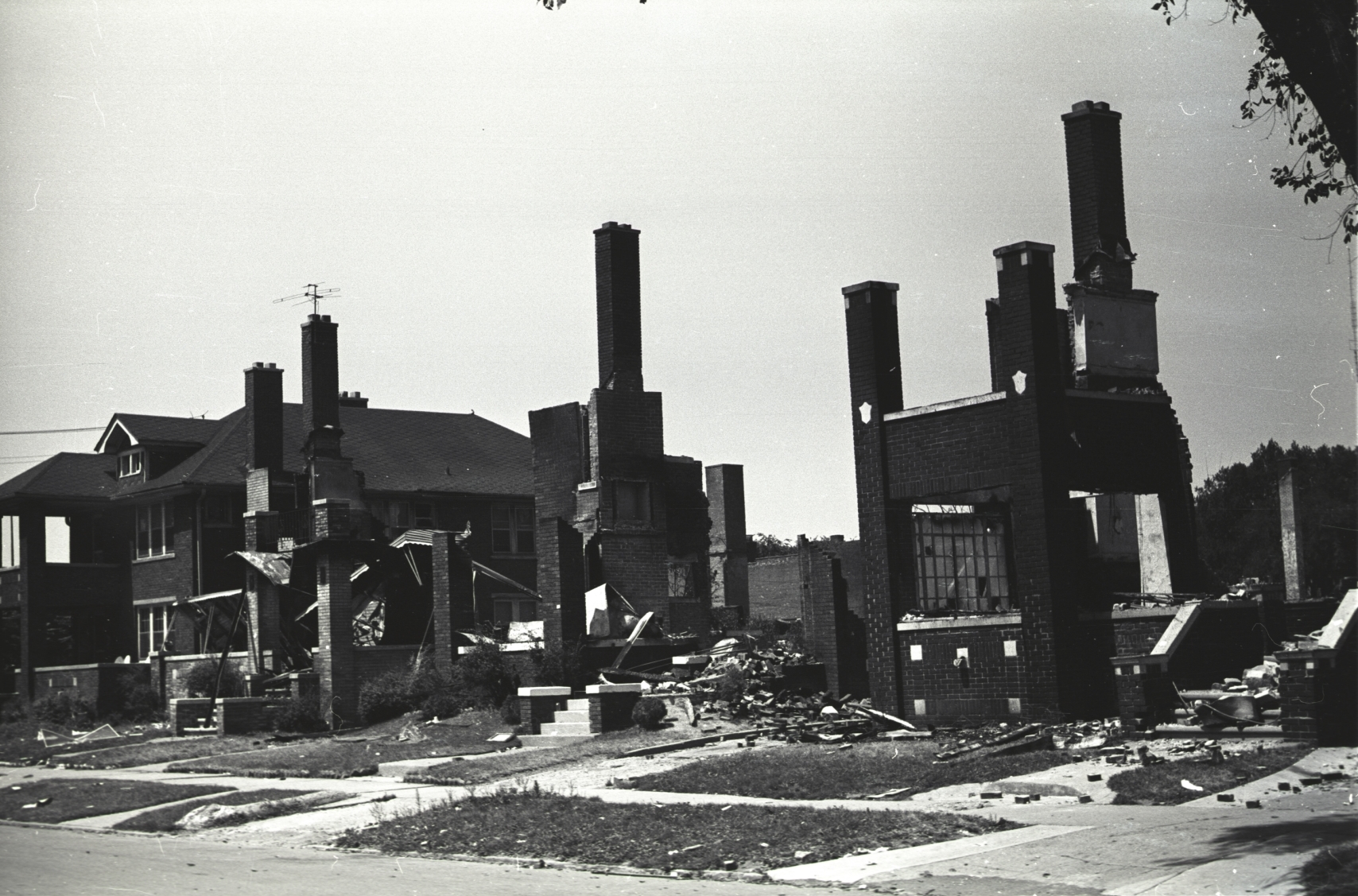
Detroit’s 1967 uprising began in the early hours of Sunday, July 23, on the city’s Near West Side. The immediate trigger was a police raid on an unlicensed, after-hours bar. The incident escalated into widespread confrontations involving African American residents and the Detroit Police Department, becoming one of the deadliest and most destructive urban disturbances in the United States during the period known as the long, hot summer of 1967.
The disturbance continued for five days. Its scale exceeded Detroit’s 1943 race riot and became the most severe unrest in the United States since the New York City draft riots of 1863. It was later surpassed by the 1992 Los Angeles riots.
As the crisis spread, Michigan’s governor, George W. Romney, ordered the Michigan Army National Guard into Detroit. President Lyndon B. Johnson then sent the 82nd and 101st Airborne divisions of the United States Army. The arrival of state and federal troops marked the scale of the emergency and the level of government intervention used to bring the unrest to an end.
The reported toll was extensive. Forty-three people died, 1,189 were injured and more than 7,200 were arrested. More than 400 buildings were destroyed. Those figures place the event among the most consequential episodes of civil disorder in modern American history and underscore the depth of the damage sustained by Detroit in less than a week.
The uprising is known by several names, including the 12th Street Riot and the Detroit Uprising. Each name points to a different aspect of how the event has been remembered: its location, its form as a revolt, or its broader place in the city’s history. The term used does not change the central sequence recorded in the historical account: a police raid, a rapid escalation, the deployment of military forces, and a five-day crisis with a substantial loss of life and property.
For Detroit, the 1967 uprising remains a defining historical reference. Its documented consequences include deaths, injuries, mass arrests and the destruction of hundreds of buildings. Any account of the event also requires attention to its setting: a confrontation between Black residents and city police that grew beyond the original raid and drew in both state and federal authorities. The basic record provides a concise measure of the event’s human and physical cost, while its multiple names reflect the lasting significance it holds in Detroit’s public history.
Source and reuse information This automatically generated backgrounder adapts text from “1967 Detroit riot” on Wikipedia: https://en.wikipedia.org/wiki/1967_Detroit_riot The adapted text is released under the Creative Commons Attribution-ShareAlike 4.0 International license (CC BY-SA 4.0): https://creativecommons.org/licenses/by-sa/4.0/. The source article’s linked references are provided below where available. This story has not been independently reviewed or fact-checked.
Further links listed by the Wikipedia page (not independently checked): - https://web.archive.org/web/20110607101254/http://www.lbjlib.utexas.edu/johnson/archives.hom/oralhistory.hom/Vance-C/DetroitReport.asp - https://web.archive.org/web/20070719053104/http://www.annarborpaper.com/content/issuev2i12/plamondon_v2i12.html - https://web.archive.org/web/20110605064836/http://historymatters.gmu.edu/d/6553/ - https://digital.library.wayne.edu/digitalcollections/search.php?q=race+riot&fq%5B%5D=rels_isMemberOfCollection:%22info:fedora/wayne:collectionvmc%22&start=0&fq%5B%5D=facet_mods_year:%221967%22 - https://www.washingtonpost.com/politics/polling/dire-national-outlook-race-relations/2016/07/25/62318504-4ba0-11e6-8dac-0c6e4accc5b1_page.html - https://townhall.com/columnists/thomassowell/2011/03/29/voting-with-their-feet-n732700 Image rights Photograph description: Detroit , Michigan in 1967. Creator: Phil Cherner (email: phil@philcherner.com ; website: www.philcherner.com).. License: CC BY-SA 2.5 (https://creativecommons.org/licenses/by-sa/2.5). Original image page: https://commons.wikimedia.org/wiki/File%3ADetroit_1967.jpg. The image was resized for display; no other changes were made.