Beyond the Bay · Detroit
Oakland County: A Detroit-Area Regional Primer
Oakland County forms a major part of Detroit’s northern suburban geography, with Pontiac as its county seat, Troy as its largest city and a population of more than 1.27 million in the 2020 census.
By KLGBT News Desk ·
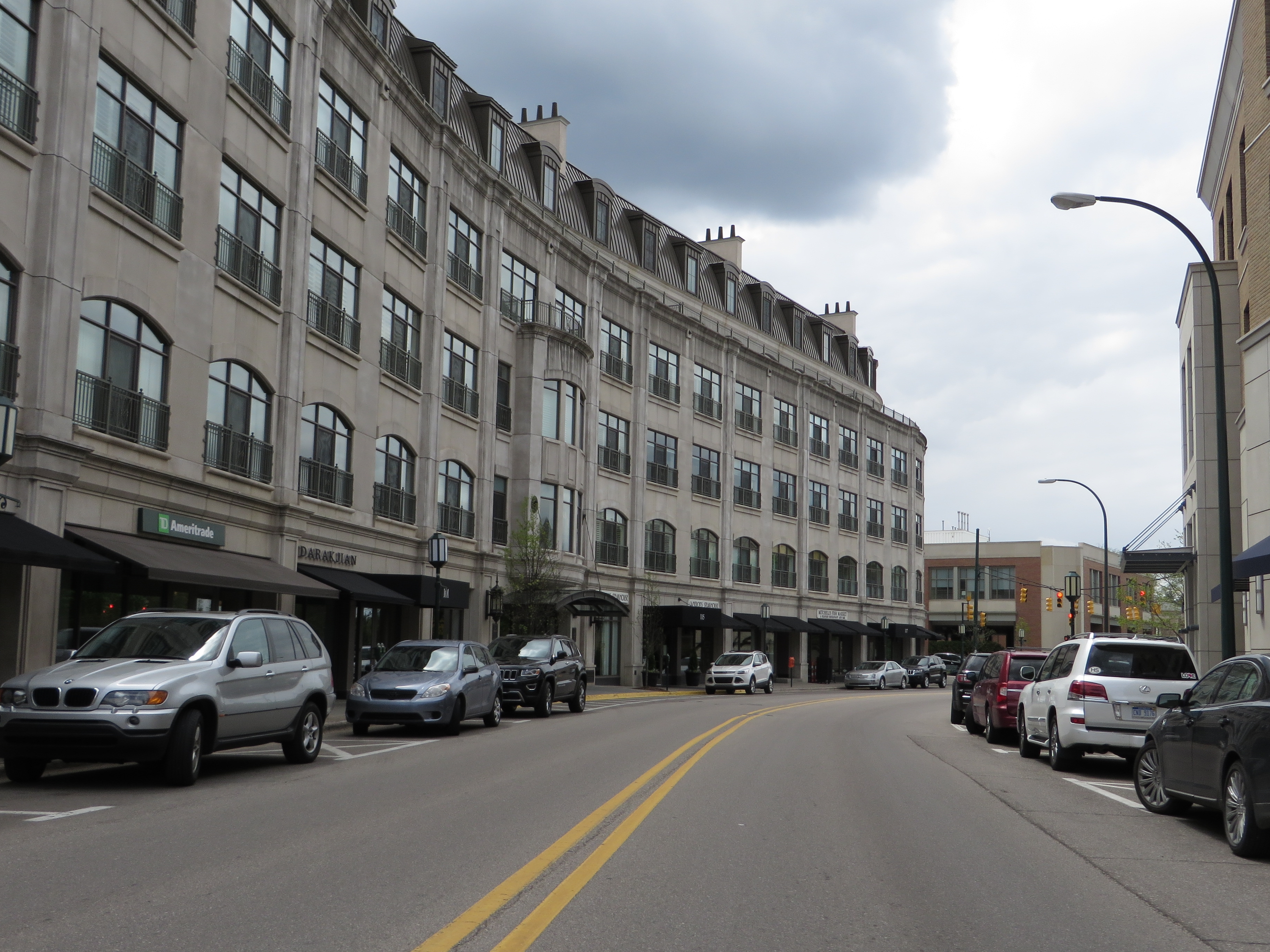
For Detroit readers, Oakland County is an important part of the metropolitan area’s regional map. The county contains most of Detroit’s northern suburbs and sits next to Wayne County, where Detroit is located. Its county seat is Pontiac, while Troy is its largest city.
Oakland County had 1,274,395 residents in the 2020 census, making it Michigan’s second-most populous county, behind neighboring Wayne County. It also holds a notable distinction: among U.S. counties with more than one million residents, it is the most populous one whose cities do not include a municipality with at least 100,000 people. That combination of substantial population and many separate local governments gives the county a particularly dispersed civic structure.
The county is made up of 62 cities, villages and townships. For audiences following LGBTQ life and public affairs across the Detroit region, that structure is a useful starting point. Local decisions can be shaped by many different municipal governments rather than by one dominant city government. A regional story involving schools, public services, community institutions or local policy may therefore span several jurisdictions within Oakland County, as well as the city of Detroit and other counties in the metropolitan area.
Oakland County’s origins date to 1819, when Territorial Governor Lewis Cass founded it. It was formally organized the following year, on land separated from Macomb County. As settlement and population grew, portions of the original county were used to create additional counties, including Lapeer and Saginaw. The county’s present-day boundaries and local identities are therefore part of a longer process of regional development rather than a fixed arrangement from its beginning.
The county is also home to Oakland University, a large public institution located across the boundary between Auburn Hills and Rochester Hills. Its campus is one example of how Oakland County’s civic and institutional life can cross city lines.
Oakland County was identified in 2010 as one of the 10 wealthiest U.S. counties with populations above one million. That economic profile, its size and its patchwork of municipalities all help explain why the county matters in Detroit-area reporting. For a Detroit-based LGBTQ newsroom, Oakland County is best understood as a broad regional setting: a collection of distinct communities north of the city, connected by metropolitan ties but governed through numerous local places.
Source and reuse information This automatically generated backgrounder adapts text from “Oakland County, Michigan” on Wikipedia: https://en.wikipedia.org/wiki/Oakland_County,_Michigan The adapted text is released under the Creative Commons Attribution-ShareAlike 4.0 International license (CC BY-SA 4.0): https://creativecommons.org/licenses/by-sa/4.0/. The source article’s linked references are provided below where available. This story has not been independently reviewed or fact-checked.
Further links listed by the Wikipedia page (not independently checked): - https://www.cmich.edu/library/clarke/AccessMaterials/Bibliographies/MichiganLocalHistory/Pages/oakland.aspx - https://archive.org/details/afk0725.0001.001.umich.edu - https://www.oakgov.com/advantageoakland/media-center/Documents/Maps/map_eob.pdf - https://www.oakgov.com/village - https://www.oakgov.com/maps/Documents/occomplexmap.pdf - https://web.archive.org/web/20070520071232/http://www.massbike.org/resources/stats.htm#sidewalk Image rights Photograph description: Birmingham is a city in Oakland County of the U.S. state of Michigan and a suburb of Detroit. As of the 2010 census, the population was 20,103. The city's downtown attracts shoppers from throughout the Metro Detroit area. Birmingham's traditional street-side shopping district runs along Old Woodward Avenue. Birmingham's downtown district has many coffee houses, ice cream parlors, upscale apparel a Creator: Ken Lund from Las Vegas, Nevada, USA. License: CC BY-SA 2.0 (https://creativecommons.org/licenses/by-sa/2.0). Original image page: https://commons.wikimedia.org/wiki/File%3ADowntown_Birmingham%2C_Michigan.jpg. The image was resized for display; no other changes were made.