Beyond the Bay · Durham
Durham, North Carolina: A Civic and Regional Primer
Durham is a Piedmont city shaped by railroads, tobacco, textiles and electric power, and connected to a metropolitan area of more than 600,000 residents.
By KLGBT News Desk ·
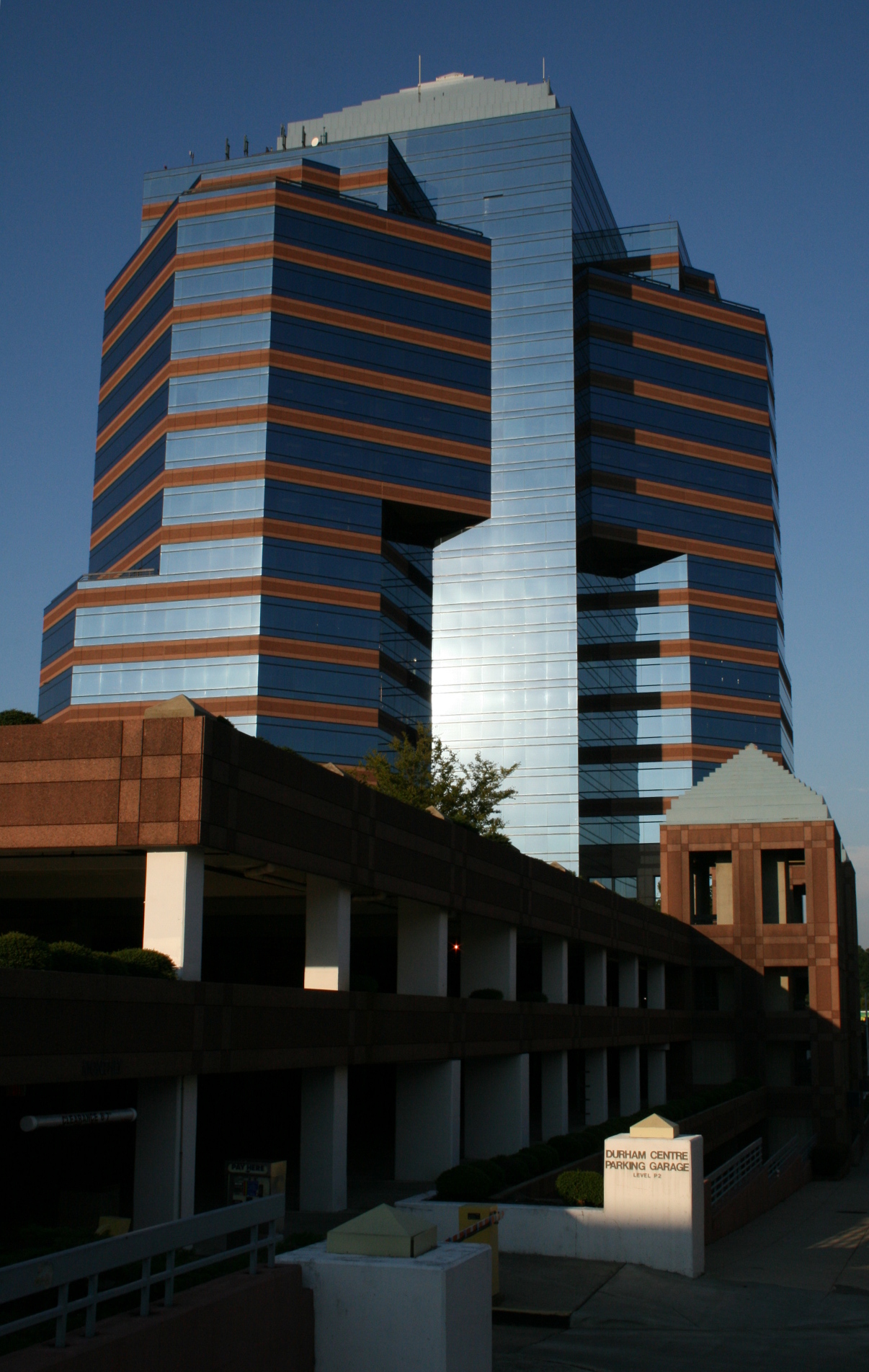
Durham is a city in the east-central Piedmont of North Carolina, positioned along the Eno River. It serves as the county seat of Durham County, although portions of the city limits extend into neighboring Orange and Wake counties. That geography places Durham within several overlapping civic and population frameworks: the city itself, Durham County, the four-county Durham–Chapel Hill metropolitan area and the broader Research Triangle.
At the 2020 census, Durham had 283,506 residents. The city is identified in the source as North Carolina’s fourth-most populous city and the 70th-most populous city in the United States. The Durham–Chapel Hill metropolitan area is estimated to include about 620,000 people, while the larger Research Triangle region has more than 2.37 million residents. For a local newsroom, those distinctions matter: a story about Durham may involve city government, county institutions or a wider regional audience, depending on the issue.
The city’s name is tied to Bartlett S. Durham, who donated land for a railway depot established in 1849. That station helped anchor the community that became known as Durham Station. After the Civil War, the settlement grew quickly, with the tobacco industry playing a major role in its expansion.
Durham’s municipal history took shape during that period of growth. The North Carolina General Assembly incorporated the town in April 1869. Twelve years later, in 1881, the General Assembly ratified the creation of Durham County. These milestones mark the development of separate but connected layers of local identity: the municipality and the county that bears its name.
The city later became known as the founding place and headquarters of the American Tobacco Company. Textile production and electric power also contributed to Durham’s industrial history. Together, those industries form part of the economic backdrop against which the city developed.
For LGBTQ-focused coverage, this baseline can help locate local stories without reducing Durham to a single neighborhood, institution or historical era. The city is both a defined municipality and part of a much larger regional network. Its present-day scale is reflected in its population, while its origins remain connected to transportation, post-Civil War growth and industry. Any reporting that examines public life in Durham can begin with that civic and geographic frame: a Piedmont city whose boundaries, county relationships and regional connections are central to understanding its place in North Carolina.
Source and reuse information This automatically generated backgrounder adapts text from “Durham, North Carolina” on Wikipedia: https://en.wikipedia.org/wiki/Durham,_North_Carolina The adapted text is released under the Creative Commons Attribution-ShareAlike 4.0 International license (CC BY-SA 4.0): https://creativecommons.org/licenses/by-sa/4.0/. The source article’s linked references are provided below where available. This story has not been independently reviewed or fact-checked.
Further links listed by the Wikipedia page (not independently checked): - https://web.archive.org/web/20091022155445/http://www.durhamnc.gov/about/ - https://archive.org/stream/hilldirectorycos1923hill/ - https://www.facebook.com/museumofdurhamhistory/photos/a.286366331389809.90199.144344455591998/835801223112981/?type=1&theater - https://web.archive.org/web/20090202064022/http://greensboro3.com/default.asp?sourceid=&smenu=1&twindow=&mad=&sdetail=1495&wpage=1&skeyword=&sidate=&ccat=&ccatm=&restate=&restatus=&reoption=&retype=&repmin=&repmax=&rebed=&rebath=&subname=&pform=&sc=2762&hn=greensboro3&he=.com - https://web.archive.org/web/20100816045824/http://scienceblogs.com/terrasig/2009/11/dedication_of_1957_royal_ice_c.php - https://web.archive.org/web/20100818183910/http://www.ncmarkers.com/Markers.aspx?ct=ddl&sp=search&k=Markers&sv=G-123%20-%20ROYAL%20ICE%20CREAM%20SIT-IN Image rights Photograph description: The Durham Centre building viewed from the parking deck entrance in the evening. Creator: Ildar Sagdejev ( Specious ). License: CC BY-SA 4.0 (https://creativecommons.org/licenses/by-sa/4.0). Original image page: https://commons.wikimedia.org/wiki/File%3A2008-07-14_Durham_Centre.jpg. The image was resized for display; no other changes were made.