Beyond the Bay · Durham
Washington, Tyne and Wear: a County Durham connection in the North East
Washington’s history links a modern Tyne and Wear town with County Durham, planned postwar growth and the family ancestry of George Washington.
By KLGBT News Desk ·
Washington is now a town within the Sunderland district of Tyne and Wear, but its story also belongs to the history of County Durham. That connection makes it a useful place to look at how boundaries, settlement and regional identity have changed across the North East.
The town sits between Chester-le-Street, Gateshead and South Tyneside. It was historically part of County Durham, before becoming part of Tyne and Wear in 1974. A decade earlier, in 1964, Washington had been designated a new town. Its later expansion was substantial: new villages were established, and areas were reassigned from Chester-le-Street as the town was developed to provide homes and employment for people arriving from nearby communities and farther away.
That planned growth is reflected in the population figures supplied by the 2011 census. Washington had 67,085 residents at that point, compared with 53,388 in 2001. The source describes the town’s current population as 67,085 as well. These figures place Washington among the larger communities in the wider area, while its post-1960s development distinguishes it from an older settlement that grew only gradually around a historic centre.
Washington also has an international historical association. It is identified as the ancestral settlement of the Washington family, from which George Washington, the first president of the United States, descended. The family connection gives the town a place in a history that reaches beyond the North East, even as the settlement itself remains rooted in the region’s changing administrative landscape.
The name Washington predates its designation as a new town by many centuries. Early references appear around 1096, when the name was recorded in an Old English form. Its precise origin is not settled. One proposed explanation connects it with people living by a stream near a hill; another links it to a settlement associated with a person named Wassa. The existence of multiple explanations is part of the town’s historical record, rather than a resolved account of how its name began.
For readers in the Durham edition, Washington offers a reminder that present-day council and regional boundaries do not tell the whole story of a place. Its identity has been shaped by an older County Durham association, a postwar programme of planned expansion and a name connected with a globally recognised family. Together, those strands show how a town can carry several layers of history at once: local, regional and international.
Source and reuse information This automatically generated backgrounder adapts text from “Washington, Tyne and Wear” on Wikipedia: https://en.wikipedia.org/wiki/Washington,_Tyne_and_Wear The adapted text is released under the Creative Commons Attribution-ShareAlike 4.0 International license (CC BY-SA 4.0): https://creativecommons.org/licenses/by-sa/4.0/. The source article’s linked references are provided below where available. This story has not been independently reviewed or fact-checked.
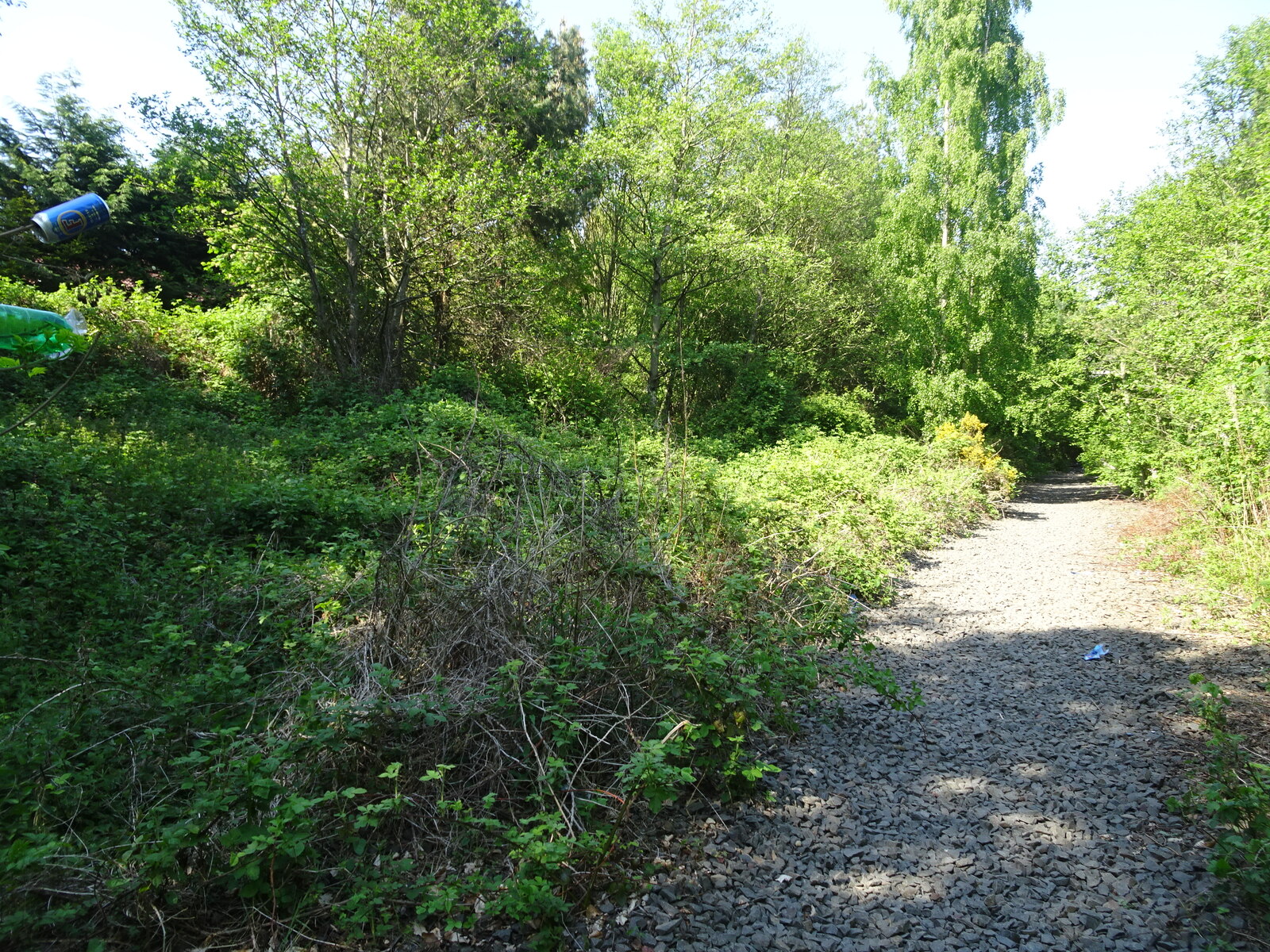
Further links listed by the Wikipedia page (not independently checked): - https://web.archive.org/web/20141103080318/http://www.sunderland.gov.uk/CHttpHandler.ashx?id=6956&p=0 - https://www.jstor.org/action/doBasicSearch?Query=%22Washington,+Tyne+and+Wear%22&acc=on&wc=on - https://musicbrainz.org/area/39558a32-af09-4c02-9315-d36032a16a01 - https://neengland-hoshuko.jimdofree.com/ - https://www.chroniclelive.co.uk/news/north-east-news/washington-metro-stations-happens-next-25436105 - https://www.sunderlandecho.com/news/people/why-washington-had-district-numbers-instead-of-village-names-and-why-the-scheme-was-scrapped-1044461 Image rights Photograph description: Washington 1st railway station (site), Tyne & Wear Opened in 1835 by the Stanhope & Tyne Railway, eventually part of the North Eastern Railway, on the line from Durham Turnpike (Chester-le-Street) to South Shields. This station became a junction in 1840 but was largely replaced by the more conveniently sited 2nd Washington station (see NZ3155 : Washington 2nd railway station (site), Tyne & Wear ) Creator: Nigel Thompson. License: CC BY-SA 2.0 (https://creativecommons.org/licenses/by-sa/2.0). Original image page: https://commons.wikimedia.org/wiki/File%3AWashington_1st_railway_station_(site)%2C_Tyne_%26_Wear_(geograph_6853813).jpg. The image was resized for display; no other changes were made.