LGBTQ+ · Los Angeles
Barbara Hammer’s Los Angeles Roots and a Life in Lesbian Experimental Cinema
Born in Los Angeles and raised in Inglewood, Barbara Hammer became a pioneering filmmaker whose work explored lesbian relationships, gender roles, aging and family life.
By KLGBT News Desk ·
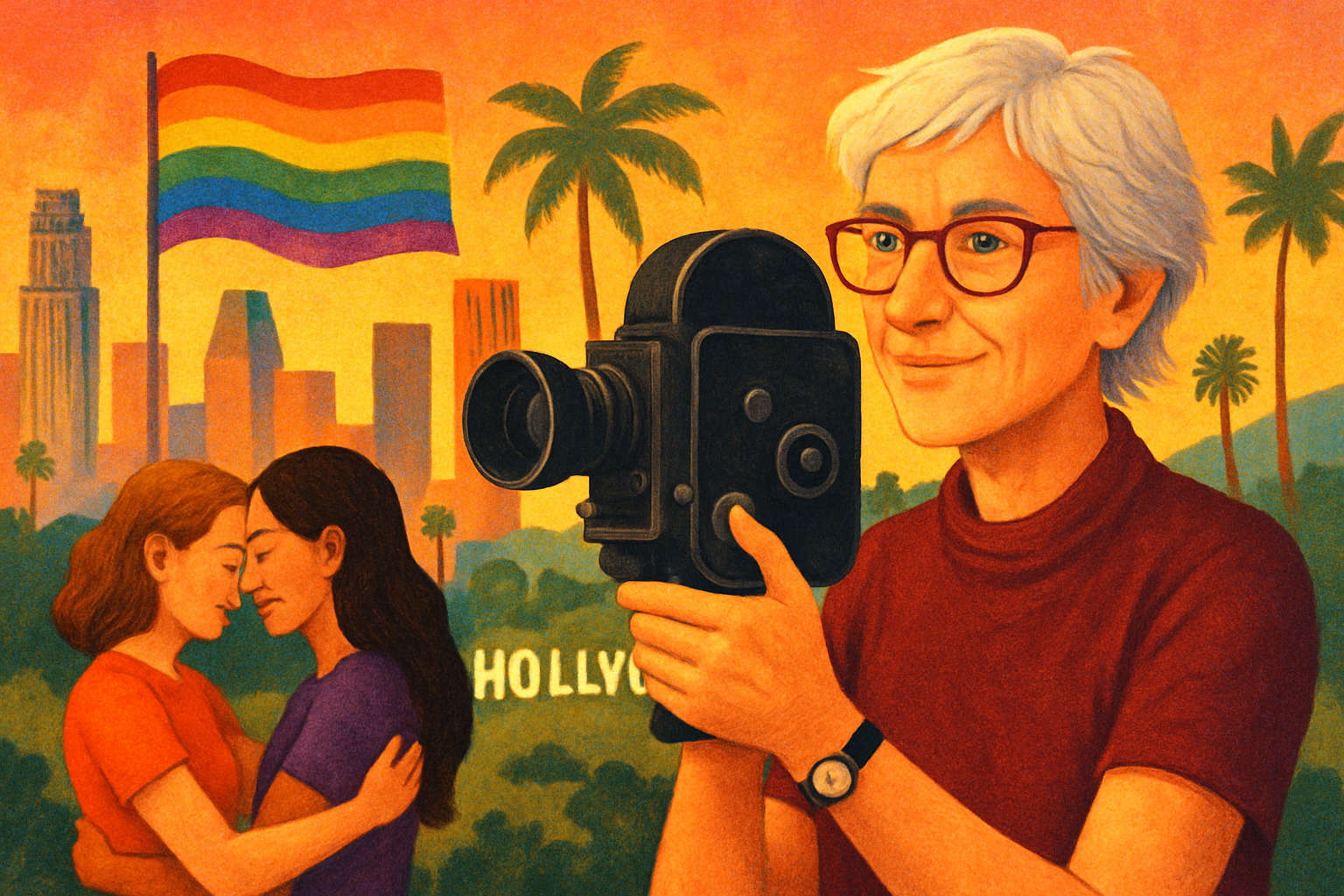
Barbara Hammer, a pioneering figure in lesbian cinema, began her life in Los Angeles before developing a film career that lasted more than five decades. Born on May 15, 1939, she grew up in Inglewood, connecting her early experiences in the region to an artistic practice that would eventually challenge conventional ideas about gender, sexuality and representation.
Hammer was the daughter of Marian Kusz and John Wilber Hammer. Her family had ties to the film world: her mother hoped she might become a child performer in the mold of Shirley Temple, while her grandmother worked as a live-in cook for director D. W. Griffith. Those connections gave Hammer an early familiarity with the industry, although her own path would lead away from mainstream stardom and toward experimental filmmaking.
Her maternal grandparents were Ukrainian, with her grandfather coming from Zbarazh. Hammer was raised without a religion, while her grandmother was Roman Catholic. These details of family background formed part of the personal history surrounding an artist whose later work often examined intimate experience and the structures shaping people’s lives.
In 1961, Hammer earned a bachelor’s degree in psychology from UCLA. Her education in Los Angeles preceded a career as a director, producer, writer and cinematographer. She became known for films addressing women’s issues, including gender roles, lesbian relationships, aging and family life. Through experimental form, her work helped establish lesbian filmmaking as an important area of artistic and cultural production.
Hammer’s career extended across more than 50 years. Rather than treating lesbian lives as a side subject, her films placed them at the center of creative inquiry. Her work also connected sexuality with broader questions about identity, relationships and the experience of growing older. That range made her an influential presence in feminist and queer film history.
Although Hammer later resided in New York City and Kerhonkson, New York, Los Angeles remained part of her story through her birth, childhood and education. Her connection to UCLA also places her within the city’s long history of film study and experimentation. For local LGBTQ audiences, her biography offers a reminder that significant queer cultural work can emerge from the region well beyond Hollywood’s commercial system.
Hammer died on March 16, 2019. Her legacy is tied to the visibility she gave lesbian experience and to the possibilities of experimental cinema. From her beginnings in Los Angeles and Inglewood, she developed an artistic language that made room for subjects mainstream film often left unexplored.
Source and reuse information This backgrounder adapts factual material from “Barbara Hammer” on Wikipedia: https://en.wikipedia.org/wiki/Barbara_Hammer The adapted text is released under the Creative Commons Attribution-ShareAlike 4.0 International license (CC BY-SA 4.0): https://creativecommons.org/licenses/by-sa/4.0/. This story has not been independently reviewed or fact-checked.
Further links listed by the Wikipedia page (not independently checked): - https://viaf.org/viaf/292722145 - https://www.idref.fr/103567259 - https://rkd.nl/en/explore/artists/386648 - https://www.getty.edu/vow/ULANFullDisplay?find=&role=&nation=&subjectid=500352411 - https://d-nb.info/gnd/132780895 - https://www.imdb.com/name/nm0358430/ Image rights Original illustrative artwork created from story keywords. It is illustrative, not a documentary photograph.