LGBTQ+ · Los Angeles
Before Pride, Lisa Ben Made Lesbian Life Visible in Los Angeles
In the late 1940s, Edythe D. Eyde used the name Lisa Ben to create Vice Versa, the first known lesbian publication in North America and a locally circulated landmark in Los Angeles LGBTQ+ history.
By KLGBT News Desk ·
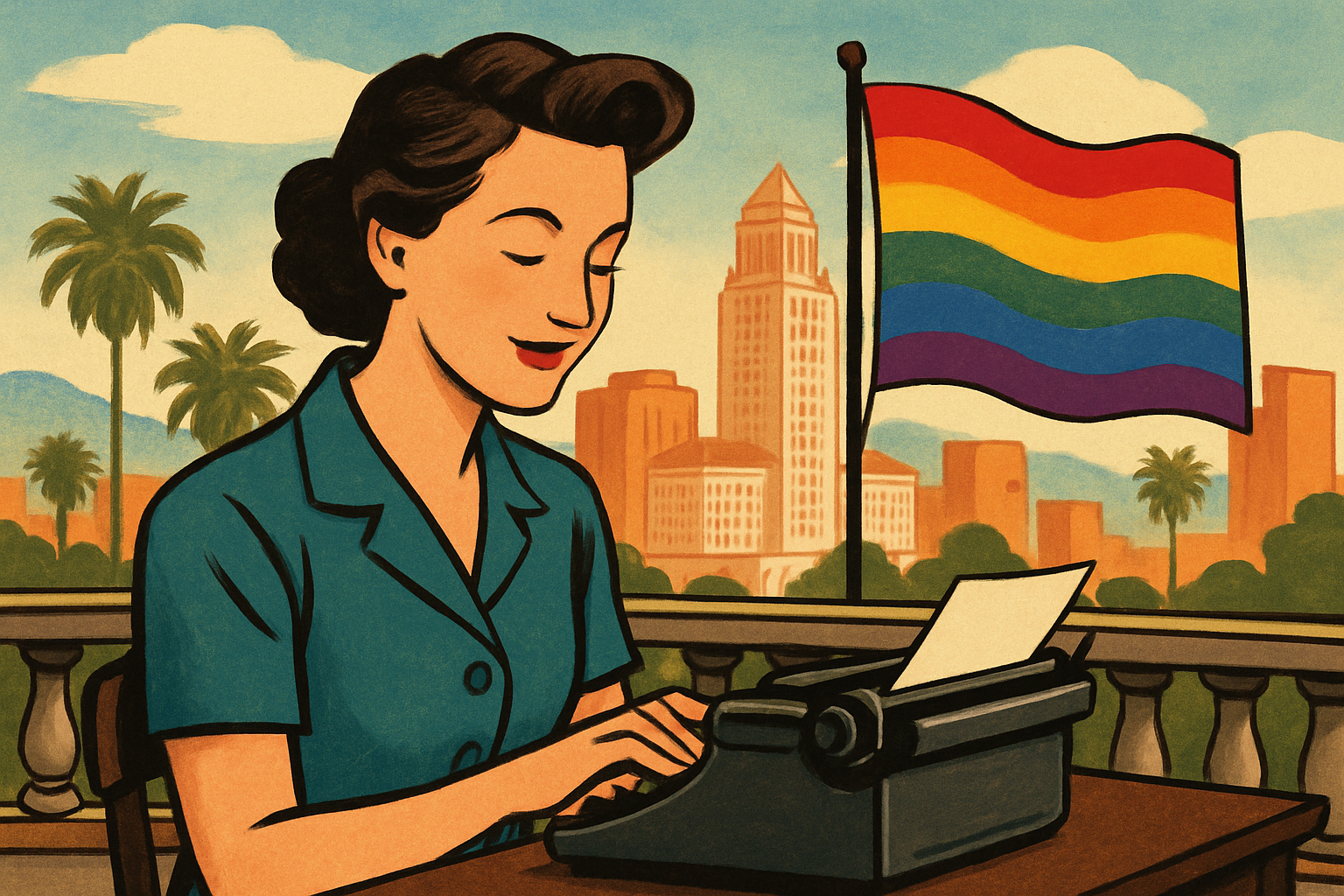
Long before LGBTQ+ publishing became a visible part of American media, Edythe D. Eyde was creating a small but consequential publication in Los Angeles. Under the pen name Lisa Ben, Eyde produced Vice Versa in the late 1940s, a magazine recognized as the first known lesbian publication in North America.
Eyde made and circulated the magazine locally for about a year. Its existence offered a way for lesbian readers to encounter writing and ideas centered on their lives at a time when such perspectives were rarely represented in mainstream publishing. The project also established Los Angeles as an important site in the early history of lesbian print culture.
Born in San Francisco in 1921, Eyde grew up as an only child on an apricot ranch in Fremont Township, California. She studied violin for eight years and developed her first crush on another girl while she was in high school, though she did not identify as a lesbian at that point.
Eyde’s creative life extended beyond Vice Versa. She wrote and edited, contributed to fantasy-fiction fan publications, and used the name Tigrina in those circles. She was also a songwriter. In the years after her work on Vice Versa, she performed as a musician in lesbian bars, connecting her publishing work with the social spaces where lesbians gathered.
The name Lisa Ben carried a playful meaning: it was formed from “lesbian” read backward. That pseudonym allowed Eyde to publish while maintaining separation between her public creative work and her personal identity. Her magazine and later music helped document lesbian life through the culture being created by lesbians themselves.
Eyde’s legacy has been recognized in several ways. She is remembered as a pioneer of the broader LGBT movement and as an early figure in what later became the women in print movement during second-wave feminism. For Los Angeles, her story is especially significant because Vice Versa was not simply associated with the city—it was produced and distributed there.
Eyde died in 2015. Her work remains a reminder that LGBTQ+ media history was built not only through major institutions, but also through small, locally shared publications made by people determined to give their communities a place to see themselves in print.
Source and reuse information This backgrounder adapts factual material from “Lisa Ben” on Wikipedia: https://en.wikipedia.org/wiki/Lisa_Ben The adapted text is released under the Creative Commons Attribution-ShareAlike 4.0 International license (CC BY-SA 4.0): https://creativecommons.org/licenses/by-sa/4.0/. This story has not been independently reviewed or fact-checked.
Further links listed by the Wikipedia page (not independently checked): - https://www.washingtonpost.com/news/checkpoint/wp/2018/01/03/in-the-washington-post-letters-from-war-project-a-lesbian-pioneer-makes-a-surprise-appearance/ - https://www.imdb.com/name/nm0069992/ - https://www.washingtonpost.com/news/retropolis/wp/2017/07/10/a-magazine-for-lesbians-was-illegal-70-years-ago-she-created-one-anyway/ - https://www.nlgja.org/lisa-ben-award-for-achievement-in-features-coverage/ - https://viaf.org/viaf/9581154441766535460004 - https://web.archive.org/web/20061113194021/http://www.queertheory.com/histories/b/ben_lisa.htm Image rights Original illustrative artwork created from story keywords. It is illustrative, not a documentary photograph.