LGBTQ+ · Los Angeles
Before Pride Was Mainstream, Downtown Los Angeles Was a Center of LGBTQ Life
From a 19th-century restaurant to the gathering places known as The Run, early LGBTQ social life helped shape Los Angeles’s public history and entertainment culture.
By KLGBT News Desk ·
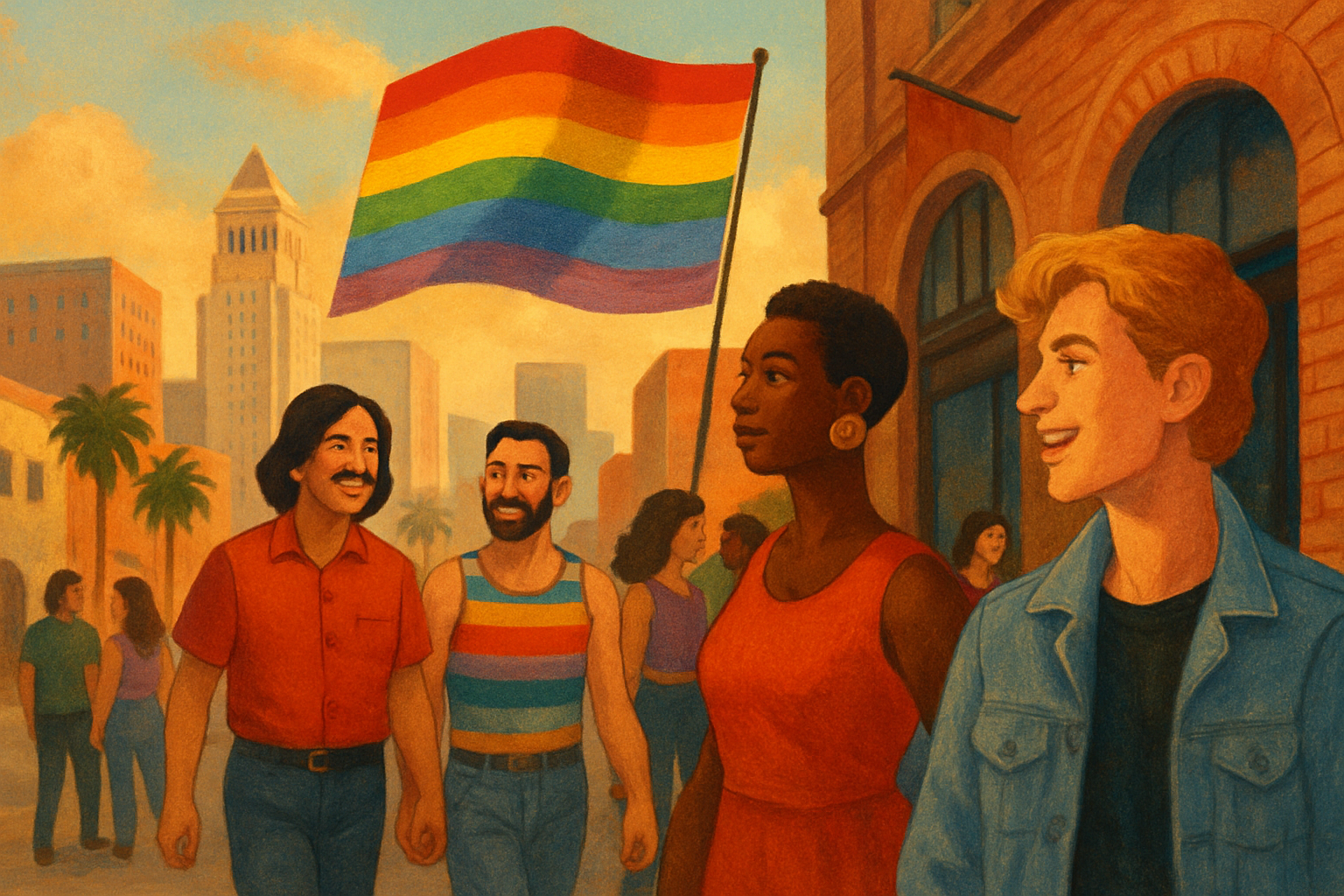
Los Angeles’s LGBTQ history reaches back well before the city became internationally associated with Hollywood and large-scale Pride celebrations. Early records show that LGBTQ Angelenos created social spaces in the city even when public acceptance and legal protections were limited.
One documented gathering place was the Vienna Buffet, a restaurant with live music on Court Street, near the area that is now Los Angeles City Hall. Between 1891 and 1902, gay men gathered there, making the venue one of the earliest recorded sites of male same-sex social activity in Los Angeles. The restaurant’s existence points to a broader history often obscured by the city’s later reputation as a center of entertainment: LGBTQ people were already finding one another, building community and establishing places for social connection.
By the 1920s, much of that activity had shifted toward an area known as The Run. Centered around Pershing Square and extending through much of the Downtown Historic Core, The Run included a network of establishments and public locations where LGBTQ people could meet. Among the places associated with this scene were the Los Angeles Central Library, the Grand Avenue Bar at the Biltmore Hotel and restrooms in the Subway Terminal Building.
These locations were not simply isolated points on a map. Together, they formed part of an urban social world in which people could seek companionship, recognition and a degree of freedom. The history also illustrates how LGBTQ life in Los Angeles developed through both commercial venues and public spaces, rather than in one officially designated neighborhood.
That landscape changed in 1951, when Pershing Square was removed to make room for a three-level underground parking garage. The project eliminated the park’s dense foliage, altering a setting that had been important to the area’s social life. The change reflected the vulnerability of LGBTQ gathering places: spaces that served a community could disappear through redevelopment without that community having meaningful control over their future.
Los Angeles is sometimes portrayed as politically detached, but its LGBTQ history challenges that simplified image. The city has been a setting for major chapters in the pursuit of visibility, community and civil rights. LGBTQ Angelenos also contributed significantly to the growth of the entertainment industry, linking the story of queer life in the region to one of the city’s most influential cultural institutions.
Remembering places such as the Vienna Buffet and The Run expands the history of Los Angeles beyond famous names and later milestones. It shows that LGBTQ community-building was part of the city’s development from the late 19th century onward—and that public visibility has long depended on the ability to gather, connect and remain present in the urban landscape.
Source and reuse information This backgrounder adapts factual material from “LGBTQ culture in Los Angeles County” on Wikipedia: https://en.wikipedia.org/wiki/LGBTQ_culture_in_Los_Angeles_County The adapted text is released under the Creative Commons Attribution-ShareAlike 4.0 International license (CC BY-SA 4.0): https://creativecommons.org/licenses/by-sa/4.0/. This story has not been independently reviewed or fact-checked.
Further links listed by the Wikipedia page (not independently checked): - https://books.google.com/books?id=AXt-qO9LFNwC&pg=PT58 - https://books.google.com/books?id=mZm0AAAAQBAJ&pg=PA268 - https://oac.cdlib.org/findaid/ark:/13030/c8z89fjx/ - https://oac.cdlib.org/findaid/ark:/13030/kt1779r55b/ - https://oac.cdlib.org/findaid/ark:/13030/c81g0pcv/ - https://oac.cdlib.org/findaid/ark:/13030/kt1f59r455/ Image rights Original illustrative artwork created from story keywords. It is illustrative, not a documentary photograph.