LGBTQ+ · Los Angeles
Before Stonewall’s Echo in Los Angeles, John Rechy Wrote of Cooper Do-nuts
John Rechy’s 1963 novel City of Night connects a cross-country hustler’s journey with a stark literary account of Los Angeles queer life, including the 1959 Cooper Do-nuts Riot.
By KLGBT News Desk ·
Long before Los Angeles queer history was routinely documented in mainstream publishing, John Rechy placed the city inside a novel about survival, desire and hustling. City of Night, published by Grove Press in New York in 1963, follows an unnamed young man who travels across the country while working as a hustler. Los Angeles is one of the locations that gives the book its shape—and one of the places where its fiction meets a documented moment in LGBTQ+ history.
Rechy’s narrator moves among New York, Los Angeles, San Francisco and New Orleans, encountering people whose relationships with him vary from sexual to emotional and from familiar to unsettling. The novel’s language reflects its subject: it uses a stream-of-consciousness style and presents hustling in an unvarnished, exposé-like manner. Rechy refers to the hustlers in the book as “youngmen,” a term that becomes part of the novel’s distinctive view of identity and work.
The Los Angeles material also includes Rechy’s account of the Cooper Do-nuts Riot, which took place in 1959. Cooper Do-nuts was a gathering place for lesbians, gay men, transgender people and drag queens. The extract describes these patrons as people who were frequently harassed by the Los Angeles Police Department and says they fought back during the incident.
That inclusion gives City of Night a particular value for readers interested in the city’s queer past. The book is not presented as a conventional history of Los Angeles, nor does it focus only on organized activism. Instead, its perspective comes through a fictional traveler moving between commercial sex, chance encounters and nightlife. The result is a portrait of queer life shaped by vulnerability, performance and the search for connection.
City of Night had already begun reaching readers before its book publication. Excerpts appeared in Evergreen Review, Big Table, Nugget and The London Magazine. Its 1963 release brought the larger work into print while preserving the novel’s attention to people and spaces often excluded from respectable public narratives.
For a Los Angeles audience, the Cooper Do-nuts passage is especially significant because it places a local act of resistance within a work of LGBTQ+ literature. Rechy’s novel does not simply use the city as a backdrop. Los Angeles becomes one of the locations through which the book examines how queer people navigated desire, policing, money and community in the period before the modern LGBTQ+ rights movement had taken its familiar form.
Source and reuse information This backgrounder adapts factual material from “City of Night” on Wikipedia: https://en.wikipedia.org/wiki/City_of_Night The adapted text is released under the Creative Commons Attribution-ShareAlike 4.0 International license (CC BY-SA 4.0): https://creativecommons.org/licenses/by-sa/4.0/. This story has not been independently reviewed or fact-checked.
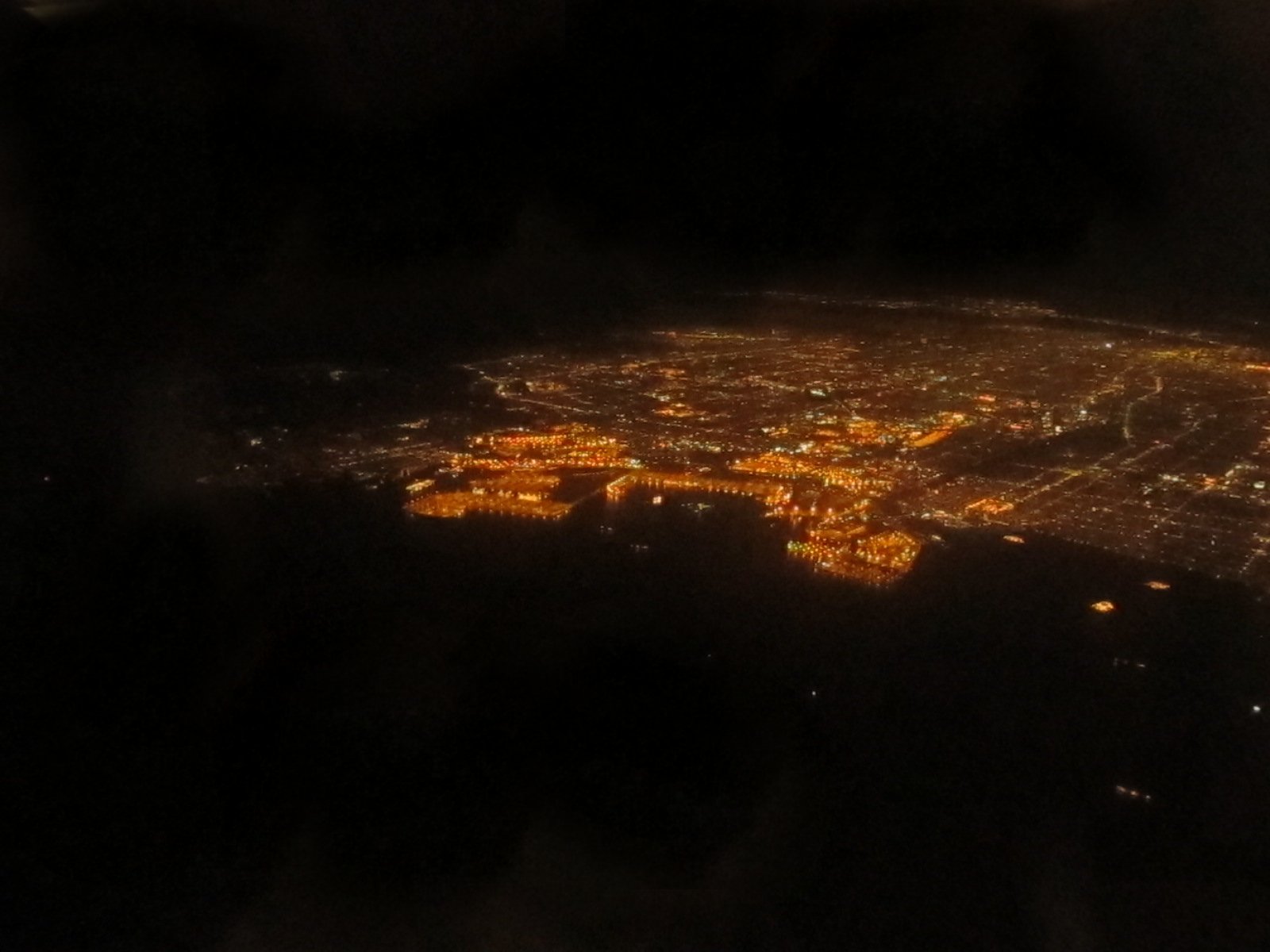
Further links listed by the Wikipedia page (not independently checked): - https://www.youtube.com/watch?v=Hw9PBxdH9NA - https://www.flickr.com/photos/13313279@N04/sets/72157625652290628/show/ - https://www.amazon.com/gp/cdp/member-reviews/A3ASNS9MQRU0FZ/ref=pdp_new_read_full_review_link?ie=UTF8&page=1&sort_by=MostRecentReview#RYE24RTKY9937 - https://web.archive.org/web/20150206200254/http://www.glbtq.com/literature/rechy_j.html - https://web.archive.org/web/20150206190742/http://www.glbtq.com/blogs/john_rechys_city_of_night_at_.html - https://archive.org/details/isbn_9780312252670 Image rights Photograph description: The Port of Long Beach, also known as Long Beach’s Harbor Department, is the second busiest container port in the USA after the Port of Los Angeles, which it adjoins. Acting as a major gateway for U.S.-Asian trade, the port occupies 3,200 acres (13 km2) of land with 25 miles (40 km) of waterfront in the city of Long Beach, California. The Port of Long Beach is located less than two miles (3 km) so Creator: Ken Lund from Reno, Nevada, USA. License: CC BY-SA 2.0 (https://creativecommons.org/licenses/by-sa/2.0). Original image page: https://commons.wikimedia.org/wiki/File%3APorts_of_Long_Beach_and_Los_Angeles_After_Takeoff_from_Long_Beach_Airport%2C_California_(6026687361).jpg. The image was resized for display; no other changes were made.