LGBTQ+ · Los Angeles
Blake McIver Ewing’s Path From Child Actor to LGBTQ+ Artist in Los Angeles
The Los Angeles-based performer has connected a career in television, music and stage work with public advocacy shaped by his experience as a gay teenager.
By KLGBT News Desk ·
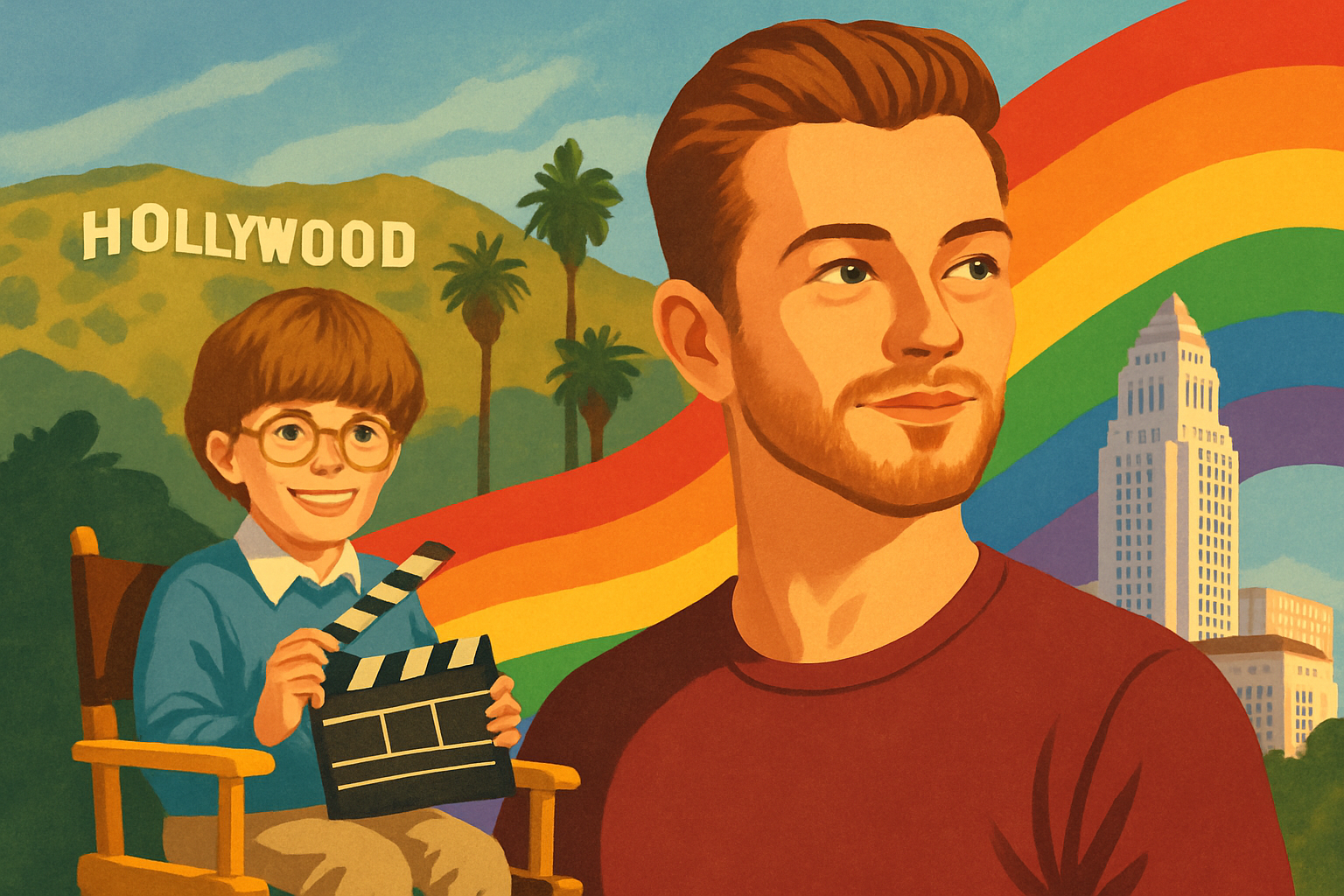
Blake McIver Ewing’s career has moved across some of the most recognizable corners of American entertainment: family sitcoms, children’s animation, feature films, reality television, theater and music. For LGBTQ+ audiences, his work also includes a public commitment to visibility and equality shaped by his own experience growing up gay.
Ewing became widely known as a child performer. He appeared as Derek, a friend of Michelle Tanner, on Full House and later returned to the role for Fuller House. In film, he played Waldo in the 1994 version of The Little Rascals. His television voice work included Eugene on Hey Arnold!, where he took over the character during the show’s fifth season.
His career later expanded beyond acting. Ewing was among the hosts of Bravo’s The People’s Couch, and he developed a parallel identity as a singer and songwriter. He co-wrote and performed “Along the River,” the end-credit song for the film End of the Spear. His first album, The Time Manipulator, came out in May 2014.
Los Angeles played a direct role in that musical chapter. During 2013, Ewing worked as a go-go dancer in the city, using the income to help complete his record. The experience reflects the range of work that can support an independent creative career, particularly for performers building projects outside the traditional studio system.
Ewing has also used his platform in support of LGBTQ+ youth. He contributed to the It Gets Better Project, identifying his experiences as a gay teenager as a reason for participating. In July 2015, he released “This Is Who We Are,” an equality-focused song that extended his advocacy into his music.
His connection to the Los Angeles arts community includes theater as well as screen and recording work. Ewing received an Ovation Award nomination for playing The Little Boy in the Los Angeles production of Ragtime. He also graduated from UCLA, linking his professional story to one of the region’s major educational and cultural institutions.
Taken together, Ewing’s work presents a portrait of an entertainer whose career did not remain confined to the child-actor roles that first made him recognizable. In Los Angeles, he pursued music, stage performance and nightlife work while speaking publicly about LGBTQ+ identity. His story is notable not only for its range, but also for the way personal experience informed his choice to support equality and queer youth.
Source and reuse information This backgrounder adapts factual material from “Blake McIver Ewing” on Wikipedia: https://en.wikipedia.org/wiki/Blake_McIver_Ewing The adapted text is released under the Creative Commons Attribution-ShareAlike 4.0 International license (CC BY-SA 4.0): https://creativecommons.org/licenses/by-sa/4.0/. This story has not been independently reviewed or fact-checked.
Further links listed by the Wikipedia page (not independently checked): - https://www.imdb.com/name/nm0263945/ - https://www.latimes.com/entertainment/gossip/la-et-mg-full-house-blake-mciver-go-go-dancer-20131102-story.html - https://musicbrainz.org/artist/920e0b41-335f-4791-a6c2-08aeb0643c61 - https://web.archive.org/web/20120522025011/http://www.teenwitchthemusical.com/artists.html - https://web.archive.org/web/20131018201604/http://www.out.com/entertainment/popnography/2013/10/18/child-star-blake-mciver-ewing-grown-and-dashing - https://web.archive.org/web/20140812193200/http://www.ibtimes.com/blake-mciver-interview-former-child-star-talks-new-album-time-manipulator-photos-1580278 Image rights Original illustrative artwork created from story keywords. It is illustrative, not a documentary photograph.