Culture · Los Angeles
In Los Angeles, ONE Archives Preserves the Record of LGBTQ Life
USC’s ONE National Gay and Lesbian Archives holds more than two million items documenting LGBTQ communities, activism, culture and personal histories.
By KLGBT News Desk ·
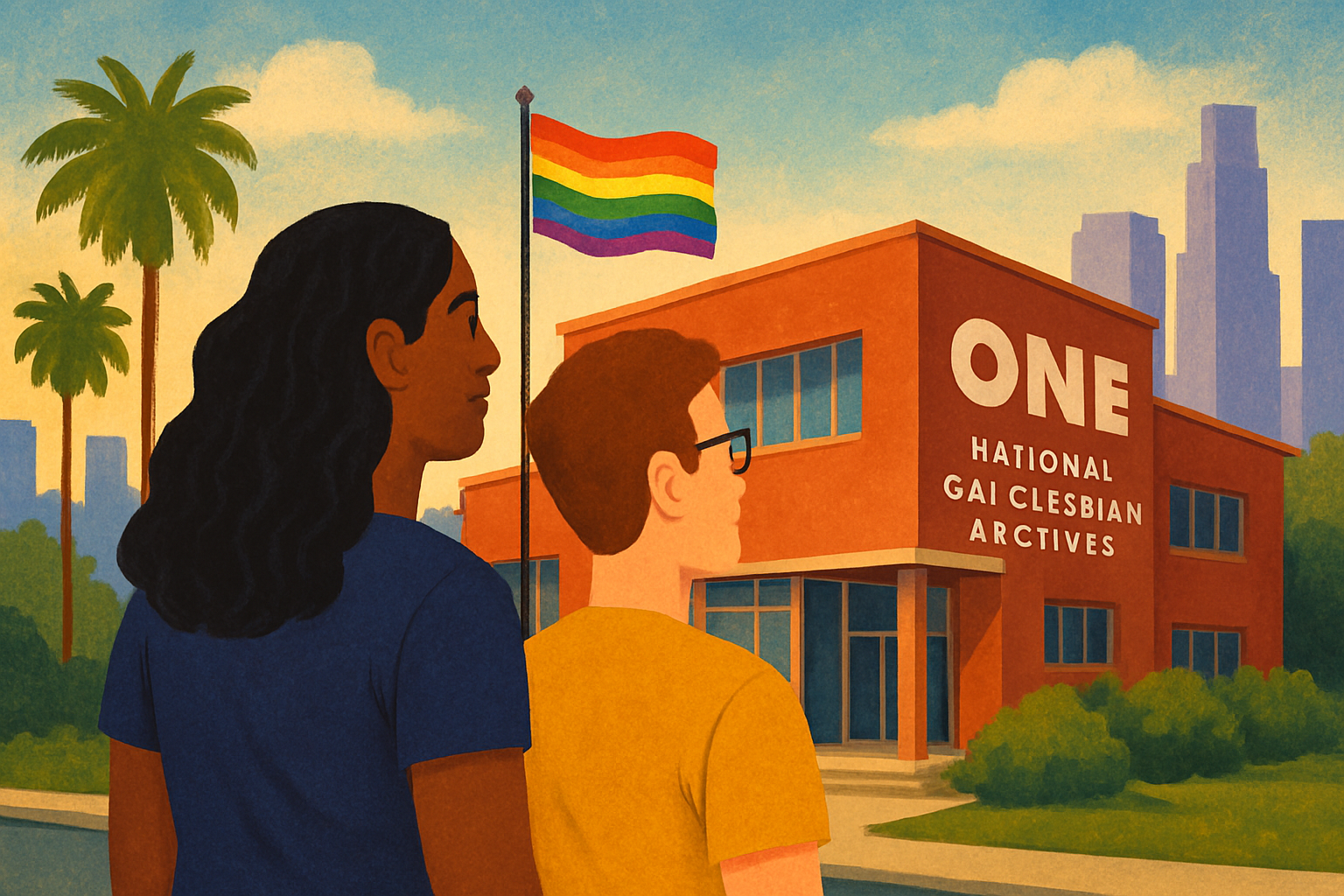
Los Angeles is home to one of the world’s largest collections documenting LGBTQ life: ONE National Gay and Lesbian Archives at the University of Southern California Libraries.
The archive holds more than two million items, making it a significant resource for understanding the people, organizations and cultural work that shaped LGBTQ history. Its holdings include periodicals, books, photographs, artwork, film, video and audio recordings, organizational records, personal papers and ephemera. That last category includes everyday and material objects such as clothing, costumes and buttons—items that can preserve aspects of community life that may not appear in formal records.
ONE Archives traces its origins to the One Institute, which grew out of ONE, Inc. The organization began publishing in 1952, producing what the archive identifies as the earliest national publication for gay readers. In 1956, ONE, Inc. established the One Institute as an academic center focused on the study of homosexuality. At the time, it used the term “Homophile Studies” for that field of work.
The organization’s history also reflects the development of LGBTQ archiving in Los Angeles. In 1994, ONE, Inc. merged with the International Gay and Lesbian Archives, which was run by archivist and LGBTQ movement figure Jim Kepner. After that merger, the organization operated exclusively as an LGBTQ archive.
ONE Archives became part of the USC Libraries in 2010. Its current home within a major university library system connects a long-running community archive with an academic research institution, while retaining a focus on LGBTQ materials and history.
For Angelenos, the archive offers a way to encounter LGBTQ history through both widely circulated publications and personal or organizational records. A periodical can show how communities communicated with one another; photographs and recordings can preserve events and voices; and personal papers can reveal the experiences behind larger movements. Clothing, buttons and other ephemera can likewise document identity, protest, social gatherings and cultural expression.
Use of the collections is free during regular business hours. That makes the archive accessible not only to scholars, but also to community members, students and others interested in exploring LGBTQ history through original materials.
As LGBTQ communities continue to build new records in digital and physical formats, ONE Archives stands as a Los Angeles-based institution preserving earlier generations’ stories. Its collections span media, organizations and individual lives, offering a broad record of how LGBTQ people documented themselves and their communities over time.
Source and reuse information This backgrounder adapts factual material from “ONE National Gay & Lesbian Archives” on Wikipedia: https://en.wikipedia.org/wiki/ONE_National_Gay_%26_Lesbian_Archives The adapted text is released under the Creative Commons Attribution-ShareAlike 4.0 International license (CC BY-SA 4.0): https://creativecommons.org/licenses/by-sa/4.0/. This story has not been independently reviewed or fact-checked.
Further links listed by the Wikipedia page (not independently checked): - https://web.archive.org/web/20110803195237/http://www.onearchives.org/images/one-usc_pressrelease.pdf - https://www.onearchives.org/ - https://geohack.toolforge.org/geohack.php?pagename=ONE_National_Gay_%26_Lesbian_Archives¶ms=34.03101_N_118.28157_W_type:landmark_globe:earth_region:US- - https://www.oneinstitute.org/about/ - https://one.usc.edu/about/history#:~:text=In%20October%202010,%20the%20collections,LGBTQ%20materials%20in%20the%20world. - https://one.usc.edu/exhibition/axis-mundo-queer-networks-chicano-la Image rights Original illustrative artwork created from story keywords. It is illustrative, not a documentary photograph.