LGBTQ+ · Los Angeles
Laura Aguilar’s Photographs Made Los Angeles’s Overlooked Lives Impossible to Ignore
The late Los Angeles photographer Laura Aguilar used portraiture and self-portraiture to center queer, brown, working-class, disabled, and fat identities that were often left out of the visual record.
By KLGBT News Desk ·
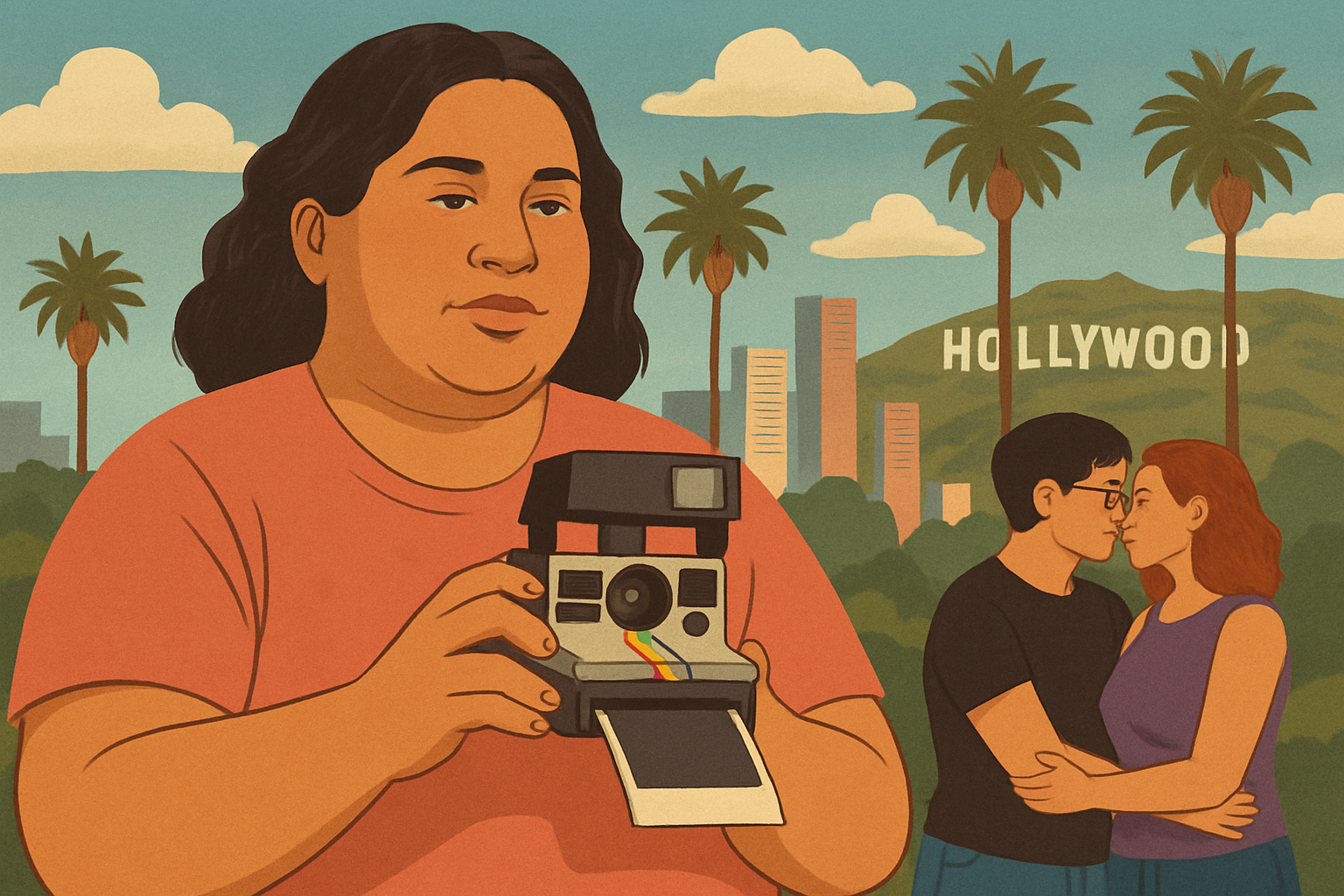
Laura Aguilar’s photographs are rooted in Los Angeles and in a direct question: who gets to be seen, and on whose terms?
Born in 1959, Aguilar became known for portraits that brought marginalized people into focus, particularly members of the Los Angeles queer community and Latinx communities. Her work also made room for identities that were rarely represented together: queer, brown, working-class, disabled, and fat people. Rather than separating those experiences, Aguilar pictured them as interconnected parts of a life.
Photography entered Aguilar’s life through her family. Her brother taught her how to develop photographs in a darkroom, helping set her on the path toward a largely self-taught practice. She later took photography courses at East Los Angeles College, where she held her second solo exhibition, “Laura Aguilar: Show and Tell.”
Aguilar’s camera often turned toward people whose bodies and circumstances had been overlooked by mainstream photography. She also photographed herself, using her own body as a site of inquiry and self-definition. In these images, nudity was not simply a matter of exposure. It became part of Aguilar’s effort to confront inner struggles and reclaim her identity as Laura: a lesbian, fat, disabled, and brown person.
That approach gave her work both personal and communal force. Her photographs did not treat identity as a single category. They showed how sexuality, race, class, disability, and body size can shape the way a person is viewed—and how portraiture can challenge those judgments.
Among Aguilar’s best-known bodies of work are “Three Eagles Flying,” “The Plush Pony Series,” and “Nature Self Portraits.” Together, these projects reflect her interest in self-presentation, intimacy, and the politics of visibility. They also connect her personal exploration to a broader record of queer and Chicana/o life in Los Angeles.
Aguilar’s significance extends beyond the subjects she photographed. Her work has become an important part of Chicano art history and is frequently discussed as an early example of intersectional feminist practice, even before “intersectionality” became common language. That recognition matters because Aguilar was not merely documenting people who had been excluded from view; she was helping redefine what a portrait could hold.
For LGBTQ Angelenos, Aguilar’s legacy lies in that refusal to make any part of a person disappear. Her images insist that queer life can be working-class, brown, disabled, fat, and deeply local—and that these realities deserve not only representation, but dignity, complexity, and authorship.
Source and reuse information This backgrounder adapts factual material from “Laura Aguilar” on Wikipedia: https://en.wikipedia.org/wiki/Laura_Aguilar The adapted text is released under the Creative Commons Attribution-ShareAlike 4.0 International license (CC BY-SA 4.0): https://creativecommons.org/licenses/by-sa/4.0/. This story has not been independently reviewed or fact-checked.
Further links listed by the Wikipedia page (not independently checked): - https://viaf.org/viaf/41751986 - https://helda.helsinki.fi/handle/10138/19183 - https://www.cla.purdue.edu/waaw/corinne/Aguilar.htm - https://pic.nypl.org/constituents/309289 - https://d-nb.info/gnd/174351208 - https://escholarship.org/uc/item/59t9691h#page-1 Image rights Original illustrative artwork created from story keywords. It is not a documentary photograph.