Culture · Los Angeles
‘The Living End’ Turns Los Angeles Into the Starting Point for a Queer Road Movie
Gregg Araki’s 1992 film follows two HIV-positive gay men who meet in Los Angeles and flee together, blending road-movie momentum with the anger and uncertainty of early New Queer Cinema.
By KLGBT News Desk ·
Gregg Araki’s “The Living End” begins in Los Angeles, where a chance encounter pulls two HIV-positive gay men into an increasingly desperate journey. Released in 1992, the film follows Jon, a withdrawn young film critic recently diagnosed with HIV, and Luke, a restless drifter whose volatile choices set the story in motion.
Their meeting comes after Luke’s encounter with violence and loss. After fleeing a deadly confrontation, he is attacked by three men carrying baseball bats. Luke shoots them with a gun he had previously taken from two women who gave him a ride. He then flags down a passing car driven by Jon. Although Jon is reluctant to get involved, he eventually takes Luke with him, setting the pair on the road.
The film’s central relationship develops amid fear, anger and uncertainty. Jon and Luke are not presented as conventional romantic heroes. Jon is isolated and struggling with his diagnosis, while Luke is impulsive and confrontational. Their road trip becomes both an escape from immediate danger and a collision between two very different ways of responding to a hostile world.
For Los Angeles audiences, the film’s opening perspective is especially significant. The city is not simply a backdrop before the characters leave; it is where Jon’s diagnosis, Luke’s flight and their connection converge. That starting point places queer intimacy and the realities of HIV at the center of a story shaped by police violence, homophobic attacks and social alienation.
“The Living End” is widely associated with New Queer Cinema, a wave of independent filmmaking that challenged more polished or reassuring representations of LGBTQ+ life. Its road-movie structure gives Araki room to combine comedy and drama while following characters who are angry, frightened, sexually autonomous and unwilling to fit respectable expectations.
Critics have sometimes compared the film’s two-person flight to “Thelma & Louise,” but its perspective is distinctly queer and tied to the early 1990s. HIV is not a distant issue in the story: both central characters are living with it, and Jon’s diagnosis helps define his emotional state from the beginning. The film treats the disease as part of the characters’ daily reality rather than as a separate medical subplot.
Starring Craig Gilmore as Jon and Mike Dytri as Luke, “The Living End” was nominated for the Dramatic Grand Jury Prize at the 1992 Sundance Film Festival. More than three decades later, its Los Angeles opening remains a useful entry point for considering how queer cinema has represented HIV, violence, desire and resistance outside conventional narratives.
Source and reuse information This backgrounder adapts factual material from “The Living End (film)” on Wikipedia: https://en.wikipedia.org/wiki/The_Living_End_(film) The adapted text is released under the Creative Commons Attribution-ShareAlike 4.0 International license (CC BY-SA 4.0): https://creativecommons.org/licenses/by-sa/4.0/. This story has not been independently reviewed or fact-checked.
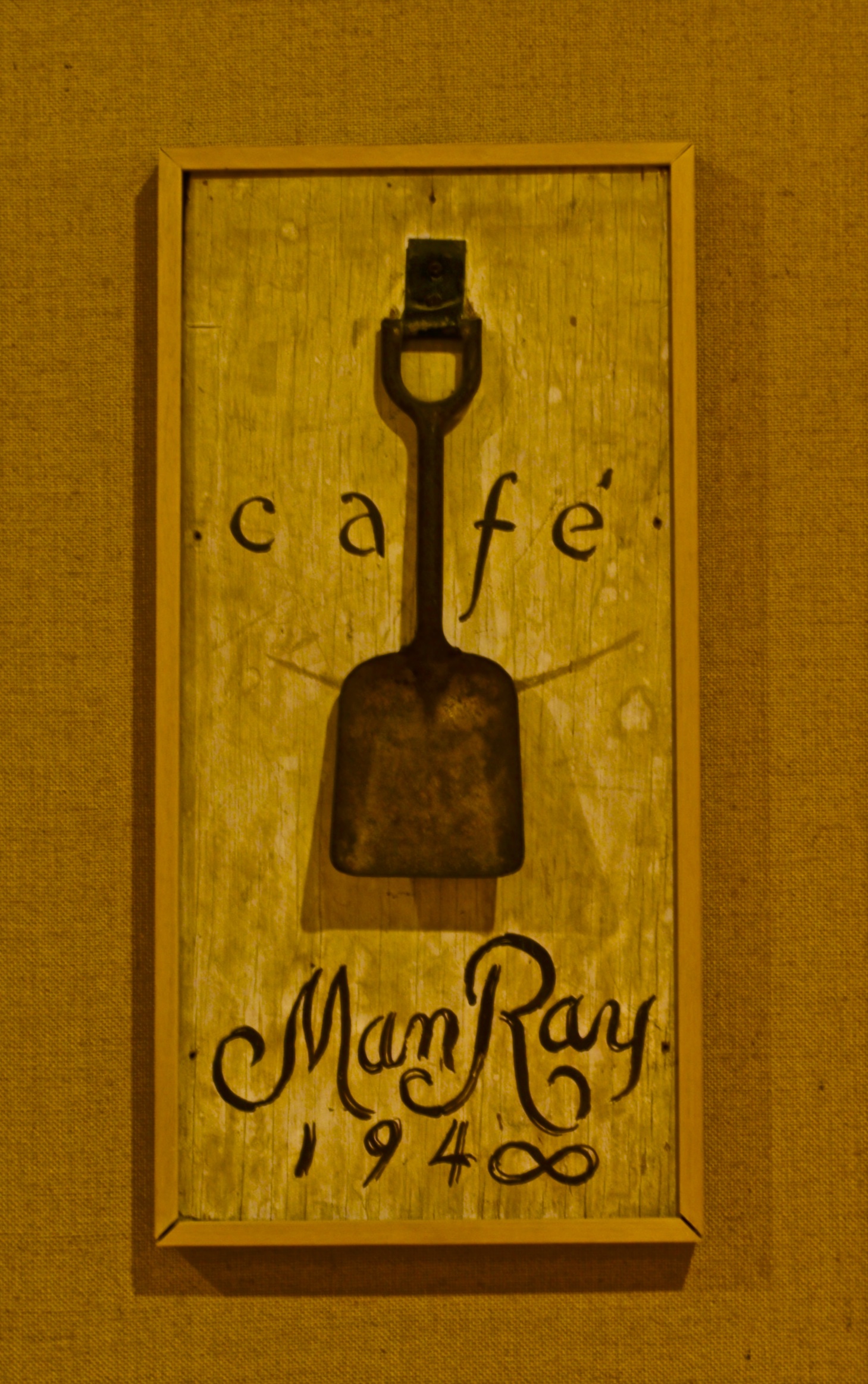
Further links listed by the Wikipedia page (not independently checked): - https://movies.nytimes.com/movie/review?res=9E0CE2DE1F3AF930A35757C0A964958260 - https://www.washingtonpost.com/wp-srv/style/longterm/movies/videos/thelivingendnrkempley_a0a2e2.htm - https://www.imdb.com/title/tt0104745/ - https://www.rollingstone.com/movies/movie-reviews/the-living-end-94743/ - https://web.archive.org/web/20210319070007/https://www.rollingstone.com/movies/movie-reviews/the-living-end-94743/ - https://web.archive.org/web/20210319065938/https://www.nytimes.com/1992/04/03/movies/review-film-festival-the-living-end-footloose-frenzied-and-hiv-positive.html Image rights Photograph description: Belem, Berardo Collection, Centro Cultural de Belem, Lisbon, Portugal MATERIALS : Oil on wood BIOGRAPHY Man Ray (born Emmanuel Radnitzky, August 27, 1890 – November 18, 1976) was an American visual artist who spent most of his career in France. He was a significant contributor to the Dada and Surrealist movements, although his ties to each were informal. He produced major works in a variety of med Creator: Pedro Ribeiro Simões from Lisboa, Portugal. License: CC BY 2.0 (https://creativecommons.org/licenses/by/2.0). Original image page: https://commons.wikimedia.org/wiki/File%3ACaf%C3%A9_Man_Ray_(1968)_-_Man_Ray_(1890_-_1976)_(23464981861).jpg. The image was resized for display; no other changes were made.