LGBTQ+ · Los Angeles
Virginia Prince: The Los Angeles Roots of a Transgender Activist
Born in Los Angeles in 1912, Virginia Prince became a transgender activist, magazine publisher and organizer whose work focused on gender expression and support for heterosexual men who cross-dressed.
By KLGBT News Desk ·
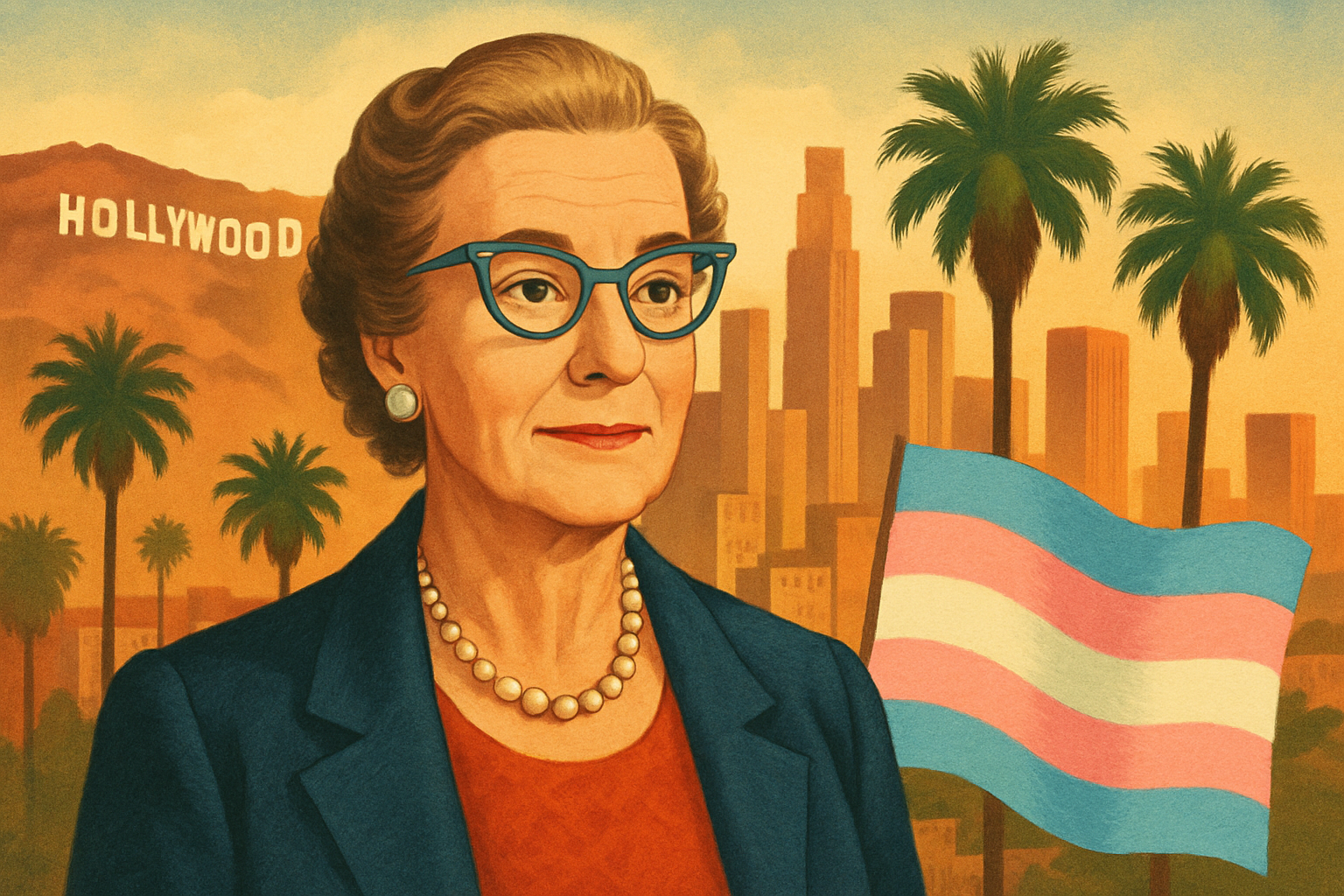
Virginia Charles Prince, a transgender woman who became an activist and publisher, was born in Los Angeles on November 23, 1912. Her early life in the city formed the beginning of a story that would later connect personal gender expression with organized community support.
Prince was assigned male at birth and grew up in a Protestant family. Her father was a surgeon, while her mother worked in real estate investment. Prince described the family as socially prominent, and her childhood was economically privileged.
At about age 12, Prince began wearing women’s clothing, initially using items belonging to her mother. During high school, she cross-dressed more often and discovered that she could be perceived in public as a girl. That experience became especially significant when she was 18 and attended a church Halloween party dressed as a woman. She won first prize at the event, which marked the first time she had knowingly appeared before other people as a girl.
In 1931, Prince enrolled at Pomona College in Claremont, California, where she joined a fraternity and eventually graduated. Her education in Southern California preceded decades of work around gender presentation, identity and community-building.
Prince published Transvestia magazine, creating a platform for people interested in cross-dressing and related questions of gender expression. She also founded an organization called Full Personality Expression. The group later became Tri-Ess and was intended for heterosexual men who cross-dressed.
That focus reflects the language and categories used by Prince and the organizations associated with her work, while also showing the complexity of transgender history. Prince was a transgender woman, but her organizing included support for people whose identities and experiences did not necessarily match her own. Her career therefore sits at an intersection of transgender activism, cross-dressing communities and efforts to make gender expression more visible.
Prince died on May 2, 2009. Her connection to Los Angeles is foundational: the city was where she was born, began experimenting with feminine presentation and first appeared publicly in a way that affirmed this part of her life. For local LGBTQ history, her story offers an example of how private experiences of gender can develop into publishing, organizing and public advocacy.
Source and reuse information This backgrounder adapts factual material from “Virginia Prince” on Wikipedia: https://en.wikipedia.org/wiki/Virginia_Prince The adapted text is released under the Creative Commons Attribution-ShareAlike 4.0 International license (CC BY-SA 4.0): https://creativecommons.org/licenses/by-sa/4.0/. This story has not been independently reviewed or fact-checked.
Further links listed by the Wikipedia page (not independently checked): - https://viaf.org/viaf/29238169 - https://web.archive.org/web/20150211063223/http://www.glbtq.com/social-sciences/prince_vc.html - https://www.digitaltransgenderarchive.net/files/j098zb17n - https://archive.org/details/tvtstapestry61unse/page/40 - https://www.digitaltransgenderarchive.net/files/8c97kq51p - https://archive.org/details/tvtstapestry64unse/page/58 Image rights Original illustrative artwork created from story keywords. It is illustrative, not a documentary photograph.