Culture · Miami
Before New York Made Him Famous, Kevin Aviance Found His Voice in Miami
The dance icon and hate-crime survivor spent part of his early career in Miami, where he developed the performance style that would carry him from queer nightlife to international recognition.
By KLGBT News Desk ·
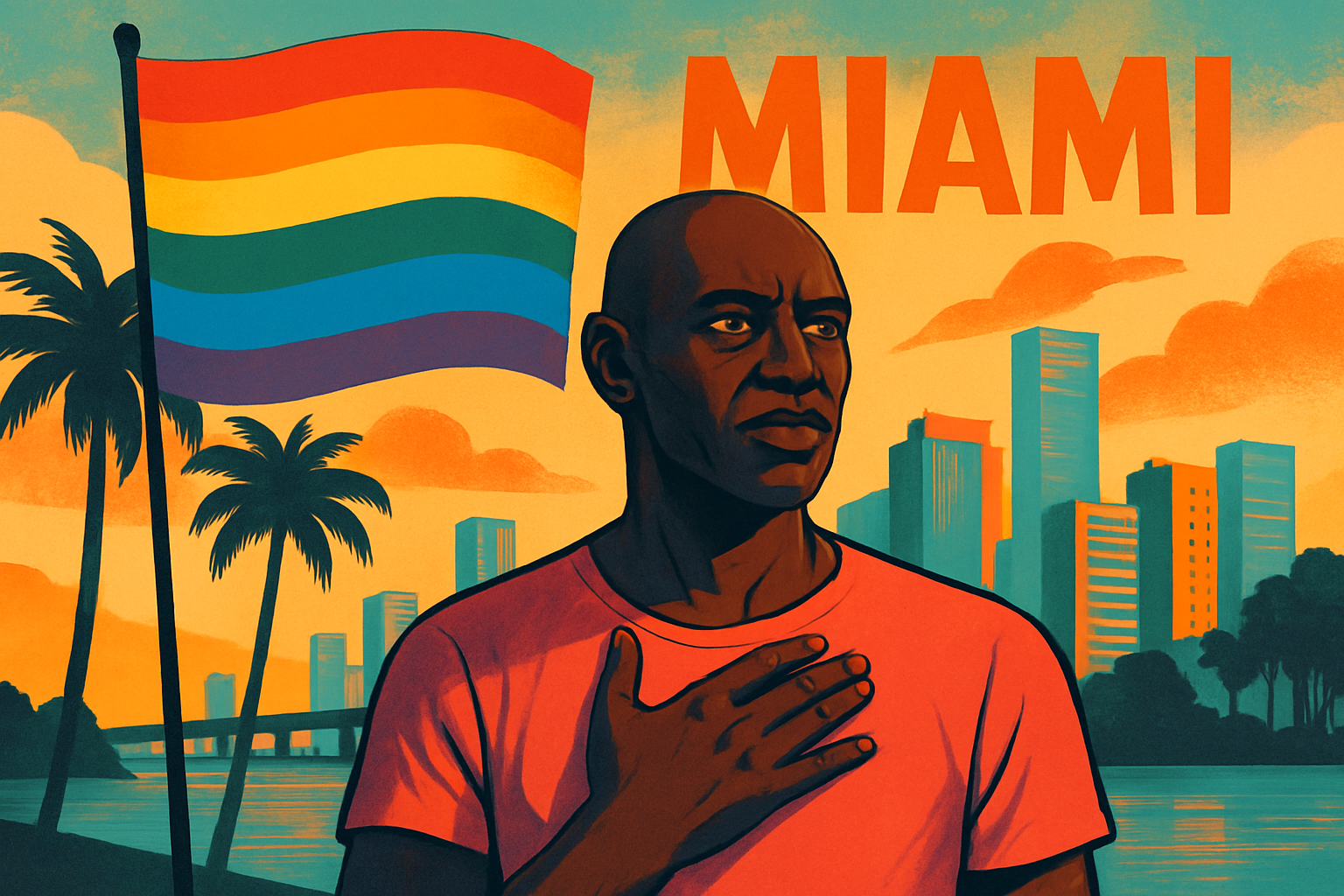
Kevin Aviance is widely associated with New York’s legendary queer nightlife, but Miami was an important stop in the performer’s path to becoming a global dance-music and drag icon.
Aviance moved to Miami in 1991, after growing up in Richmond, Virginia, and spending his early adult years in Washington, D.C. The city gave him time to refine his craft before he relocated to New York two years later. In New York, he became a fixture of gay club culture, appearing in Madonna’s “Secret” video and releasing dance tracks including “Din Da Da,” “Alive,” and “Give It Up.”
His Miami chapter came before the fame that would make him a recognizable figure on dance floors and in queer music history. Aviance’s performance combined drag, ballroom, fashion, and theatricality. His towering heels, sculptural costumes, shaved head, and commanding stage presence made him difficult to overlook in a nightlife culture that often favored narrower ideas of who could be desirable or celebrated.
That visibility also carried risk. In June 2006, after leaving a bar in Manhattan’s East Village, Aviance was followed by a group of men who hurled slurs and objects before surrounding and beating him. The attack broke his jaw. Four people were arrested and later pleaded guilty to assault under agreements that brought six-to-15-year sentences.
The violence affected his body, career, and emotional health. Aviance struggled with drugs and alcohol, entered a 30-day rehabilitation program in 2007, and later underwent hip replacement surgeries. He also lost his mother soon after the attack. Still, he continued making music and performing.
Aviance’s work received a new wave of attention when Beyoncé sampled his 1996 underground anthem “Cunty” on her 2022 album Renaissance. The House of Aviance was also recognized on the “Break My Soul (The Queens Remix),” connecting his club legacy with a younger global audience. In 2023, he launched the CVNTY Ball tour, and he later released the album HIPPOPOTAMUS! while working on more music.
For Aviance, nightlife is more than entertainment. Queer dance spaces have historically helped people find community, share information, raise money, and build chosen family—especially during periods when public institutions offered little support. That history resonates in Miami, a city whose LGBTQ+ nightlife has long provided gathering places for people across generations.
His message to queer people is not to retreat from one another. He urges LGBTQ+ communities to attend events, support performers, check on friends after violence, and remain especially attentive to Black trans women and others who face heightened danger. He also calls on allies to take visible action rather than treating solidarity as a private sentiment.
Aviance’s story links Miami to a broader LGBTQ+ history in which music, drag, and collective celebration have helped people survive hostility. His career began in rooms where queer people gathered in person, and his continuing work argues that those connections still matter.
Source and reuse information This story uses Hate crime survivor Kevin Aviance urges resistance | Advocate.com (https://www.advocate.com/news/culture/kevin-aviance-antigay-resistance) as factual research. Source wording is not reproduced. This citation does not claim or imply a license to republish the source. This story has not been independently reviewed or fact-checked. Image rights Original illustrative artwork created from story keywords. It is not a documentary photograph.