LGBTQ+ · Miami
Before Stonewall, a Miami Flight Helped Expose a National Gay Extortion Ring
A 1960s investigation into impostor police and blackmail reached Miami through an airline clue, revealing how homophobia created a lucrative criminal economy targeting closeted gay men.
By KLGBT News Desk ·
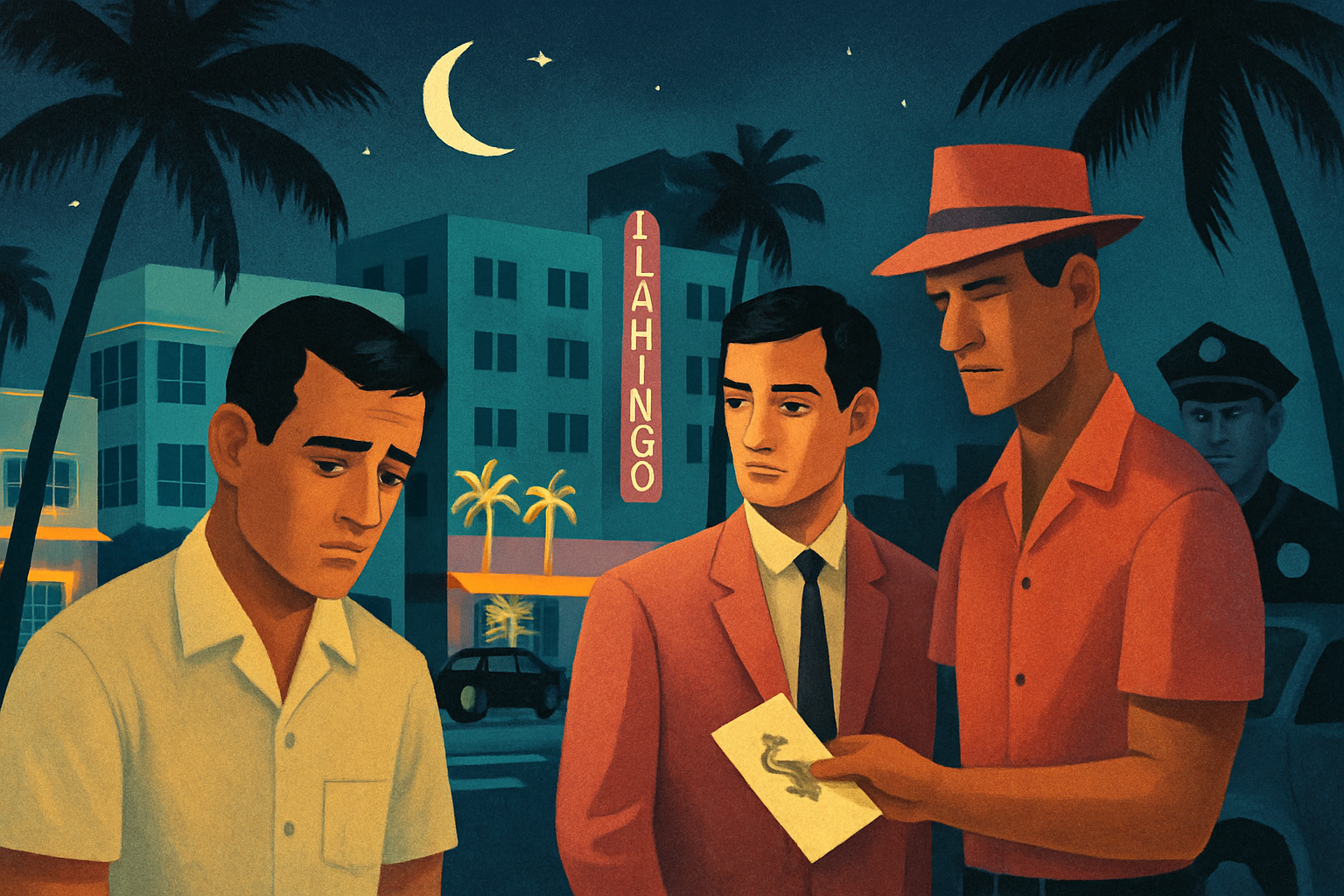
Miami appears only briefly in the surviving account of one of the largest gay extortion investigations in U.S. history—but that connection helped investigators recognize that a series of frightening encounters was part of something much bigger.
In 1965, New York detectives were investigating people who pretended to be police officers and demanded money from gay men. One clue had surfaced earlier aboard an Eastern Airlines flight traveling between New York and Miami: an apparent New York police arrest warrant and a counterfeit detective’s shield. On its own, the discovery looked like evidence of police impersonation. Combined with later cases, it pointed toward an organized blackmail operation with a national reach.
The investigation accelerated after New York detective James McDonnell arrested John Aitken at Grand Central Terminal. Aitken had been posing as a detective while dealing with a 14-year-old runaway. After his arrest, he told investigators about an extortion network that threatened to expose prominent men’s homosexuality unless they paid. His information led to the arrest of Edward Murphy, a security director at the New York Hilton, and helped connect the operation to other cities.
The ring used a system built on the dangers of being publicly identified as gay. Young men—whom police and criminals called “chickens”—were used to attract or identify potential targets. Men posing as officers, or “bulls,” would then claim that a sexual encounter involved a minor or otherwise threatened criminal charges. The impostors offered to make the problem disappear in exchange for cash.
According to the investigation described in the historical account, the targets included senior military officers, a member of Congress, an Ivy League professor, a prep-school headmaster, a surgeon, and entertainment figures. The operation had apparently continued for years, involved a rotating group of about two dozen participants, and collected at least $2 million. Its methods included counterfeit badges, official-looking forms, and forged warrants from jurisdictions around the country.
The Miami reference is significant because it shows how easily the ring’s tools and information could move through national transportation and communication networks. It also underscores why victims had so much to lose. During the 1960s, homosexuality could lead to arrest, professional ruin, divorce, or public humiliation. Police departments themselves frequently targeted gay men through entrapment, while newspapers and scandal publications treated exposure as entertainment. That environment made a false accusation frighteningly credible.
The New York Police Department and FBI pursued the case in parallel, sometimes uneasily. Their response was unusual for the era: rather than treating the targeted men primarily as offenders, investigators treated them as victims of a criminal conspiracy. By 1966, authorities announced that the network had been dismantled.
For LGBTQ people looking back from Miami, the case offers a reminder that the pre-Stonewall story was not only one of protest and liberation. It was also a history of secrecy forced by law and custom—and of criminals who turned that enforced secrecy into profit.
Source and reuse information This story uses The Chickens and the Bulls: The rise and incredible fall of a vicious extortion ring that preyed on prominent gay men in the 1960s. (https://slate.com/human-interest/2012/07/the-chickens-and-the-bulls-the-rise-and-incredible-fall-of-a-vicious-extortion-ring-that-preyed-on-prominent-gay-men-in-the-1960s.html) as factual research. Source wording is not reproduced. This citation does not claim or imply a license to republish the source. This story has not been independently reviewed or fact-checked. Image rights Original illustrative artwork created from story keywords. It is illustrative, not a documentary photograph.