LGBTQ+ · Miami
Miami’s LGBTQ Community Has Deep Roots—and a National Reach
From a nightlife scene documented as early as the 1930s to more than 1 million LGBTQ visitors annually, Miami has developed one of the country’s most prominent LGBTQ communities.
By KLGBT News Desk ·
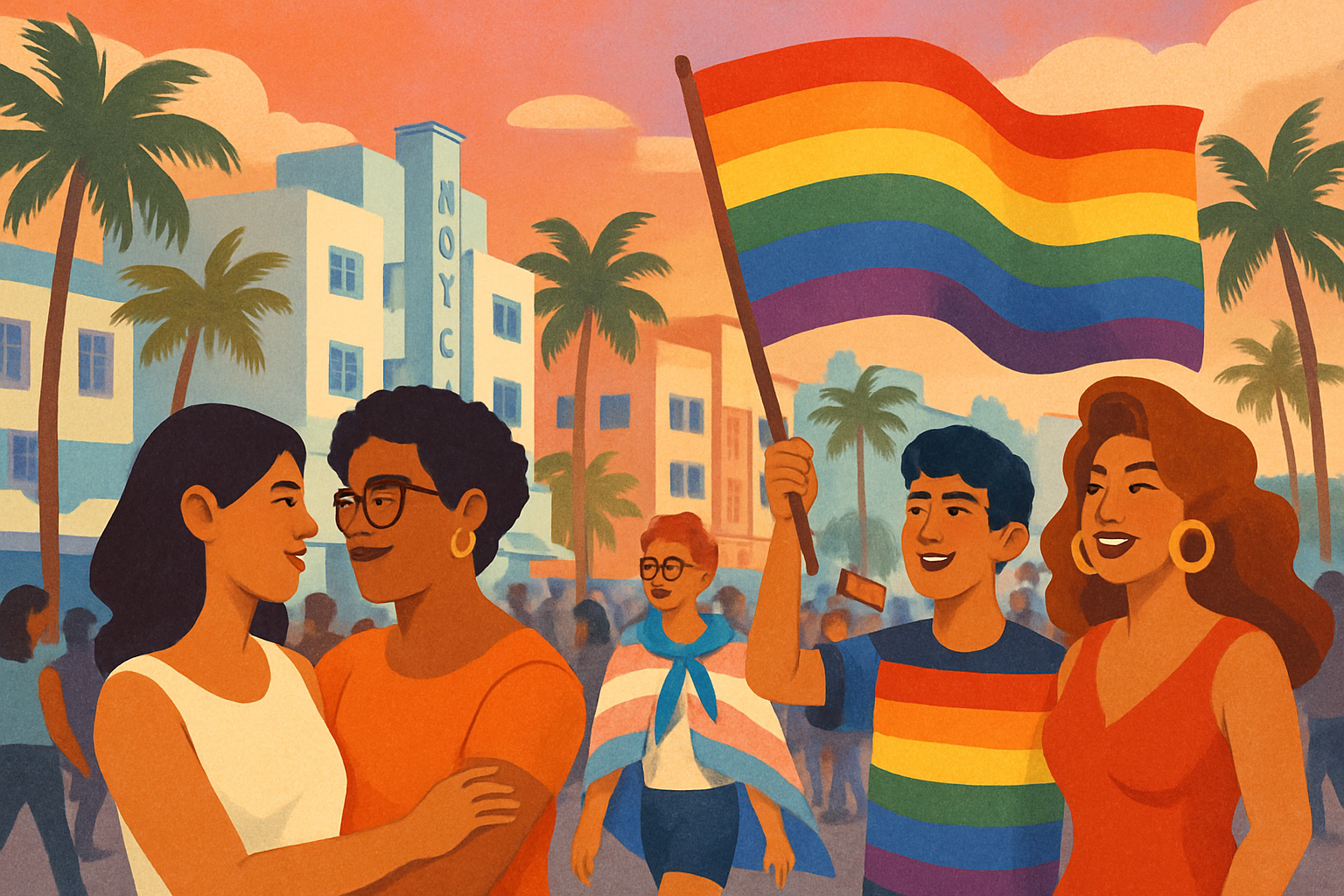
Miami’s reputation as an LGBTQ destination did not emerge overnight. The city had a gay nightlife scene as early as the 1930s, and the Miami area has remained associated with LGBTQ life and travel for decades.
Today, Miami is widely recognized as one of the largest and most prominent LGBTQ communities in the United States. The region’s appeal extends beyond its resident population: more than 1 million LGBTQ visitors come to Miami each year, according to the available research. That steady flow of visitors has helped reinforce the city’s standing as a major LGBTQ destination.
Miami’s LGBTQ presence is also reflected in its business infrastructure. The area is among the relatively few places with its own LGBTQ-focused chamber of commerce, the Miami-Dade Gay and Lesbian Chamber of Commerce. The organization’s existence points to a community with an established network of LGBTQ-owned, LGBTQ-serving and allied businesses.
Population estimates offer another measure of the community’s size, though the figures come from different years and should not be treated as a current census. In 2005, Miami was estimated to have 15,277 people who identified as gay or bisexual. The Miami metropolitan area was estimated to have 183,346 LGBTQ residents. Those estimates describe a substantial regional population, while the annual visitor figure illustrates the community’s broader national and international draw.
Miami’s LGBTQ history also includes conflicts over policing and public treatment. In 2009, the American Civil Liberties Union began examining reports that Miami Beach Police had targeted gay men for harassment. The ACLU said the department had a history of arresting gay men based on perceived sexuality or gender expression. In February 2010, the organization announced plans to sue the City of Miami Beach, alleging an ongoing pattern of targeting and arrests.
The controversy generated negative publicity for Miami Beach and became part of the city’s LGBTQ history. The available account identifies the allegations and the ACLU’s intended legal action, but does not establish the final outcome of the proposed lawsuit.
Together, these details present a city with a long-running LGBTQ cultural presence, a significant visitor economy and institutions built around community life. They also show that Miami’s reputation as an LGBTQ hub exists alongside a history of disputes over safety, policing and equal treatment. For residents and visitors alike, that combination is part of the fuller story of LGBTQ culture in the Miami area.
Source and reuse information This backgrounder adapts factual material from “LGBTQ culture in Miami” on Wikipedia: https://en.wikipedia.org/wiki/LGBTQ_culture_in_Miami The adapted text is released under the Creative Commons Attribution-ShareAlike 4.0 International license (CC BY-SA 4.0): https://creativecommons.org/licenses/by-sa/4.0/. This story has not been independently reviewed or fact-checked.
Further links listed by the Wikipedia page (not independently checked): - https://www.gaybizmiami.com/ - https://www.aclu.org/lgbt-rights/aclu-gives-notice-intent-sue-miami-beach-unlawful-arrest-gay-men-and-individuals-who-rep - https://web.archive.org/web/20110429104006/http://www.miamiherald.com/2011/03/04/2102454/miami-beach-by-the-numbers.html - https://web.archive.org/web/20121101123233/http://www.savedade.org/content/breaking-news-two-new-local-ordinances-support-equality-gay-residents-miami-beach-and-south- - https://www.nbcmiami.com/news/local/Gay-Pride-Parade-Set-to-Take-Over-Miami-Beach-This-Sunday-For-10th-Straight-Year-478979323.html - https://www.miamibeachgaypride.com/ Image rights Original illustrative artwork created from story keywords. It is illustrative, not a documentary photograph.