LGBTQ+ · Miami
When Miami Was Part of a Nationwide Gay Bathhouse Network
Miami was one of dozens of cities connected to Club Baths, a gay bathhouse chain that expanded across the United States and Canada before most locations disappeared in the 1990s.
By KLGBT News Desk ·
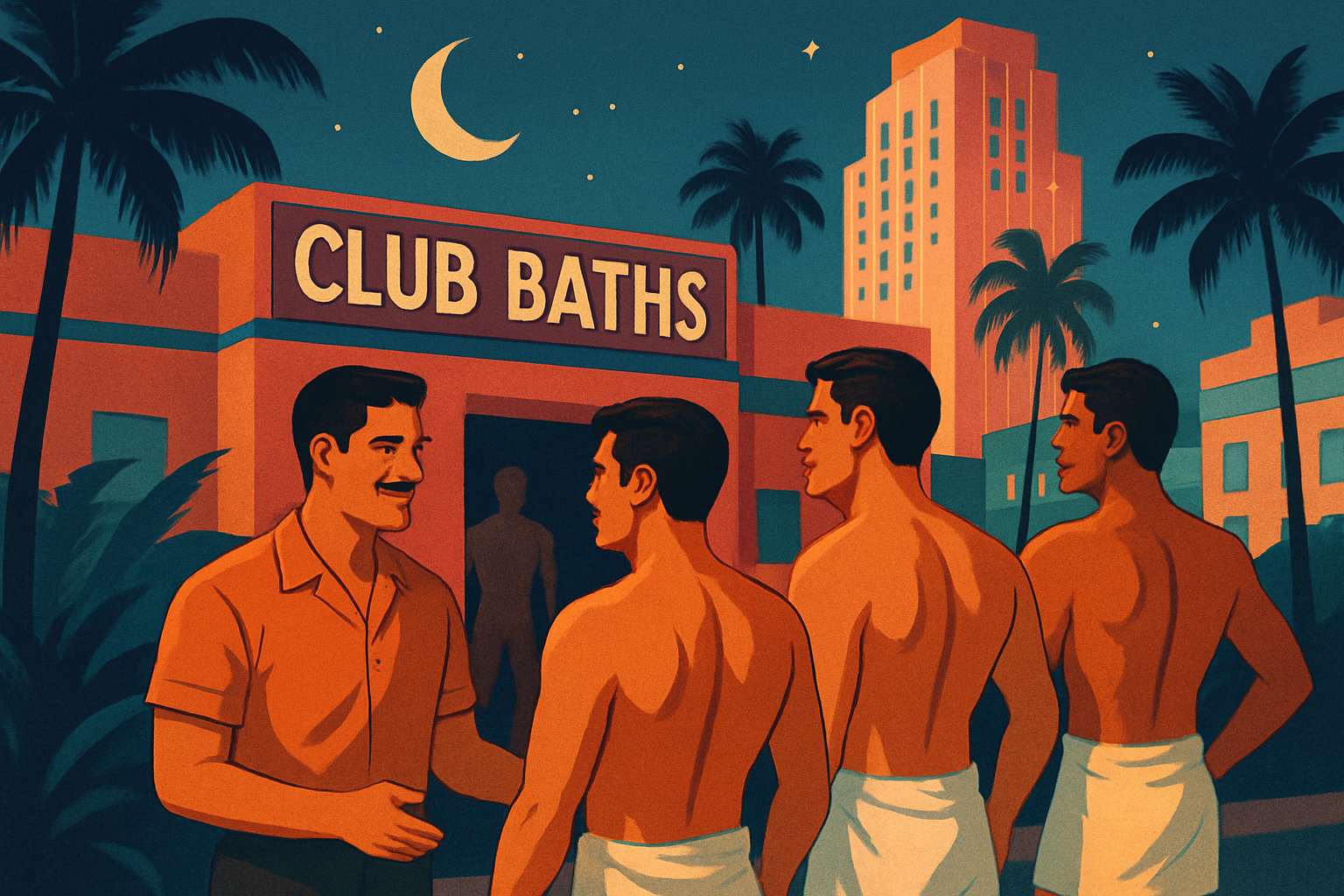
Long before LGBTQ communities had today’s digital networks and public-facing venues, Club Baths linked gay bathhouses across the United States and Canada. Miami was one of the cities in that network, alongside nearby locations in Tampa and Key West.
The chain began in 1965, when John “Jack” W. Campbell and two other investors purchased a closed Finnish bathhouse in Cleveland, Ohio. Their investment was $15,000. Campbell’s stated goal was to create facilities that were cleaner and brighter than the bathhouses he believed had previously defined the market.
From that beginning, Club Baths grew into a large organization. At its height, the chain included 42 locations. The list stretched from major cities such as New York, Chicago, Los Angeles, San Francisco and Washington, D.C., to smaller or regionally important cities including Miami, Jacksonville, Dayton, Providence and Toledo. The network also crossed the border into Canada, with locations in London, Ontario, and Toronto.
Club Baths claimed to have at least 500,000 members. That figure offers a sense of the scale the company sought to achieve, although it represents the chain’s own membership claim rather than an independent count. The bathhouses were part of a period when gay men often built social and sexual networks through dedicated businesses and private spaces, particularly while LGBTQ people faced widespread stigma and discrimination.
By the 1990s, most Club Baths locations had closed. According to the historical account, some were shut down by government agencies, while others were affected by a changing market. The chain also faced accusations that its businesses contributed to the spread of AIDS. Those claims placed bathhouses at the center of public-health and political debates during the epidemic, when gay communities were already confronting fear, loss and intense scrutiny.
The history of Club Baths matters in Miami because the city was not isolated from those national changes. It was one stop in a chain that connected queer spaces across the country, creating a shared commercial model and a recognizable name in gay life from the 1960s through the 1990s. The Miami location’s inclusion in the network also shows how businesses serving gay customers operated across both large metropolitan areas and destinations with different local identities.
Although the chain itself largely vanished, its rise and decline reflect a broader transition in LGBTQ history: the expansion of dedicated gay businesses, followed by the pressures created by the AIDS crisis, government intervention and changing patterns of community life. For Miami, Club Baths is a reminder that the city’s LGBTQ past was connected to a much larger national and cross-border story.
Source and reuse information This backgrounder adapts factual material from “Club Baths” on Wikipedia: https://en.wikipedia.org/wiki/Club_Baths The adapted text is released under the Creative Commons Attribution-ShareAlike 4.0 International license (CC BY-SA 4.0): https://creativecommons.org/licenses/by-sa/4.0/. This story has not been independently reviewed or fact-checked.
Further links listed by the Wikipedia page (not independently checked): - https://web.archive.org/web/20091215035535/http://www.cbcresorts.com/newpagetemp.htm - https://archive.wislgbthistory.com/business/health-clubs/clubbath.htm - https://www.windycitytimes.com/lgbt/If-These-Walls-Could-Talk-Mans-Country-anniversary/39510.html - https://search.worldcat.org/oclc/40668240 - https://www.villagelegacy.ca/items/show/119 - https://www.washingtonpost.com/archive/opinions/1987/11/01/why-aids-spread-so-far-so-fast/b78ecc8d-3293-47b6-b000-f0222159e223/ Image rights Original illustrative artwork created from story keywords. It is illustrative, not a documentary photograph.