LGBTQ+ · New Orleans
Cafe Lafitte in Exile and New Orleans’ LGBTQ Bar History
Cafe Lafitte in Exile traces its New Orleans history to 1933, when its predecessor opened in a building now known as Lafitte’s Blacksmith Shop.
By KLGBT News Desk ·
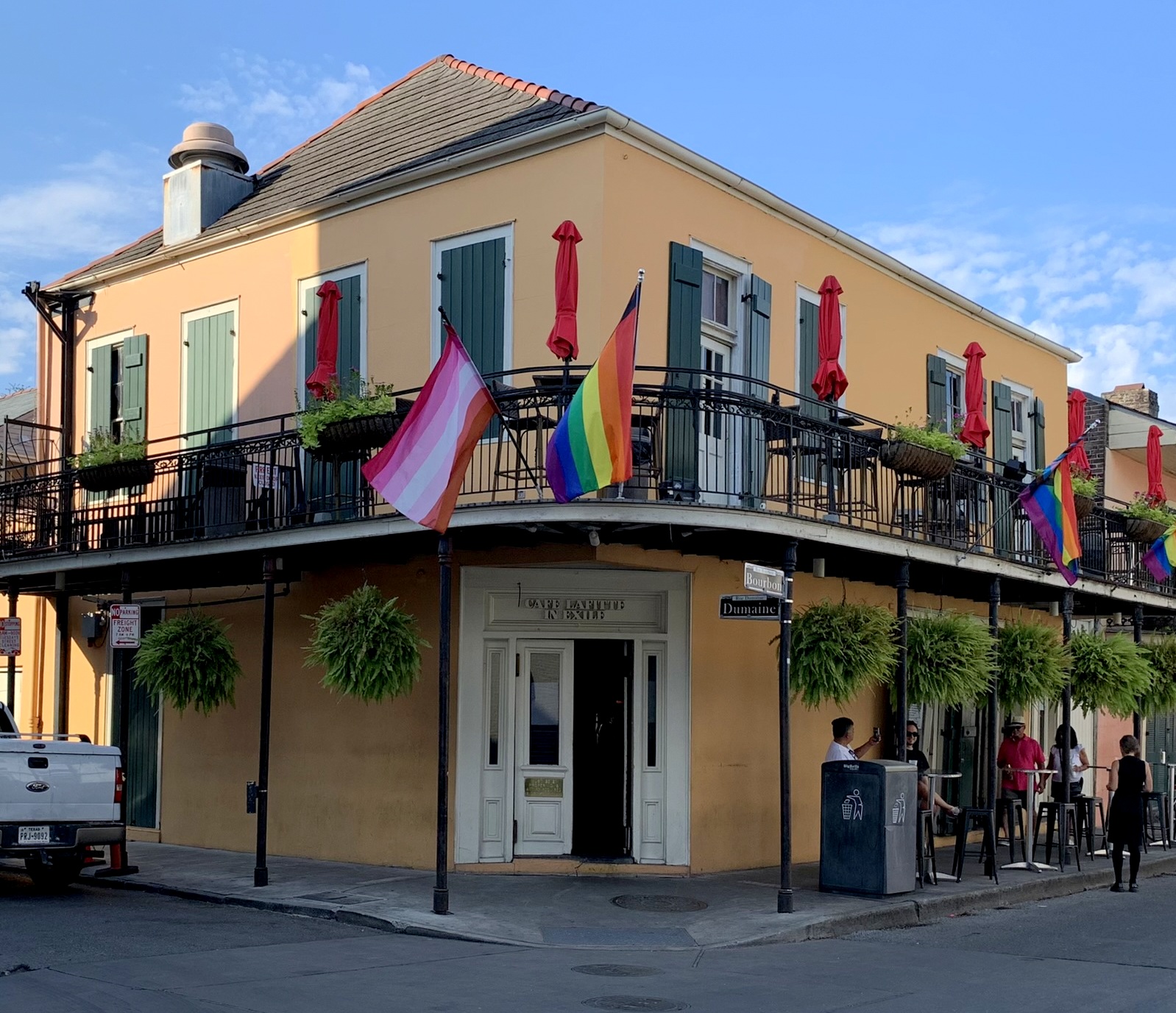
In New Orleans’ French Quarter, Cafe Lafitte in Exile occupies a notable place in the history of LGBTQ nightlife. The bar dates its beginnings to 1933 and identifies itself as one of the oldest continuously operating gay bars in the United States. The White Horse Inn in Oakland, California, also traces its operation to that year.
The establishment’s present name reflects a change of address. The original Cafe Lafitte opened at 941 Bourbon Street, in the historic building associated with pirate Jean Lafitte’s blacksmith business. That structure is now known as Lafitte’s Blacksmith Shop. After business owner Tom Caplinger was required to leave the site, he reopened the bar at 901 Bourbon Street and called it Cafe Lafitte in Exile.
That move is central to how the bar describes its longevity: the business has continued since the end of Prohibition, though it has operated from two different Bourbon Street locations. Its history therefore combines continuity with relocation, linking a longstanding name and community institution to more than one site in the French Quarter.
The bar’s early clientele was not limited to one group. Mary Collins, described as a lesbian, managed the establishment in its early years, when the venue attracted lesbians, gay men and heterosexual patrons. That mixed audience places Cafe Lafitte within a broader social history of nightlife, where a bar could serve as both an LGBTQ gathering place and a destination for people beyond the community.
The account also connects the bar to prominent literary figures. Tennessee Williams and Truman Capote are identified as influential guests. Their association adds a cultural dimension to the venue’s story, but Cafe Lafitte in Exile’s importance does not depend solely on famous visitors. Its enduring significance comes from its claimed continuity as a gay bar in a city whose French Quarter is closely associated with nightlife and public social life.
The bar is open seasonally around the clock. Taken together, its Bourbon Street locations, LGBTQ history and long operation make Cafe Lafitte in Exile a useful point of reference for understanding the persistence of queer nightlife in New Orleans. Its story is also a reminder that institutional continuity can survive a change in address, while preserving a recognizable connection to the city’s past.
Source and reuse information This automatically generated backgrounder adapts text from “Cafe Lafitte in Exile” on Wikipedia: https://en.wikipedia.org/wiki/Cafe_Lafitte_in_Exile The adapted text is released under the Creative Commons Attribution-ShareAlike 4.0 International license (CC BY-SA 4.0): https://creativecommons.org/licenses/by-sa/4.0/. The source article’s linked references are provided below where available. This story has not been independently reviewed or fact-checked.
Further links listed by the Wikipedia page (not independently checked): - https://books.google.com/books?id=99-NtgAACAAJ&q=cafe+lafitte+in+exile - https://books.google.com/books?id=wrZCAQAAIAAJ&q=cafe+lafitte+in+exile - https://geohack.toolforge.org/geohack.php?pagename=Cafe_Lafitte_in_Exile¶ms=29.9604_N_90.0642_W_ Image rights Photograph description: The Cafe Lafitte in Exile is located at 901 Bourbon Street in the French Quarter of New Orleans, Louisiana. Creator: APK. License: CC BY-SA 4.0 (https://creativecommons.org/licenses/by-sa/4.0). Original image page: https://commons.wikimedia.org/wiki/File%3ACafe_Lafitte_in_Exile.jpg. The image was resized for display; no other changes were made.