LGBTQ+ · New York City
Azalea: The New York Magazine Built by Third World Lesbians
Published from 1977 to 1983, Azalea grew from a New York City lesbian organizing group into a quarterly magazine for Black, Asian, Latina, and Native American lesbians.
By KLGBT News Desk ·
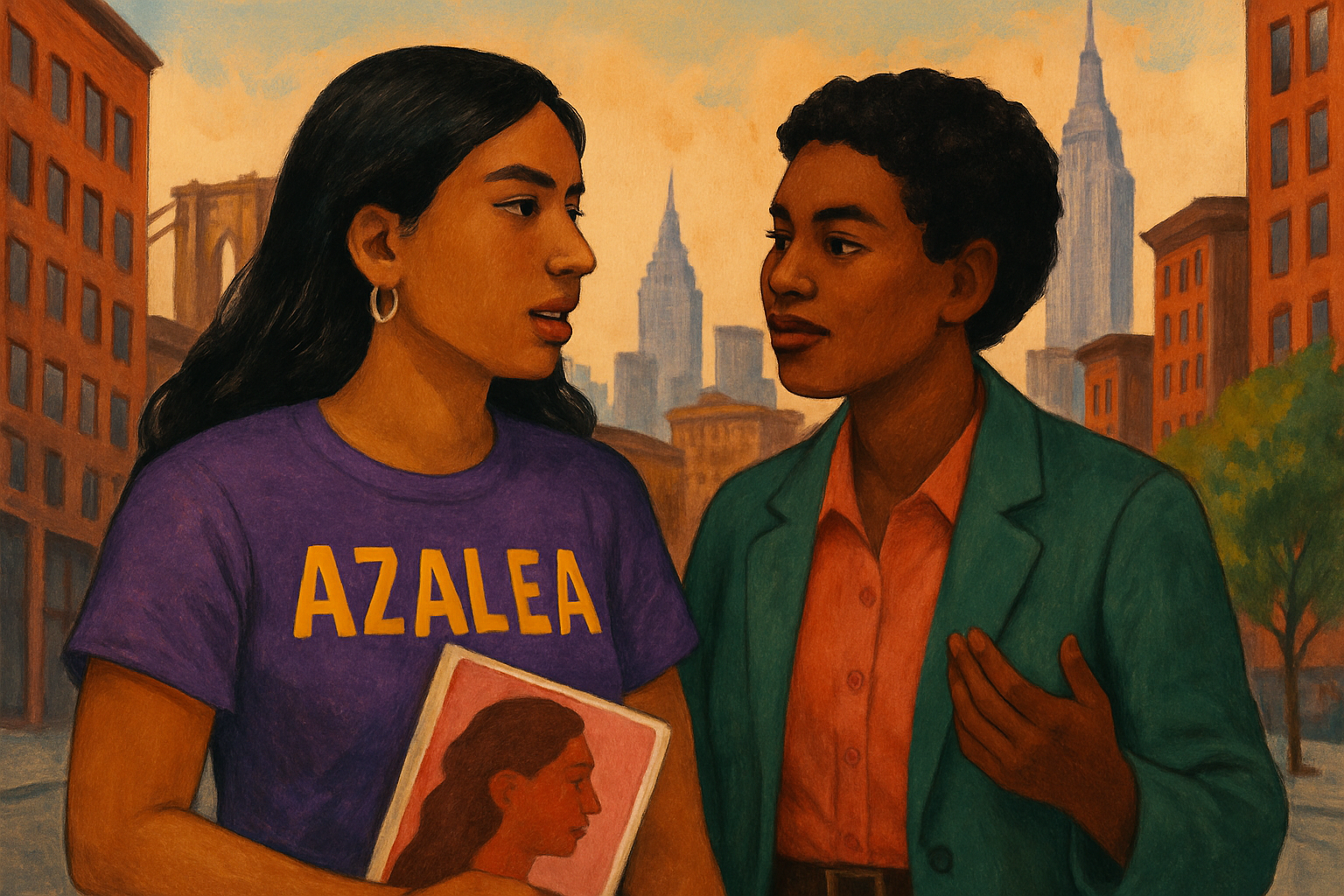
Before Azalea appeared in print, its founders were already organizing in New York City. Joan Gibbs, Robin Christian, and Linda Brown came together in 1974 through the Black Lesbian Caucus of the Gay Activists Alliance. Their work grew from a gap in the feminist and lesbian press: publications of the period were not offering enough space for the writing and experiences of women of color.
Rather than wait for established institutions to change, the organizers created one of their own. Azalea: A Magazine by Third World Lesbians became a quarterly periodical published by the Salsa Soul Sisters, Third World Wimmin Inc Collective. The magazine ran from 1977 through 1983 and centered Black, Asian, Latina, and Native American lesbians.
Its name came from the azalea flower, described in the magazine’s history as hardy and spring-blooming. That choice offered a fitting emblem for a publication rooted in self-determination: a project made by lesbians of color to circulate their own writing, perspectives, and cultural record.
The magazine’s origins point to a broader pattern in LGBTQ history. When mainstream or predominantly white publications failed to represent particular communities, organizers developed independent publications and institutions instead. For Azalea’s founders, publishing was not simply a response to exclusion; it was a way to build a platform controlled by the people whose lives it documented.
The collective’s publishing work continued beyond Azalea. Around 1982, it also produced the Salsa Soul Sisters/Third World Women’s Gay-zette. Together, the publications reflect the importance of lesbian-of-color organizing in New York City during the 1970s and early 1980s.
Azalea’s run was limited to six years, but its existence marked an important intervention in the city’s LGBTQ press. It connected lesbian identity with race, community formation, and political self-representation at a time when those intersections were often overlooked. The magazine’s story is therefore not only about a periodical; it is also about New Yorkers creating the media they could not find elsewhere.
Source and reuse information This backgrounder adapts factual material from “Azalea: A Magazine by Third World Lesbians” on Wikipedia: https://en.wikipedia.org/wiki/Azalea:_A_Magazine_by_Third_World_Lesbians The adapted text is released under the Creative Commons Attribution-ShareAlike 4.0 International license (CC BY-SA 4.0): https://creativecommons.org/licenses/by-sa/4.0/. This story has not been independently reviewed or fact-checked.
Further links listed by the Wikipedia page (not independently checked): - https://web.archive.org/web/20080110181519/http://www.clga.ca/Material/PeriodicalsLGBT/inven/PeriodicalsInventoryA-B.htm - https://web.archive.org/web/20131022183230/http://english.clas.asu.edu/files/SapphireAnnotatedBibliography2.pdf - https://archive.org/details/unspeakableriseo00stre/page/175 - https://www.proquest.com/docview/885367454 Image rights Original illustrative artwork created from story keywords. It is illustrative, not a documentary photograph.