Culture · New York City
Ballez Reimagines Classical Dance Through a Queer Lens
Founded in New York City in 2011, Ballez creates space for LGBTQ dancers and audiences by reshaping ballet’s traditional stories and structures.
By KLGBT News Desk ·
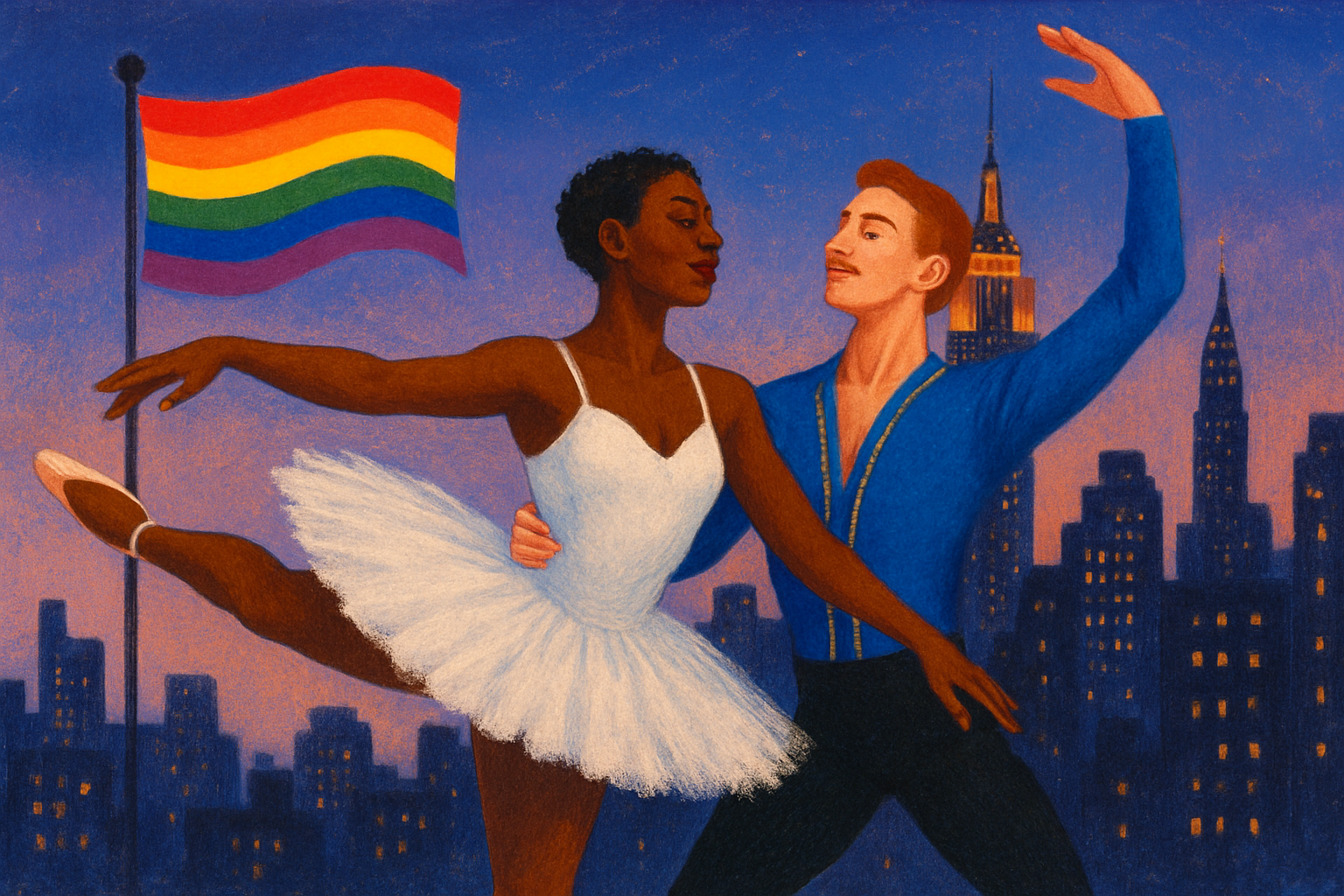
In New York City, Ballez has approached ballet as both an art form and a place for LGBTQ people to see themselves represented. The company reworks familiar classical pieces and creates new ballets with queer dancers, characters and histories at the center.
Ballez was founded in 2011 by Katy Pyle, a lesbian and genderqueer dancer. Its work grew from a desire to create more possibilities for queer performers within a dance tradition shaped by patriarchal structures. The company’s initial support came through a grant from Brooklyn Arts Exchange, and its first form was an outreach program offering ballet classes to LGBTQ people who felt excluded or alienated by conventional classical dance environments.
That beginning remains central to Ballez’s stated purpose. Alongside performances, the company offers public engagement programs and classes intended to make ballet more accessible to LGBTQ participants. The goal is not simply to add queer characters to existing repertory, but to question who gets to perform ballet, whose stories are considered worthy of the stage, and how audiences understand the form’s familiar narratives.
One example of that approach was “The Firebird, a Ballez,” presented at Dancespace Project in 2013. The production recast the story with a lesbian princess and a transgender prince, placing LGBTQ identities inside a recognizable ballet framework while changing the relationships and possibilities within it.
Ballez continued exploring ballet’s conventions with “Variations on Virtuosity, a Gala with the Stars of the Ballez,” presented as part of American Realness at Abrons Arts Center in 2015. The work’s title and format pointed toward another part of the company’s project: examining the expectations around virtuosity, celebration and performance while centering queer artists.
The company has also developed work from queer history. “Sleeping Beauty & the Beast” was described as being based on historic events in queer history, extending Ballez’s practice beyond adapting fairy tales and canonical dance works. In this setting, ballet becomes a vehicle for recovering or highlighting LGBTQ experiences that have often been left outside mainstream cultural storytelling.
Ballez’s New York City history reflects a broader effort to make dance institutions more inclusive from the inside out. Its performances challenge traditional roles and plotlines, while its classes and public programs address the practical question of who feels welcome in a ballet studio. Together, those elements define a company focused on representation, participation and the possibility of a queer future for a historically rigid art form.
Source and reuse information This backgrounder adapts factual material from “Ballez” on Wikipedia: https://en.wikipedia.org/wiki/Ballez The adapted text is released under the Creative Commons Attribution-ShareAlike 4.0 International license (CC BY-SA 4.0): https://creativecommons.org/licenses/by-sa/4.0/. This story has not been independently reviewed or fact-checked.
Further links listed by the Wikipedia page (not independently checked): - https://www.culturebot.org/2015/09/24516/katy-pyle-ballez-and-the-virtuosity-of-the-queer-body/ - https://www.nytimes.com/2016/04/24/arts/dance/katy-pyle-and-her-misfits-of-ballet.html - https://www.cosmopolitan.com/lifestyle/a19864706/ballez-katy-pyle-gender-fluid-ballet/ - https://www.conwaydailysun.com/portland_phoenix/arts/dance/lez-dance-ballez-artistic-director-katy-pyle-on-queering-ballet/article_70639528-4d69-11e8-938d-03f2d7f70f52.html - https://thisiswod.com/ballez-blazes-new-path-for-ballet/ - https://cargocollective.com/katypyle/THE-FIREBIRD-a-Ballez Image rights Original illustrative artwork created from story keywords. It is illustrative, not a documentary photograph.