LGBTQ+ · New York City
Before “Lavender Menace” Became a Banner, It Challenged Feminism in New York
On May 1, 1970, a group of lesbian radical feminists protested the exclusion of lesbians and lesbian concerns from a major feminist gathering in New York City.
By KLGBT News Desk ·
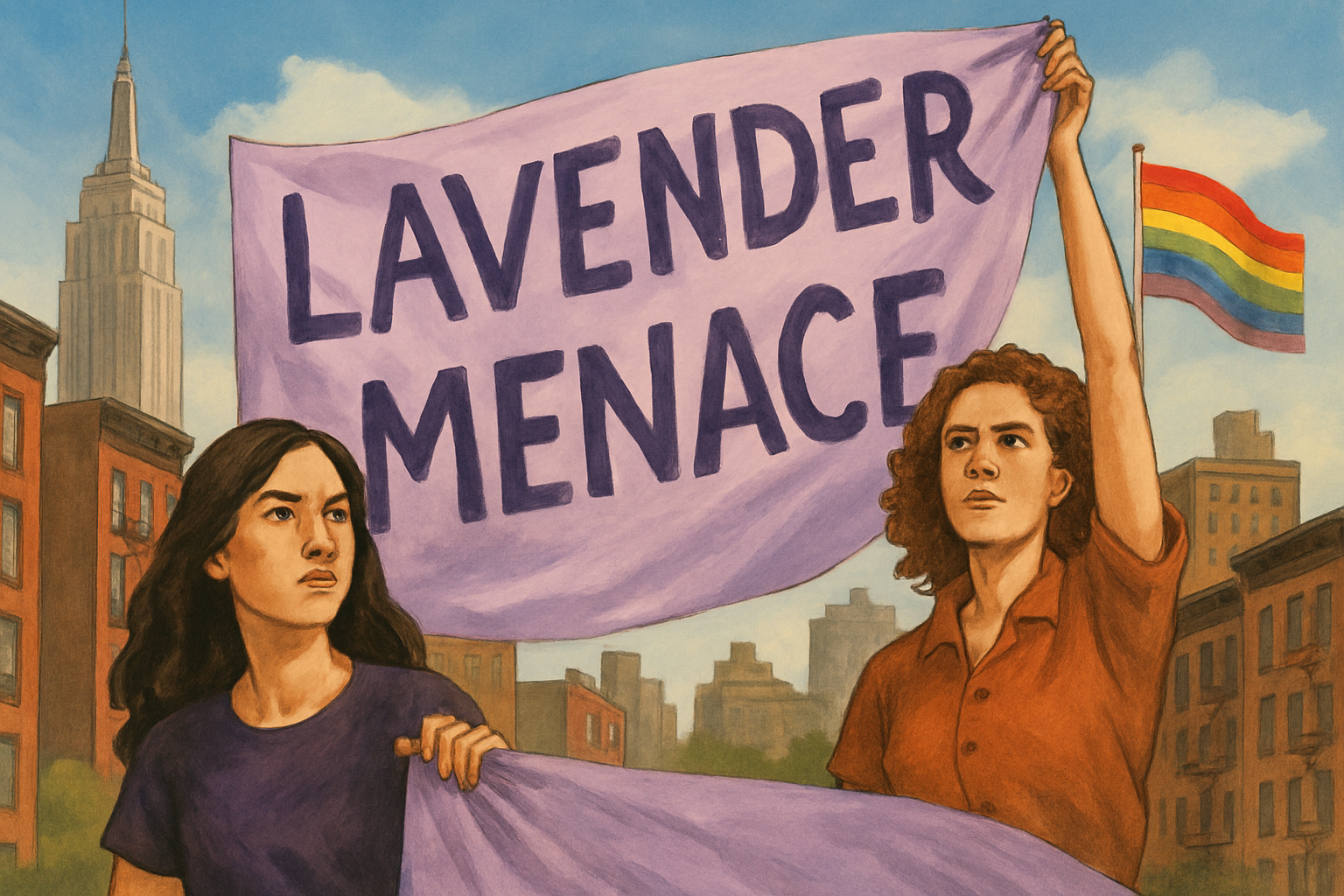
New York City was the setting for a protest that helped make lesbian visibility a central question within the feminist movement. On May 1, 1970, an informal group of lesbian radical feminists challenged the exclusion of lesbians and lesbian issues from the Second Congress to Unite Women.
The group called itself Lavender Menace, a name that had initially been used negatively. Betty Friedan, then president of the National Organization for Women, reportedly used the phrase in 1969 to describe what she viewed as a danger that associations with lesbianism could pose to NOW and the developing women’s movement. The protesters turned that language around, treating “Lavender Menace” not as a warning but as a source of political identity and collective strength.
Many of the participants were connected to both the Gay Liberation Front and NOW. The members identified in historical accounts include Karla Jay, Martha Shelley, Rita Mae Brown, Lois Hart, Barbara Love, Ellen Shumsky, Artemis March, Cynthia Funk, Linda Rhodes, Arlene Kushner, Ellen Broidy, and Michela Griffo. Their overlapping ties reflected the tensions facing lesbians who were active in feminist organizing while also participating in gay liberation.
The protest addressed more than representation at one conference. It questioned whether a movement organized around women’s equality could leave lesbian experiences at the margins. By insisting that lesbian concerns belonged within feminist politics, the participants confronted a divide that had shaped organizing in both NOW and the broader women’s movement.
The word “lavender” already carried layers of cultural meaning. Lavender shades had become popular in women’s fashion during the early twentieth century, and the color later acquired slang associations with gay men. In the hands of lesbian feminists, however, the term became something that could be reclaimed and used affirmatively.
Lavender Menace later became known as the Radicalesbians. The change in name marked a continuing effort to develop a political identity rooted in lesbian experience rather than accepting exclusion as the price of participation in feminist organizing.
For New York City’s LGBTQ+ history, the episode remains significant because it connects local protest with a broader transformation in how lesbian activists understood movement politics. The action at the 1970 congress did not simply seek a place for lesbians within an existing agenda; it challenged organizers to recognize lesbian lives and demands as part of the feminist movement itself. Its legacy can be seen in the decision to reclaim a hostile label and turn it into a public declaration of solidarity.
Source and reuse information This backgrounder adapts factual material from “Lavender Menace” on Wikipedia: https://en.wikipedia.org/wiki/Lavender_Menace The adapted text is released under the Creative Commons Attribution-ShareAlike 4.0 International license (CC BY-SA 4.0): https://creativecommons.org/licenses/by-sa/4.0/. This story has not been independently reviewed or fact-checked.
Further links listed by the Wikipedia page (not independently checked): - https://web.archive.org/web/20050407181303/http://www.glbtq.com/social-sciences/radicalesbians.html - https://www.nbcnews.com/feature/nbc-out/lgbtq-history-month-road-america-s-first-gay-pride-march-n917096 - https://www.nyclgbtsites.org/site/lavender-menace-action-at-second-congress-to-unite-women/ - https://www.thoughtco.com/lavender-menace-feminism-definition-3528970 - https://www.degruyter.com/document/doi/10.18574/nyu/9781479805419.003.0050/html?lang=en - https://doi.org/10.18574%2Fnyu%2F9781479805419.003.0050 Image rights Original illustrative artwork created from story keywords. It is illustrative, not a documentary photograph.