Culture · New York City
Before the Garden: Remembering Greenwich Village’s House of D
The former New York Women’s House of Detention occupied a prominent Greenwich Village site from 1932 to 1974. Today, Jefferson Market Garden preserves the location while a historical marker points to the prison that once stood there.
By KLGBT News Desk ·
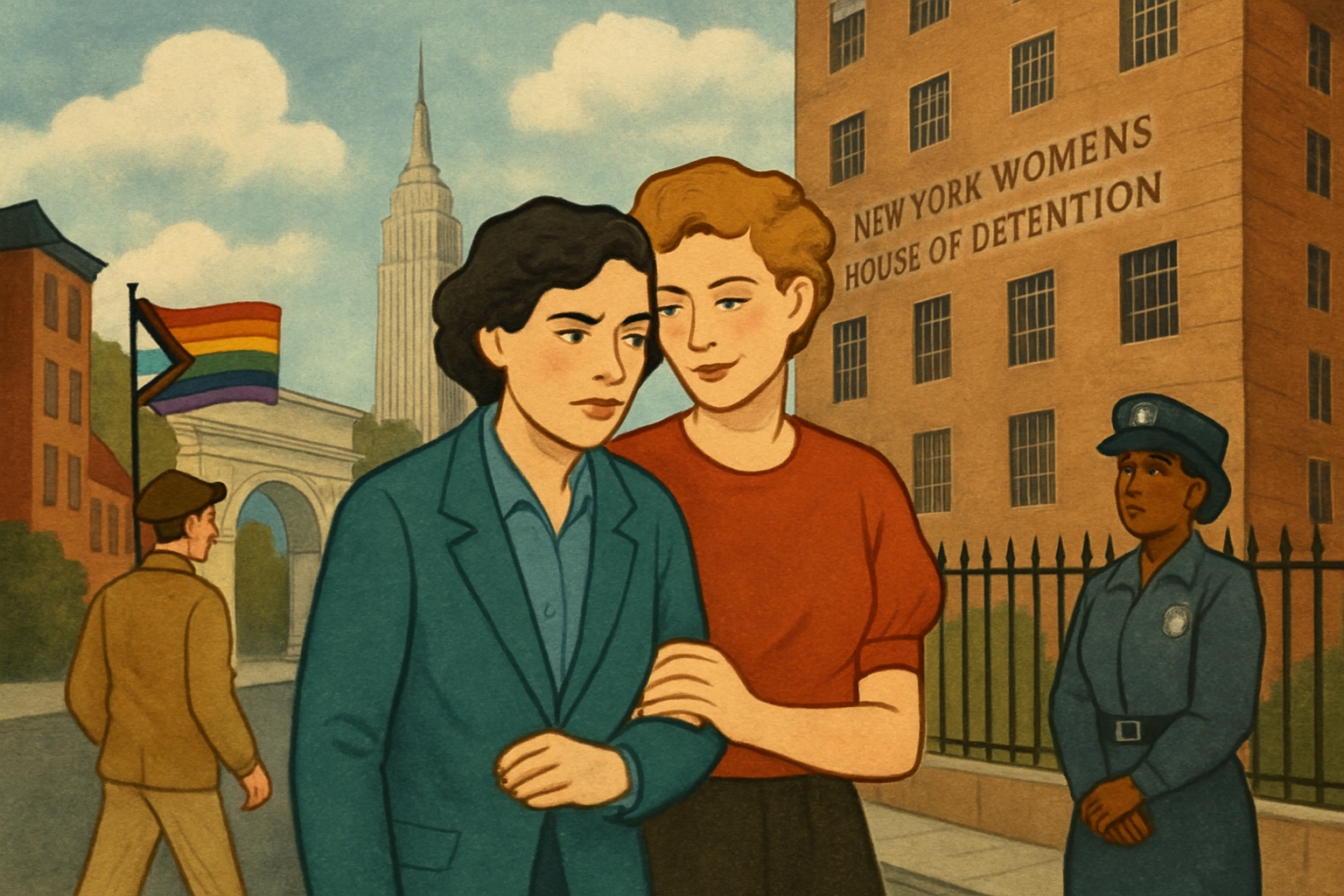
At 10 Greenwich Avenue, a garden now occupies a site that once held one of Manhattan’s most distinctive—and imposing—public buildings. The New York Women’s House of Detention, commonly called the House of D, operated in Greenwich Village from 1932 to 1974.
The prison was built on the former site of Jefferson Market Prison, which itself had followed the market that gave the area its name. Designed by the architectural firm Sloan & Robertson in 1931, the House of D cost $2 million to construct. Its Art Deco style set it apart from conventional prison architecture; the building is regarded as possibly the only prison in the world designed in that style.
The facility opened to the public on March 29, 1932, when it was presented by Richard C. Patterson Jr. The first inmates arrived later. Ruth E. Collins served as its first superintendent and viewed the building as part of a new approach to corrections, emphasizing what she described as moral and social rehabilitation.
Its location made the prison unusually visible to the surrounding neighborhood. Cells and windows looked down toward crowded Greenwich Avenue, allowing women inside to try to communicate with people passing below. That physical connection between the facility and the street became one of the defining features of the House of D’s presence in the Village: incarceration was not hidden away at the city’s edge but placed in the middle of a busy, highly recognizable community.
The institution’s official closure came on June 13, 1971. Demolition did not begin immediately. Mayor John Lindsay initiated the building’s removal in 1973, and the work was completed the following year. The site was subsequently transformed into Jefferson Market Garden, providing a very different public use for the same small piece of Greenwich Village.
A historical marker at the garden acknowledges the site’s earlier identities, including the House of D. For New Yorkers walking through the garden today, that marker offers a reminder that neighborhood landscapes can contain several layers of civic history at once: a market, a prison, a women’s detention facility, and finally a public green space.
The House of D’s story is therefore tied not only to criminal justice but also to the changing physical character of Greenwich Village. Its Art Deco façade, central location, and long institutional presence made it a familiar part of the neighborhood until the building disappeared. What remains is the address, the garden, and the marker—small but tangible links to a structure that once shaped the view from the street and the skyline of the Village.
Source and reuse information This backgrounder adapts factual material from “New York Women's House of Detention” on Wikipedia: https://en.wikipedia.org/wiki/New_York_Women%27s_House_of_Detention The adapted text is released under the Creative Commons Attribution-ShareAlike 4.0 International license (CC BY-SA 4.0): https://creativecommons.org/licenses/by-sa/4.0/. This story has not been independently reviewed or fact-checked.
Further links listed by the Wikipedia page (not independently checked): - https://news.google.com/newspapers?id=RrpIAAAAIBAJ&sjid=jwENAAAAIBAJ&pg=913,792505&dq=new+york+women's+house+of+detention+ruth+e+collins&hl=en - https://www.theguardian.com/world/2005/apr/11/books.booksnews - https://www.nytimes.com/1931/03/08/archives/womens-house-of-detention-protects-the-first-offenders-new-yorks.html - https://www.nytimes.com/1932/03/29/archives/luxury-jail-here-for-women-ready-prison-without-bars-costing.html - https://www.nytimes.com/1970/10/15/archives/davis-case-goes-to-citys-courts-us-sets-bail-of-250000-then-cancels.html - https://www.nytimes.com/1971/06/14/archives/womens-prison-closed-inmates-moved-to-rikers-womens-prison-closed.html Image rights Original illustrative artwork created from story keywords. It is not a documentary photograph.