LGBTQ+ · New York City
How the Sylvia Rivera Law Project Put Transgender Justice at the Center of New York
Founded in New York City in 2002, the Sylvia Rivera Law Project provides legal aid to low-income transgender, intersex and gender-nonconforming people, with a mission shaped by the barriers its founder experienced firsthand.
By KLGBT News Desk ·
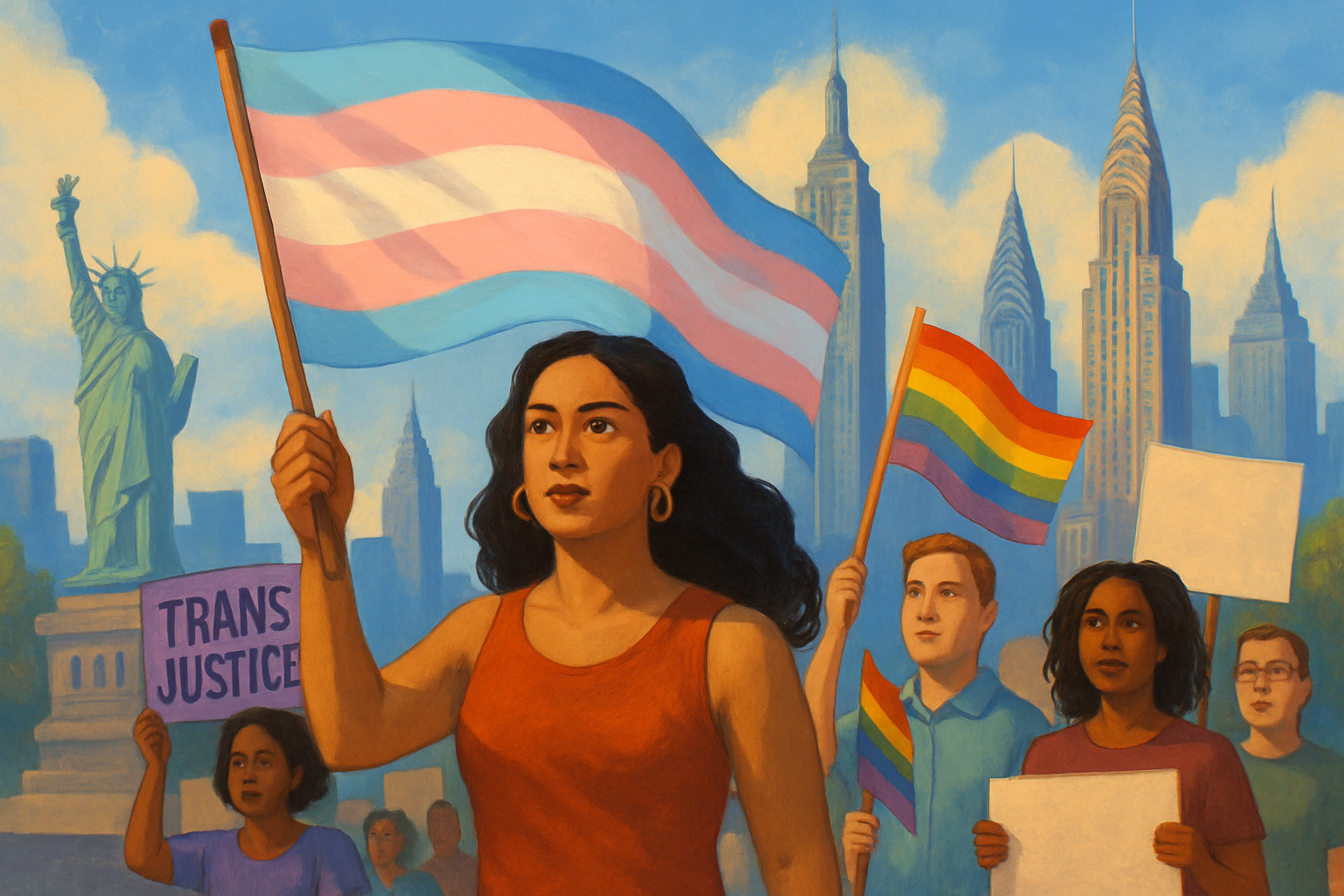
In New York City, the Sylvia Rivera Law Project (SRLP) has built its work around a straightforward premise: legal support should be accessible to people whose gender identity or expression can make encounters with public institutions especially dangerous or difficult.
The organization serves low-income people and people of color who are transgender, intersex and/or gender-nonconforming. Its base is the Miss Major-Jay Toole Building for Social Justice, a New York City site named for two prominent figures in movements for transgender and broader social justice. SRLP was established in August 2002 by Dean Spade, an attorney and transgender civil rights activist.
The project’s name honors Sylvia Rivera, the transgender activist and participant in the 1969 Stonewall uprising. Rivera died in 2002, the same year the organization was formed. Naming the project after her connects its legal work to a longer history of transgender organizing in New York and to the activism associated with Stonewall.
SRLP’s origins were also shaped by an incident involving Spade earlier that year. In February 2002, a police officer followed him into a bathroom, asked for identification and challenged his gender. Spade was arrested after explaining that he was transgender and intended only to use the restroom. The experience later informed his writing about transgender people’s access to public bathrooms and the development of laws targeting that access.
According to Spade’s account, the legal process created another layer of distress. During an initial meeting, the attorney assigned to his case asked personal questions that he experienced as invasive. Rather than feeling protected by the system, Spade feared what the case would require him to disclose and endure.
That combination—police scrutiny in an ordinary public space and a legal response that failed to feel affirming—helps explain the gap SRLP was created to address. For transgender, intersex and gender-nonconforming New Yorkers with limited income, legal problems can extend beyond a single court appearance or arrest. They can involve institutions that question a person’s identity before addressing the underlying issue.
SRLP’s founding story therefore places legal aid within a wider struggle over dignity, safety and who gets treated fairly by public systems. Its New York City location and focus on communities facing overlapping economic, racial and gender-based barriers make it part of the city’s ongoing LGBTQ+ civil-rights landscape.
Source and reuse information This backgrounder adapts factual material from “Sylvia Rivera Law Project” on Wikipedia: https://en.wikipedia.org/wiki/Sylvia_Rivera_Law_Project The adapted text is released under the Creative Commons Attribution-ShareAlike 4.0 International license (CC BY-SA 4.0): https://creativecommons.org/licenses/by-sa/4.0/. This story has not been independently reviewed or fact-checked.
Further links listed by the Wikipedia page (not independently checked): - https://www.nytimes.com/2005/12/30/nyregion/30jails.html - https://www.wired.com/medtech/health/news/2006/11/72174 - https://srlp.org/action/ - https://srlp.org/rodriguez/ - https://viaf.org/viaf/125844316 - https://api.semanticscholar.org/CorpusID:144343441 Image rights Original illustrative artwork created from story keywords. It is not a documentary photograph.