LGBTQ+ · New York City
How the Transgender Oral History Project Connects New York to a Larger Community Story
The Transgender Oral History Project preserves trans lives, builds intergenerational connections, and includes New York City among the communities where it has hosted events.
By KLGBT News Desk ·
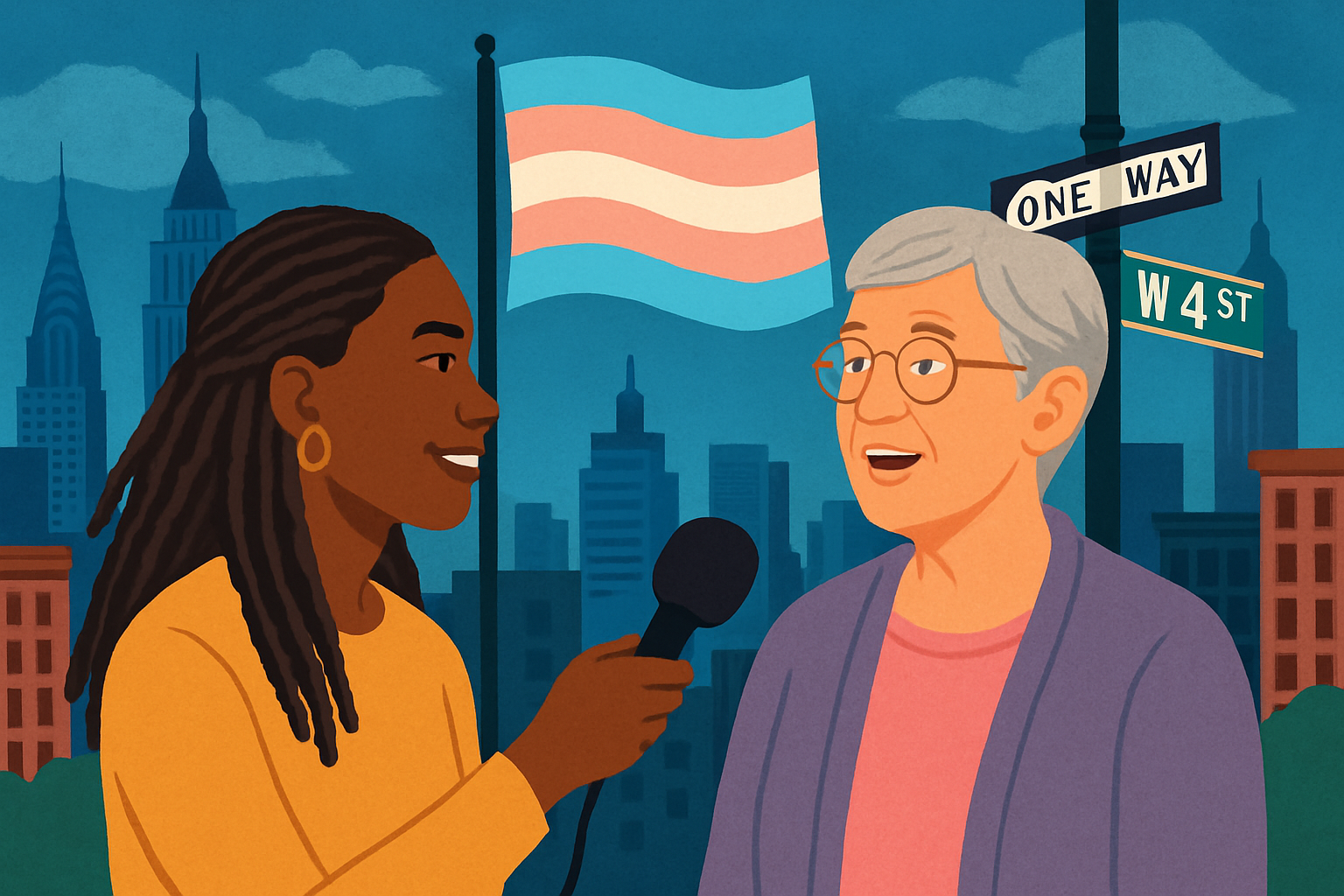
For transgender New Yorkers, community history can offer more than a record of the past. It can connect people across generations, put current struggles in context, and make visible experiences that are often missing from mainstream accounts. Those aims are central to the Transgender Oral History Project, an initiative created by and for transgender people.
The project gathers interviews with transgender-identified people and turns those stories into multimedia work. Its purpose is not limited to archiving individual memories. By sharing how people have navigated their lives, communities, and changing social conditions, the project seeks to strengthen connections among trans people and support a fuller understanding of transgender history.
New York City is part of that broader work. The project has been active in communities across the United States, including New York City, as well as Massachusetts, Illinois, Iowa, Seattle, and Philadelphia. The available information does not identify particular New York venues or event dates, but the city’s inclusion reflects the project’s community-based reach beyond a single region.
According to the project’s stated goals, its work is designed to encourage conversations between generations of transgender people. That approach can help link present-day experiences with the organizing, relationships, and challenges that shaped earlier periods. It also creates room for stories from people and groups whose concerns may not receive sustained attention in dominant public discussions about transgender life.
The project additionally examines the ways political, social, and historical conditions affect transgender people. In that sense, an interview is both a personal account and part of a larger record: one person’s story can illuminate the pressures and possibilities created by the world around them.
The initiative was founded in 2009 by André Pérez. Its early work documented the development of what the research describes as the first New England Transgender Pride March. Pérez later created a multimedia exhibition called “Community in Transition: 40 Years of Struggle,” extending the project’s focus from individual testimony to a broader presentation of transgender community history.
For LGBTQ-focused media and community organizations in New York, the project offers a useful model for preserving local memory: center trans people as authors of their own histories, pair personal testimony with historical context, and treat community storytelling as a form of empowerment. Its work suggests that documenting lives is not simply about looking backward. It is also a way to help people recognize shared experiences and understand how today’s transgender communities emerged.
Source and reuse information This backgrounder adapts factual material from “Transgender Oral History Project” on Wikipedia: https://en.wikipedia.org/wiki/Transgender_Oral_History_Project The adapted text is released under the Creative Commons Attribution-ShareAlike 4.0 International license (CC BY-SA 4.0): https://creativecommons.org/licenses/by-sa/4.0/. This story has not been independently reviewed or fact-checked.
Further links listed by the Wikipedia page (not independently checked): - https://www.facebook.com/events/211111529021507/ - https://web.archive.org/web/20140720132141/http://transoralhistory.com/ilive/curriculum - https://www.chicagotribune.com/2011/12/19/finding-their-gender-identities/ - https://web.archive.org/web/20140725004306/http://chicagofilmmakers.org/cf/content/cdmpf-2013-finalists?page=2 Image rights Original illustrative artwork created from story keywords. It is illustrative, not a documentary photograph.