LGBTQ+ · New York City
Lesbian Feminist Liberation Put Lesbian Issues at the Center of New York Activism
Formed in 1972 after breaking from the Gay Activists Alliance, Lesbian Feminist Liberation organized around lesbian and feminist priorities in New York City.
By KLGBT News Desk ·
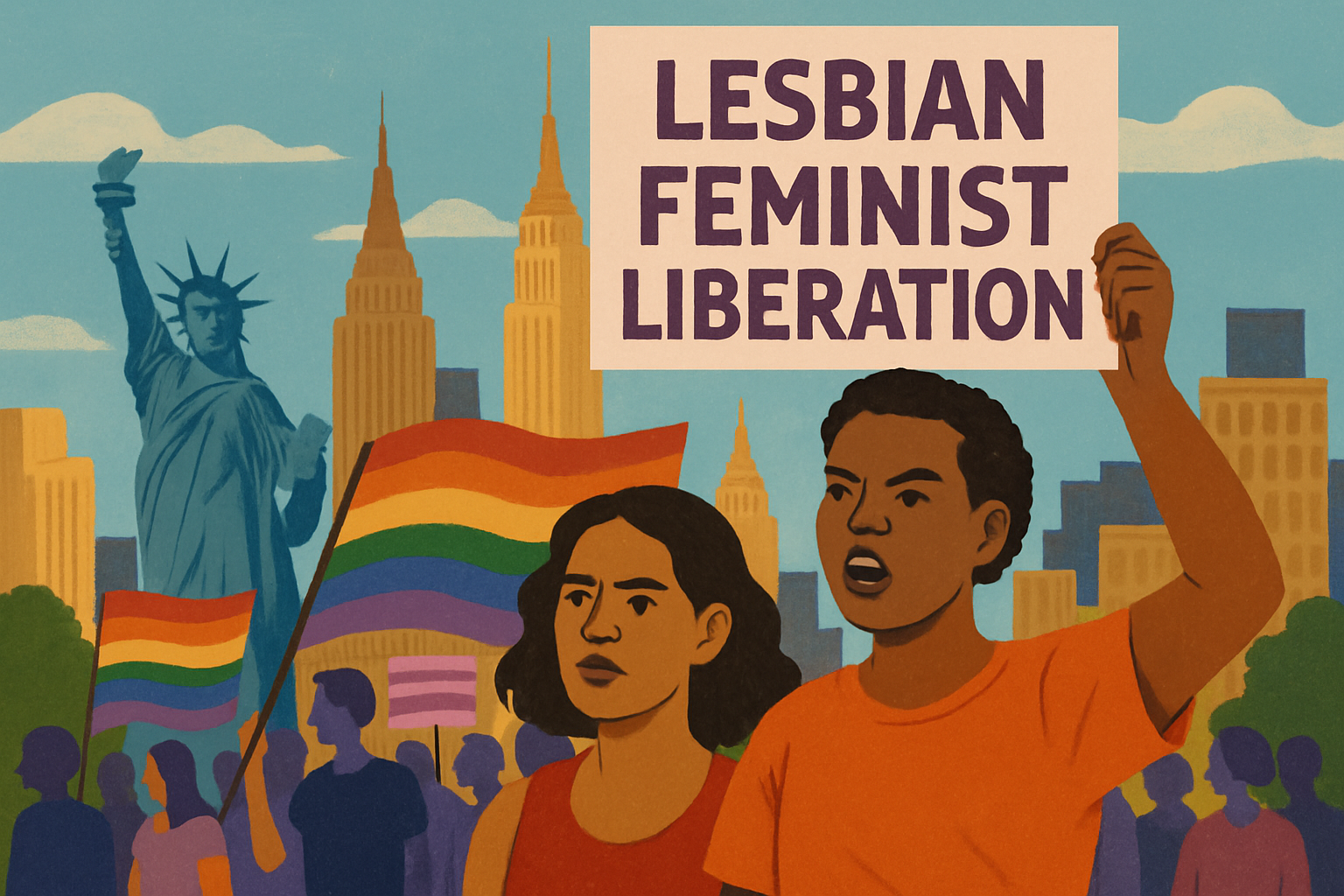
In 1972, a group of New York City activists created Lesbian Feminist Liberation after deciding that lesbian and feminist concerns were not receiving enough attention within the Gay Activists Alliance, or GAA.
The organization began as the Lesbian Liberation Committee, a unit of the GAA. Its departure from the alliance was coordinated by Jean O'Leary. The split reflected a broader question facing activists at the time: how should movements organized around sexual orientation address differences in focus, experience and political priorities within their own communities?
After leaving the GAA, the group continued its work under the name Lesbian Feminist Liberation. Its early meetings took place at 99 Wooster Street in SoHo, an old firehouse that became known among activists as the Firehouse. The Lesbian Liberation Committee had met there before the break, and the newly independent organization initially remained in the space. It later moved to another converted firehouse, the Women's Liberation Center.
The group's work included efforts to change New York City's laws. In 1973, Lesbian Feminist Liberation took part in a campaign urging the City Council to add sexual orientation to the city's anti-discrimination ordinance. The campaign placed lesbian organizing within a municipal fight over legal protections and helped make discrimination based on sexual orientation a subject of city policy.
The organization also used public disruption to challenge views it considered hostile to lesbians and feminism. Twenty-five members attended The Dick Cavett Show during an interview with George Gilder, an author they regarded as anti-feminist and anti-lesbian. Their intervention brought the group's demands into a nationally visible media setting, rather than limiting its advocacy to meetings, lobbying and demonstrations in New York.
Lesbian Feminist Liberation emerged from the same citywide activist environment as other lesbian and gay liberation groups, but its formation underscored the importance of independent lesbian feminist organizing. Its departure from the GAA also affected the Radicalesbians, which was left with few members after the change.
Today, the group's history offers a view of how New York's LGBTQ movement developed through both coalition-building and disagreement. Lesbian Feminist Liberation's story is not only about a new organization taking shape in 1972. It is also about activists insisting that lesbian political concerns receive their own institutional focus, while pursuing change through neighborhood organizing, city lobbying and direct action.
Source and reuse information This backgrounder adapts factual material from “Lesbian Feminist Liberation” on Wikipedia: https://en.wikipedia.org/wiki/Lesbian_Feminist_Liberation The adapted text is released under the Creative Commons Attribution-ShareAlike 4.0 International license (CC BY-SA 4.0): https://creativecommons.org/licenses/by-sa/4.0/. This story has not been independently reviewed or fact-checked.
Further links listed by the Wikipedia page (not independently checked): - https://archive.org/details/alternatechannel00stev - https://archive.org/details/straightnewsgays00alwo - https://archive.org/details/straightnewsgays00alwo/page/150 - https://books.google.com/books?id=csGUOUsPK_gC&pg=PA338 - https://books.google.com/books?id=ux-j8fgXyg4C&pg=PA165 - https://books.google.com/books?id=jA8l8EYcnHsC&pg=PA98 Image rights Original illustrative artwork created from story keywords. It is illustrative, not a documentary photograph.