Culture · New York City
Nuyorican Poets Café: An East Village Home for Boundary-Breaking Art
Founded in 1973 in a Lower East Side apartment, the Nuyorican Poets Café grew into a Manhattan nonprofit dedicated to poetry, music, theater and other forms of community-rooted expression.
By KLGBT News Desk ·
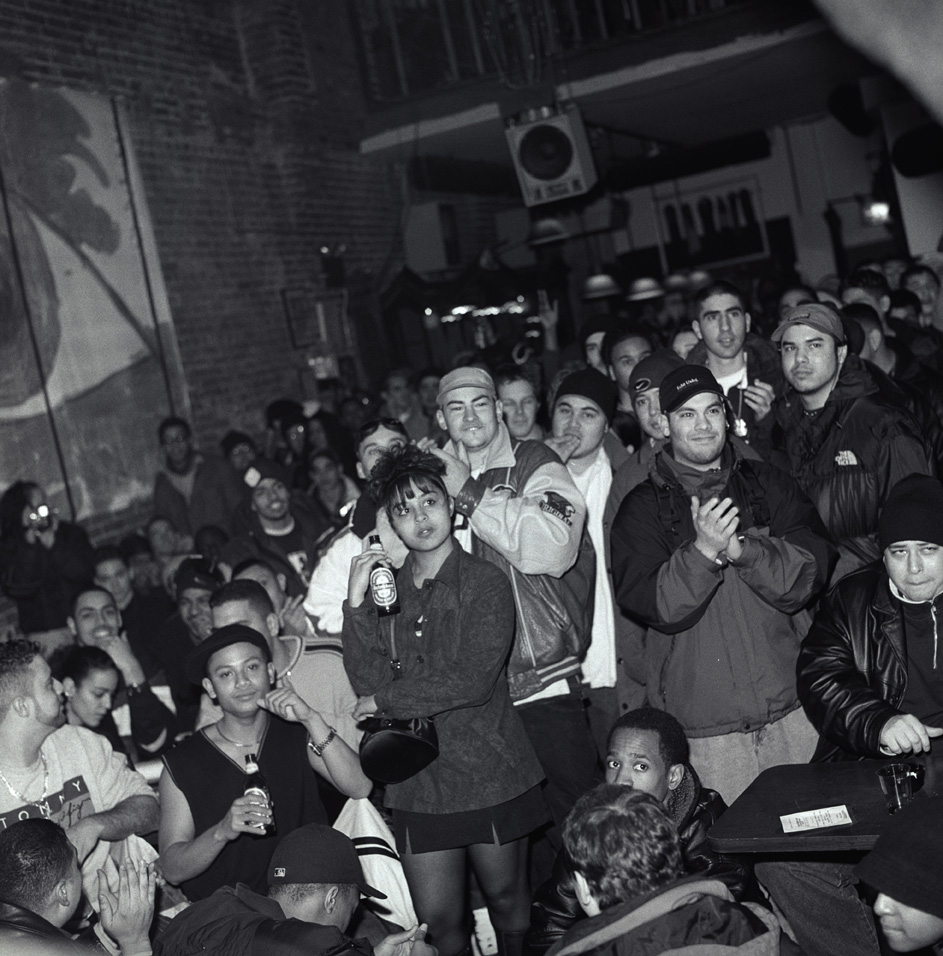
In Manhattan’s Alphabet City, the Nuyorican Poets Café has provided a home for artists whose work crosses boundaries between poetry, music, theater and other forms of performance. The nonprofit organization is closely associated with the Nuyorican art movement, a cultural tradition rooted in the experiences of Puerto Rican New Yorkers.
The café began on Oct. 31, 1973, in the East Village apartment of writer and poet Miguel Algarín, who was also a professor at Rutgers University. Algarín helped establish the gathering with poets and artists Miguel Piñero, Bimbo Rivas, Pedro Pietri and Lucky Cienfuegos.
What started as an apartment-based gathering soon needed more room. By 1975, the number of participating poets had outgrown Algarín’s space. He rented the Sunshine Café, an Irish pub on East Sixth Street, and the group adopted the name Nuyorican Poets Café.
The venue’s programming has extended well beyond traditional readings. Its forum has included poetry, music, hip-hop, video, visual art, comedy and theater. That range reflects the café’s role not simply as a performance space, but as a place where artists can develop shared ideas and bring them to a wider public.
At the center of the café’s mission is a belief in art as a vehicle for community and understanding. Nuyorican artists, poets and playwrights have used the space to explore collective themes and challenge divisions based on color and other arbitrary social boundaries. The work created and presented there is intended to travel beyond the café itself, carrying those messages into the broader city and culture.
For New Yorkers, the Nuyorican Poets Café represents an important link between neighborhood gathering, performance and cultural exchange. Its history also demonstrates how an informal artistic community can grow from a private apartment into a lasting institution. The café’s connection to the Nuyorican movement gives it a distinct place in Manhattan’s cultural landscape, while its multidisciplinary programming has opened the space to audiences interested in many kinds of expression.
The café has also served as a host for several events connected to the PEN World Voices festival, placing its neighborhood-based work in conversation with an international literary program. That combination—local roots and broader reach—helps explain the organization’s continuing significance as a New York venue for art that questions barriers and builds community.
Source and reuse information This backgrounder adapts factual material from “Nuyorican Poets Café” on Wikipedia: https://en.wikipedia.org/wiki/Nuyorican_Poets_Caf%C3%A9 The adapted text is released under the Creative Commons Attribution-ShareAlike 4.0 International license (CC BY-SA 4.0): https://creativecommons.org/licenses/by-sa/4.0/. This story has not been independently reviewed or fact-checked.
Further links listed by the Wikipedia page (not independently checked): - https://www.nuyorican.org/ - https://web.archive.org/web/20080819151112/http://www.verbsonasphalt.com/ - https://poets.org/text/slamnation-poetry-slam-documentary - https://www.americanquarterly.org/interact/americas.html - https://www.pbs.org/newshour/tag/nuyorican-poets-cafe - https://artsandculture.google.com/asset/amiri-baraka-in-town-the-nuyorican-poets-cafe/qAHZVAOD9rVZQg Image rights Photograph description: Nuyorican Poets Cafe NYC 1998 Creator: Mikamote. License: CC BY-SA 3.0 (https://creativecommons.org/licenses/by-sa/3.0). Original image page: https://commons.wikimedia.org/wiki/File%3ANuyorican-02-mika.jpg. The image was resized for display; no other changes were made.