LGBTQ+ · New York City
Queer Big Apple Corps Connects New York’s LGBTQ+ History and Community Through Music
Founded in 1979, the Queer Big Apple Corps has offered New Yorkers an inclusive space for musical expression while carrying LGBTQ+ visibility into the city’s public life.
By KLGBT News Desk ·
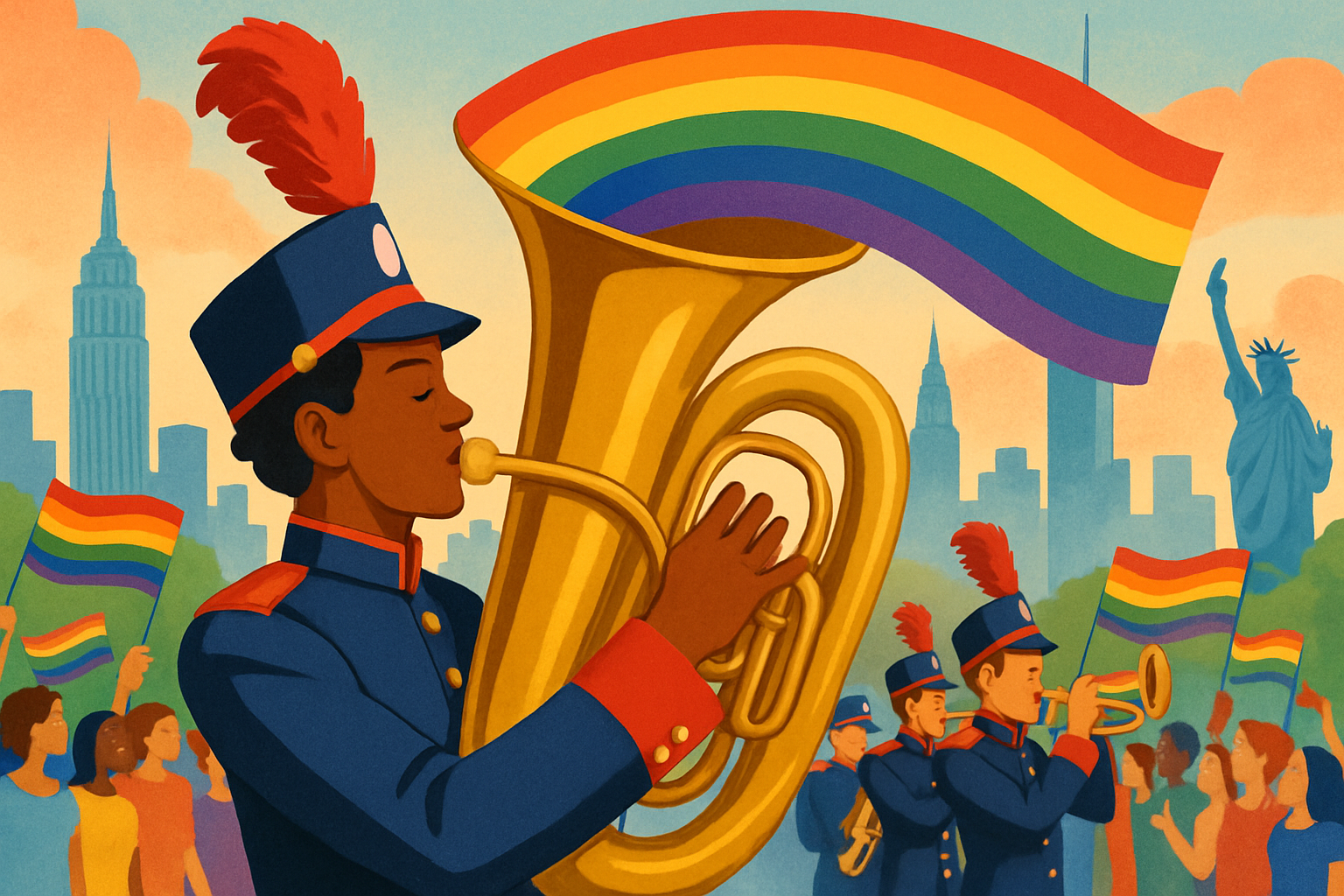
For more than four decades, the Queer Big Apple Corps has brought LGBTQ+ visibility, community and music together in New York City. Founded in 1979 as the New York Gay Community Marching Band, the ensemble is now known as QBAC. It was formerly called the Lesbian and Gay Big Apple Corps.
QBAC is the third-oldest community band in the United States dedicated to serving the LGBTQ+ community. Its membership is predominantly lesbian, gay, bisexual, transgender and queer, while also welcoming heterosexual musicians. The group describes itself as an inclusive organization intended to give queer people a supportive setting for musical and artistic expression.
The band’s work extends beyond performance. Its stated mission includes using music to encourage social acceptance, equality and harmony for everyone. That purpose has placed QBAC within New York’s LGBTQ+ civic and cultural history, with performances that have made queer participation in public musical life visible to broad audiences.
Nancy Corporan and Bob Wolff founded the group, with Corporan serving as its first artistic director. The founders drew inspiration from Jon Reed Sims, who established the San Francisco Gay Freedom Day Marching Band and Twirling Corps. Their New York ensemble quickly became part of the city’s major cultural institutions and public demonstrations.
In 1980, QBAC became the first openly queer musical group to perform at Lincoln Center. That June, the band also led New York’s Pride march, placing a community ensemble at the front of one of the city’s most significant LGBTQ+ public events.
The group’s early history also reflects the fear and solidarity that shaped queer life in New York. After a gunman killed two people in a gay bar in the West Village in November 1980, the band responded by playing “The Battle Hymn of the Republic.” The performance connected its musical work to a moment of mourning and public presence.
Today, QBAC’s significance rests not only in its longevity but also in the kind of space it represents: one where queer musicians can perform together, welcome allies and participate openly in the city’s cultural life. From its origins as a marching band formed during a pivotal period in LGBTQ+ history, the organization has continued to embody music as both creative expression and a way to affirm equality.
Source and reuse information This backgrounder adapts factual material from “Queer Big Apple Corps” on Wikipedia: https://en.wikipedia.org/wiki/Queer_Big_Apple_Corps The adapted text is released under the Creative Commons Attribution-ShareAlike 4.0 International license (CC BY-SA 4.0): https://creativecommons.org/licenses/by-sa/4.0/. This story has not been independently reviewed or fact-checked.
Further links listed by the Wikipedia page (not independently checked): - https://www.lgba.org/ - https://www.thedailybeast.com/pride-may-be-canceled-but-this-lgbtq-marching-band-plays-on - https://www.gaysonoma.com/2020/11/first-lgbt-marching-band-performs-at-macys-thanksgiving-day-parade/ - https://www.lgbtqnation.com/2020/11/lgbtq-marching-band-performs-thanksgiving-day-parade-first-time-history/ - https://twitter.com/lgbac - https://qbac.org/about/ Image rights Original illustrative artwork created from story keywords. It is not a documentary photograph.