LGBTQ+ · New York City
The Subway’s Queer-City Significance Starts With Its Reach
New York’s subway is not an LGBTQ-specific institution, but its scale and round-the-clock history make it essential infrastructure for reporting on queer life across the city.
By KLGBT News Desk ·
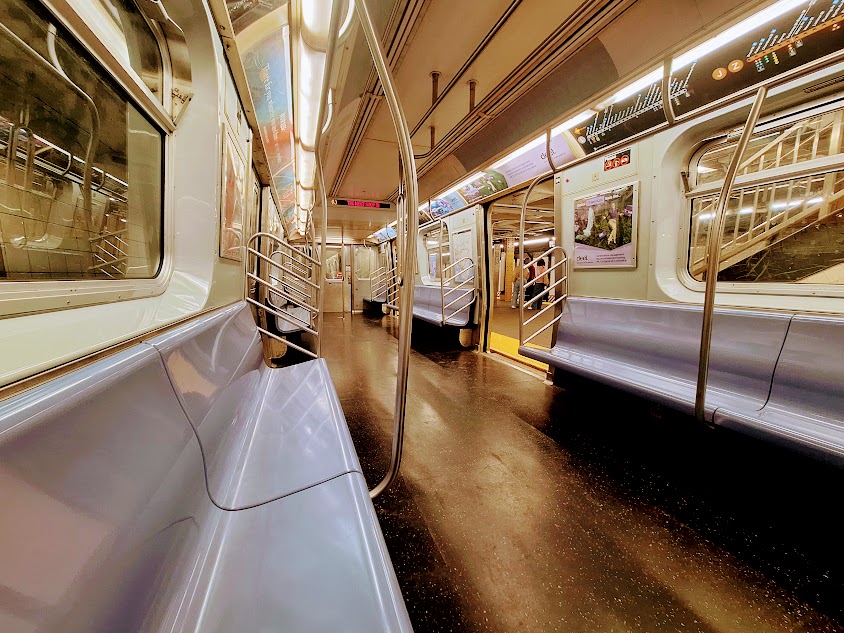
New York City’s subway is not an LGBTQ-specific institution. It is, however, one of the city’s most important pieces of shared infrastructure—and that makes it relevant to any newsroom covering queer New Yorkers across the five boroughs.
The system serves Manhattan, Brooklyn, Queens, and the Bronx, connecting four of New York City’s five boroughs. With 423 stations in operation—or 472 when stations linked by transfers are counted separately—it reaches an enormous portion of the city’s public realm. The subway is owned by New York City and leased to the New York City Transit Authority, an affiliate of the state-run Metropolitan Transportation Authority.
That reach matters for LGBTQ-focused coverage because queer New Yorkers do not live, work, socialize, or seek services in one location. A transit system spanning four boroughs provides the physical framework for moving among the city’s many neighborhoods and institutions. The reference information does not identify riders by sexual orientation or gender identity, and it does not document LGBTQ-specific subway programs. Still, the system’s breadth makes it an unavoidable part of the city’s social geography.
The subway opened on October 27, 1904, making it one of the world’s oldest rapid-transit systems. It has operated around the clock every day for most of its history, except during emergencies and disasters. That unusually continuous service is another reason the subway belongs in conversations about access and city life: its operating model has historically extended beyond a conventional daytime schedule.
The system remains one of the busiest rapid-transit networks in the Western Hemisphere. In 2025, it recorded 1,281,883,362 linked passenger trips, or 2,314,388,000 unlinked trips. Those figures use different counting methods: linked trips follow a journey across transfers, while unlinked trips count each boarding. The subway’s daily ridership record—more than 6.2 million riders—was set on October 29, 2015.
For LGBTQ-focused local journalism, these numbers offer context rather than a complete story. They describe the scale of a public system through which New Yorkers move, but they do not answer questions about safety, accessibility, policing, discrimination, or the experiences of transgender and queer riders. Those issues require separate reporting. What the subway’s basic facts establish is its citywide importance: any account of queer New York that examines movement, neighborhoods, nightlife, health access, work, or community must reckon with the transit network connecting them.
Source and reuse information This backgrounder adapts factual material from “New York City Subway” on Wikipedia: https://en.wikipedia.org/wiki/New_York_City_Subway The adapted text is released under the Creative Commons Attribution-ShareAlike 4.0 International license (CC BY-SA 4.0): https://creativecommons.org/licenses/by-sa/4.0/. This story has not been independently reviewed or fact-checked.
Further links listed by the Wikipedia page (not independently checked): - https://www.youtube.com/watch?v=yZ83UhBJFP0 - https://www.youtube.com/watch?v=mhJrrGNvcFk - https://twitter.com/NYCTSubway - https://www1.nyc.gov/html/dcp/pdf/transportation/broadway_junction_pt3.pdf - https://web.archive.org/web/20141102050242/http://www.deafecho.com/2005/12/new-york-city-subway/ - https://web.archive.org/web/20101220211646/http://www.mta.info/nyct/service/servInfo/PresidentLetter_servInfo.htm Image rights Photograph description: Train Car, New York City subway Creator: Boaventuravinicius. License: CC BY 4.0 (https://creativecommons.org/licenses/by/4.0). Original image page: https://commons.wikimedia.org/wiki/File%3ATrain_Car%2C_New_York_City_subway.jpg. The image was resized for display; no other changes were made.