LGBTQ+ · New York City
William Sloane Coffin’s New York Ministry and Support for Gay Rights
William Sloane Coffin was a Presbyterian clergyman, peace activist and senior minister at Riverside Church in New York City whose public work also included support for gay rights.
By KLGBT News Desk ·
William Sloane Coffin Jr. brought together several roles that did not always sit comfortably within the traditional image of a Protestant minister. He was a Presbyterian clergyman, a peace activist, a former CIA officer, a pianist and athlete, and a onetime chaplain at Yale University. His public life eventually connected religious leadership with civil rights, antiwar activism and support for gay rights.
For New York City readers, Coffin’s most direct institutional connection was Riverside Church, where he served as senior minister. The church became one setting for a career shaped by opposition to military intervention and advocacy for social justice. Coffin also led SANE/Freeze, described in the source material as the nation’s largest peace and social justice group. His opposition to U.S. military interventions extended from the Vietnam War to the Iraq War.
The available biographical material identifies Coffin as an ardent supporter of gay rights, placing that position within a broader pattern of engagement with movements challenging established political and social arrangements. The extract does not provide details about specific speeches, campaigns, organizations or policies connected to his gay-rights work. It does, however, establish that support for gay rights was part of the public record associated with his ministry and activism.
Coffin’s path toward that public role developed over time. After being ordained in the Presbyterian Church, he later received ministerial standing in the United Church of Christ. At Yale, the influence of theologian H. Richard Niebuhr’s social philosophy helped move him toward leadership in the civil rights and peace movements of the 1960s and 1970s. His background also included membership in Skull and Bones, a secret society, and an upbringing in New York City’s wealthy elite.
He lived from June 1, 1924, to April 12, 2006. In an LGBTQ-focused account of New York’s religious and civic history, Coffin is notable not because the supplied record documents a single defining gay-rights episode, but because it places a prominent city-based Protestant minister among the supporters of gay rights while also tracing his involvement in civil rights, peace organizing and opposition to war. His biography offers a starting point for examining how religious figures participated in overlapping social-justice movements, even when the available record does not specify the full scope of their work on any one issue.
Source and reuse information This automatically generated backgrounder adapts text from “William Sloane Coffin” on Wikipedia: https://en.wikipedia.org/wiki/William_Sloane_Coffin The adapted text is released under the Creative Commons Attribution-ShareAlike 4.0 International license (CC BY-SA 4.0): https://creativecommons.org/licenses/by-sa/4.0/. The source article’s linked references are provided below where available. This story has not been independently reviewed or fact-checked.
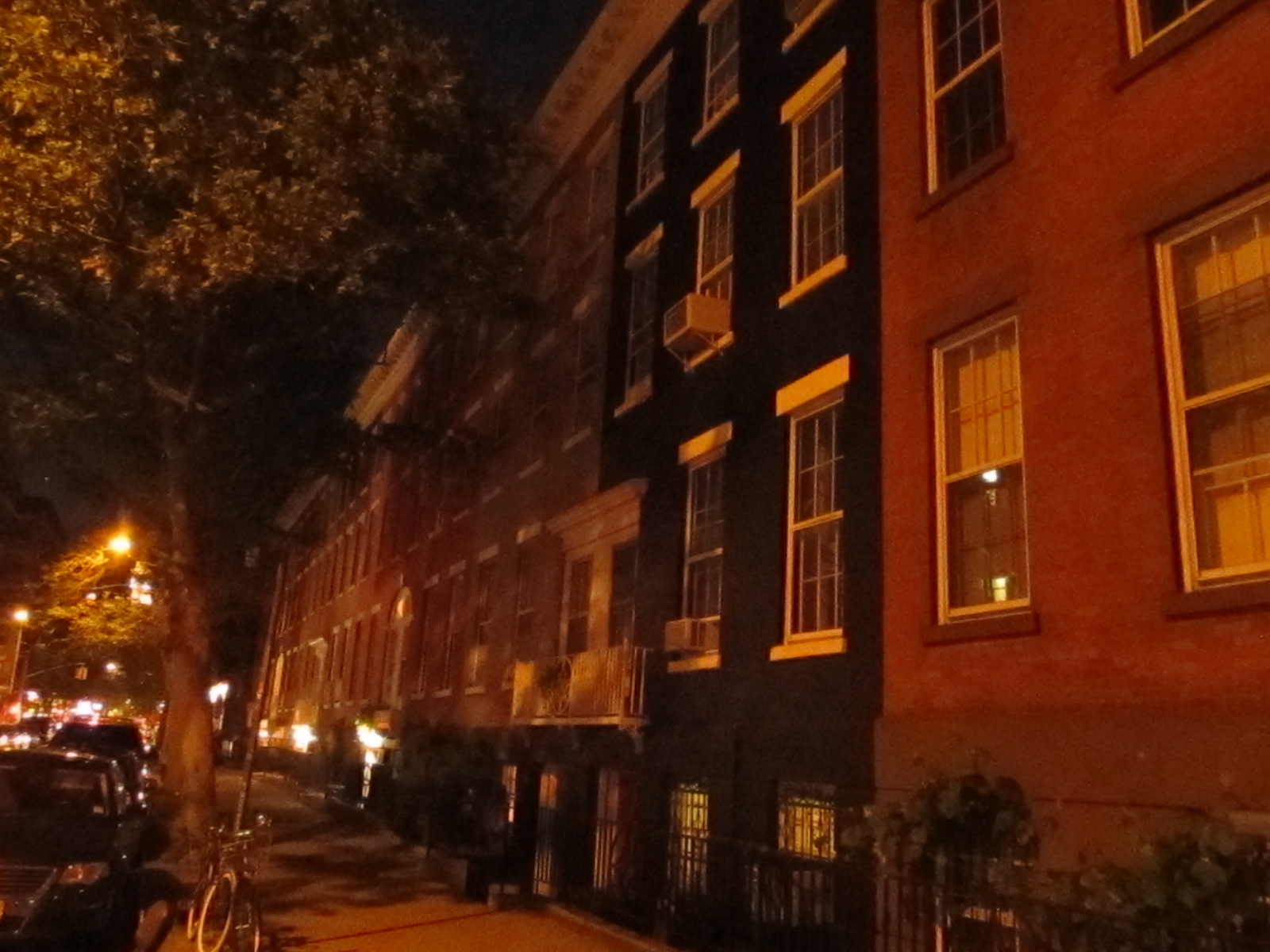
Further links listed by the Wikipedia page (not independently checked): - https://viaf.org/viaf/6004988 - https://archive.org/details/openmind_ep253 - https://books.google.com/books?id=BE1QCgAAQBAJ&pg=PA131 - https://books.google.com/books?id=wf-WC2xjO4sC&pg=PA320 - https://www.theguardian.com/news/2006/apr/14/guardianobituaries.usa - https://www.idref.fr/079875645 Image rights Photograph description: The MacDougal-Sullivan Gardens Historic District is a small historic district consisting of 22 houses located at 74-96 MacDougal Street and 170-188 Sullivan Street between Houston and Bleecker Streets in the South Village neighborhood of Manhattan, New York City. The houses were built in 1844 (MacDougal Street) and 1850 (Sullivan Street) in the Greek Revival style, but became deteriorated until th Creator: Ken Lund from Reno, Nevada, USA. License: CC BY-SA 2.0 (https://creativecommons.org/licenses/by-sa/2.0). Original image page: https://commons.wikimedia.org/wiki/File%3AMacDougal-Sullivan_Gardens_Historic_District%2C_Greenwich_Village%2C_Manhattan%2C_New_York_(7237384354).jpg. The image was resized for display; no other changes were made.