Beyond the Bay · Richmond
Alcott House: Richmond’s Experiment in Cooperative Living and Progressive Education
On Ham Common, a spiritual community and school pursued collective living, reform-minded education and a vision of human improvement between 1838 and 1848.
By KLGBT News Desk ·
Long before Ham became part of the London Borough of Richmond upon Thames, it was home to an unusual social experiment. From 1838 to 1848, Alcott House on Ham Common brought together a spiritual community, a working cooperative and a progressive school for children.
The project was led by James Pierrepont Greaves, a mystic and advocate of what the source describes as “sacred socialism.” Greaves had been influenced by the American transcendentalist Amos Bronson Alcott and by Johann Heinrich Pestalozzi, the Swiss educational reformer. The house took its name from Alcott, while the community also became known as the Ham Common Concordium.
Greaves did not build the project alone. Charles Lane was among his followers, and wealthy sponsors Sophia and Georgiana Chichester helped establish the community. Henry Gardiner Wright served as headmaster of the school. Together, the residents and organizers created an institution that linked education with a broader program of spiritual development and personal discipline.
The community’s stated purpose was to cultivate conditions that would support human progress. Its members pursued what the source characterizes as spiritual purification, pairing that goal with cooperative work and a shared way of life. The result was not simply a school or a residence, but an attempt to organize daily life around a common philosophy.
Alcott House also forms part of the history of vegetarian organizing. Supporters of the community were a key group involved in the formation of the Vegetarian Society in 1847, during the Concordium’s decade of existence. That connection places the Ham community within a wider network of nineteenth-century reform movements concerned with how people should live, learn and relate to one another.
For Richmond readers, Alcott House offers a local example of how the area’s history includes experiments in communal life and alternative education. Its story is also a reminder that reform movements often overlapped: spiritual practice, schooling, cooperative labor and dietary ideas could all be pursued within the same institution.
The community lasted only ten years, ending in 1848. Even within that limited period, Alcott House represented an ambitious effort to turn ideals about human improvement into an everyday social structure. Its legacy, as presented in the source, lies in that combination of place, pedagogy and collective reform on Ham Common.
Source and reuse information This automatically generated backgrounder adapts text from “Alcott House” on Wikipedia: https://en.wikipedia.org/wiki/Alcott_House The adapted text is released under the Creative Commons Attribution-ShareAlike 4.0 International license (CC BY-SA 4.0): https://creativecommons.org/licenses/by-sa/4.0/. The source article’s linked references are provided below where available. This story has not been independently reviewed or fact-checked.
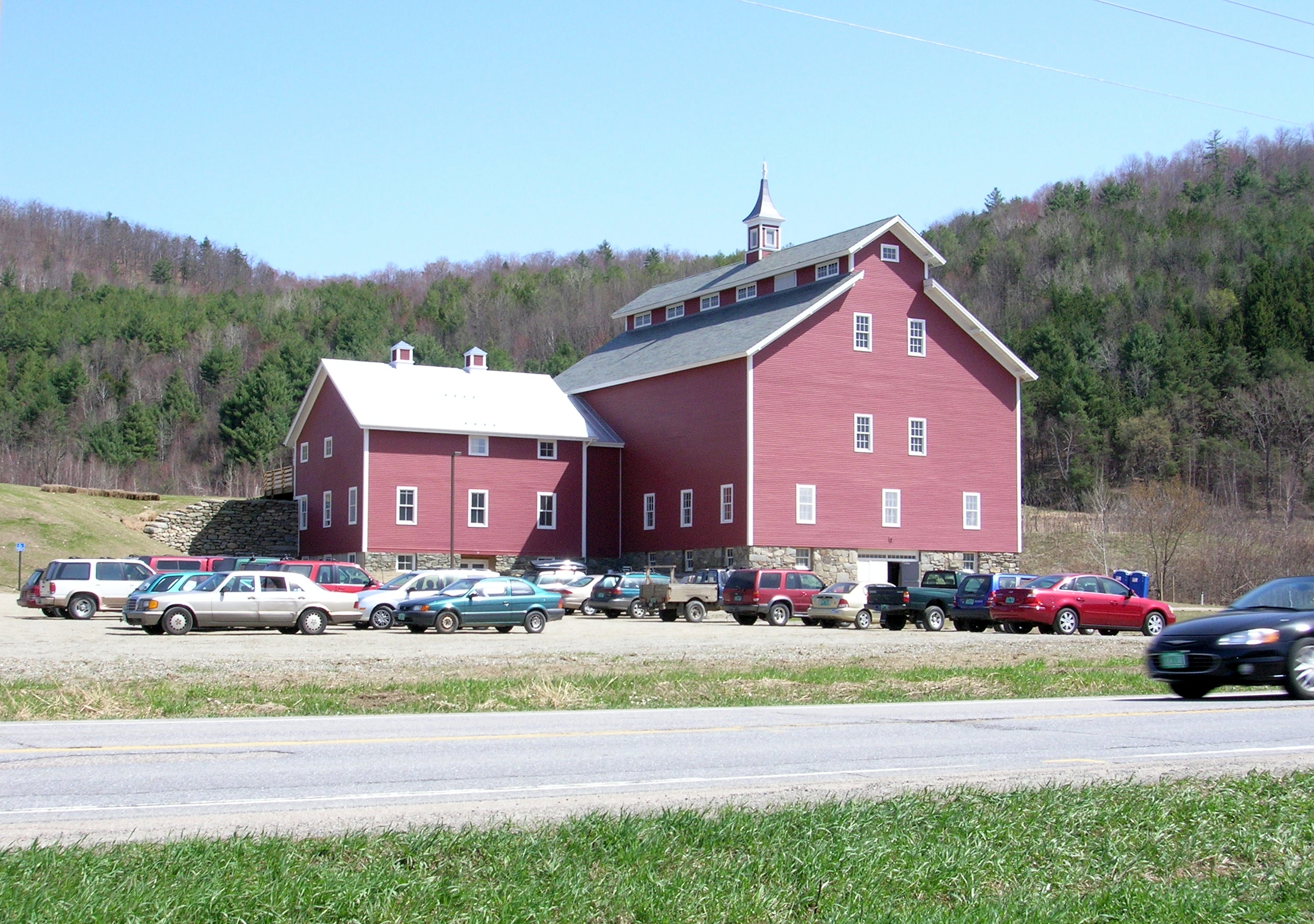
Further links listed by the Wikipedia page (not independently checked): - https://archive.org/details/newageandconcor00unkngoog - https://archive.org/details/fortyyearsrecoll00frosuoft - https://archive.org/details/bronsonalcottata00sanbrich - https://archive.org/details/utopiasutopiansh0000trah - https://archive.org/details/utopiasutopiansh0000trah/page/6 - https://archive.org/details/hampetershamasit0000gree Image rights Photograph description: West Monitor Barn Richmond, Vermont, listed within the Online Resource Center of the Vermont Agency of Commerce and Community Development - Division for Historic Preservation Creator: Niranjan Arminius. License: CC BY-SA 4.0 (https://creativecommons.org/licenses/by-sa/4.0). Original image page: https://commons.wikimedia.org/wiki/File%3AWest_Monitor_Barn_Richmond_VT_2_20060410.jpg. The image was resized for display; no other changes were made.