Politics · Sacramento
Anthony Kennedy: The Sacramento Lawyer Who Became a Supreme Court Swing Vote
Born and professionally rooted in Sacramento, Anthony Kennedy served on the U.S. Supreme Court for three decades and became a pivotal vote on many closely divided decisions.
By KLGBT News Desk ·
Anthony McLeod Kennedy is one of Sacramento’s most prominent figures in the federal judiciary. Born in the city on July 23, 1936, he later returned to practice law there, taking over his father’s legal practice after studying at Stanford University and Harvard Law School.
Kennedy’s path from Sacramento attorney to Supreme Court justice began with a federal judicial appointment. In 1975, President Gerald Ford appointed him to the United States Court of Appeals for the Ninth Circuit. The court’s jurisdiction placed Kennedy in a major role within the federal appeals system before he was considered for the nation’s highest court.
His Supreme Court nomination came after two unsuccessful attempts by President Ronald Reagan to select a successor to Associate Justice Lewis F. Powell Jr. Reagan nominated Kennedy in November 1987. The U.S. Senate confirmed him unanimously in February 1988, and he was sworn in on February 18 of that year.
Kennedy served as an associate justice from 1988 until his retirement in 2018. His tenure spanned a period in which the Supreme Court was often closely divided. After Justice Sandra Day O’Connor retired in 2006, Kennedy was widely regarded as the swing vote in many of the Roberts Court’s 5–4 decisions. That position made his judicial role especially consequential whenever the court’s more ideologically distinct blocs reached different conclusions.
Following the death of Justice Antonin Scalia in February 2016, Kennedy became the court’s senior associate justice. He retired during Donald Trump’s first term and was succeeded afterward.
For Sacramento, Kennedy’s biography offers a direct local connection to one of the country’s most powerful legal institutions. His career also illustrates a route from private legal work in the city to the federal bench and, ultimately, the Supreme Court. The supplied record does not identify specific cases or rulings involving LGBTQ+ rights, so this backgrounder does not assign Kennedy a position on those issues. It does establish why his career remains relevant to readers tracking the long-term influence of Sacramento-connected figures in national law and politics.
Source and reuse information This automatically generated backgrounder adapts text from “Anthony Kennedy” on Wikipedia: https://en.wikipedia.org/wiki/Anthony_Kennedy The adapted text is released under the Creative Commons Attribution-ShareAlike 4.0 International license (CC BY-SA 4.0): https://creativecommons.org/licenses/by-sa/4.0/. The source article’s linked references are provided below where available. This story has not been independently reviewed or fact-checked.
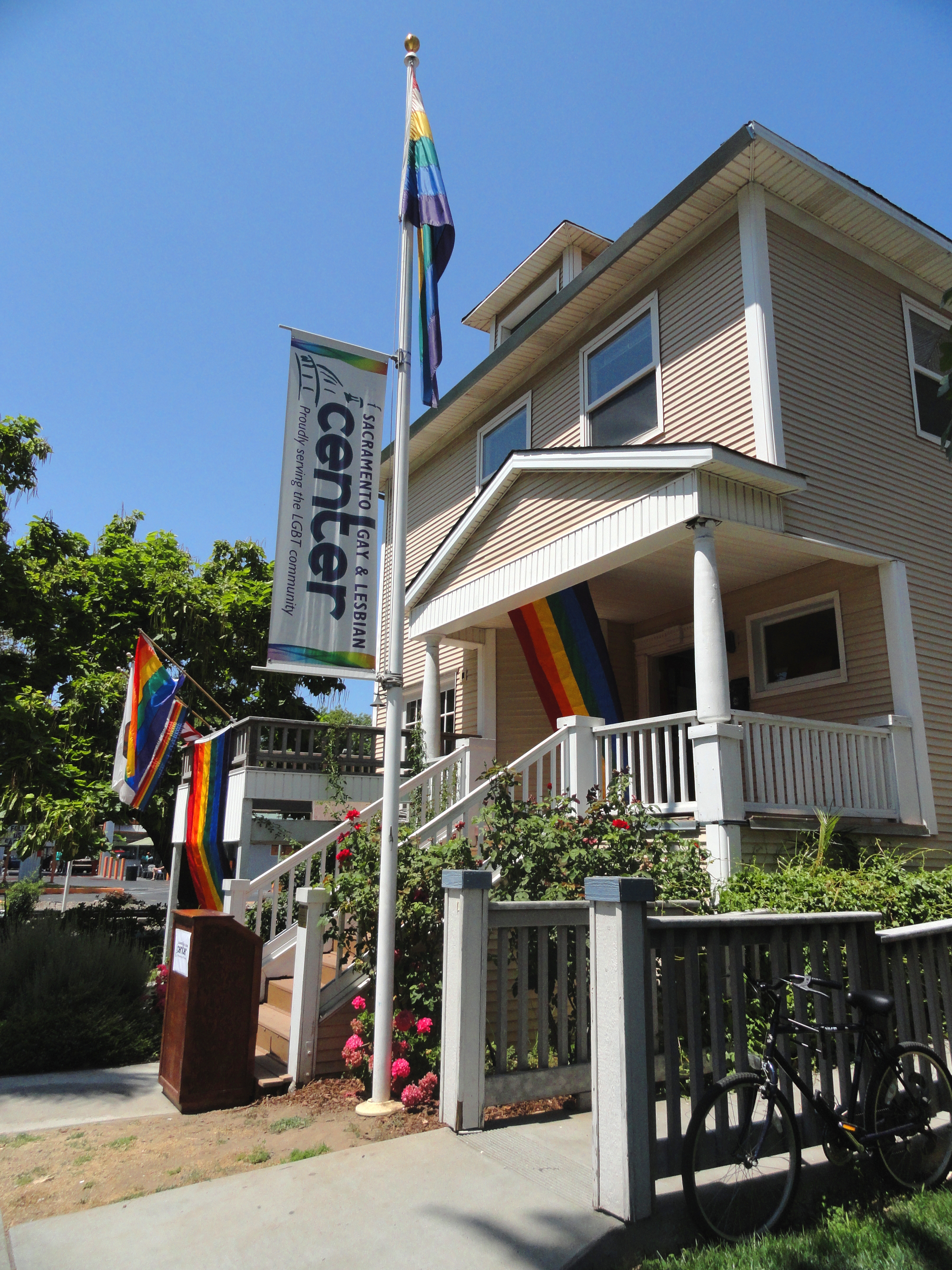
Further links listed by the Wikipedia page (not independently checked): - https://www.h-net.org/reviews/showrev.php?id=30454 - https://viaf.org/viaf/26149596 - https://web.archive.org/web/20100605163057/http://www.google.com/hostednews/ap/article/ALeqM5iWhwP-GmuptNw-uw8t8Z_lb1YV2QD9FMQKRG0 - https://web.archive.org/web/20140225213945/http://www.gpo.gov/fdsys/pkg/GPO-CHRG-KENNEDY/content-detail.html - https://web.archive.org/web/20110430023239/http://www.newyorker.com/archive/2005/09/12/050912fa_fact - https://web.archive.org/web/20070715162533/http://supct.law.cornell.edu/supct/html/01-963.ZX.html Image rights Photograph description: The Lambda Community Center in Sacramento California. Creator: Amadscientist. License: CC BY-SA 3.0 (https://creativecommons.org/licenses/by-sa/3.0). Original image page: https://commons.wikimedia.org/wiki/File%3ALambda_Sacramento.JPG. The image was resized for display; no other changes were made.