Culture · Saint Louis
A Brief History of the Saint Louis Science Center
The Saint Louis Science Center grew from a 1963 planetarium into a large, multi-building institution on the edge of Forest Park, with a major expansion that reshaped its footprint in the city.
By KLGBT News Desk ·
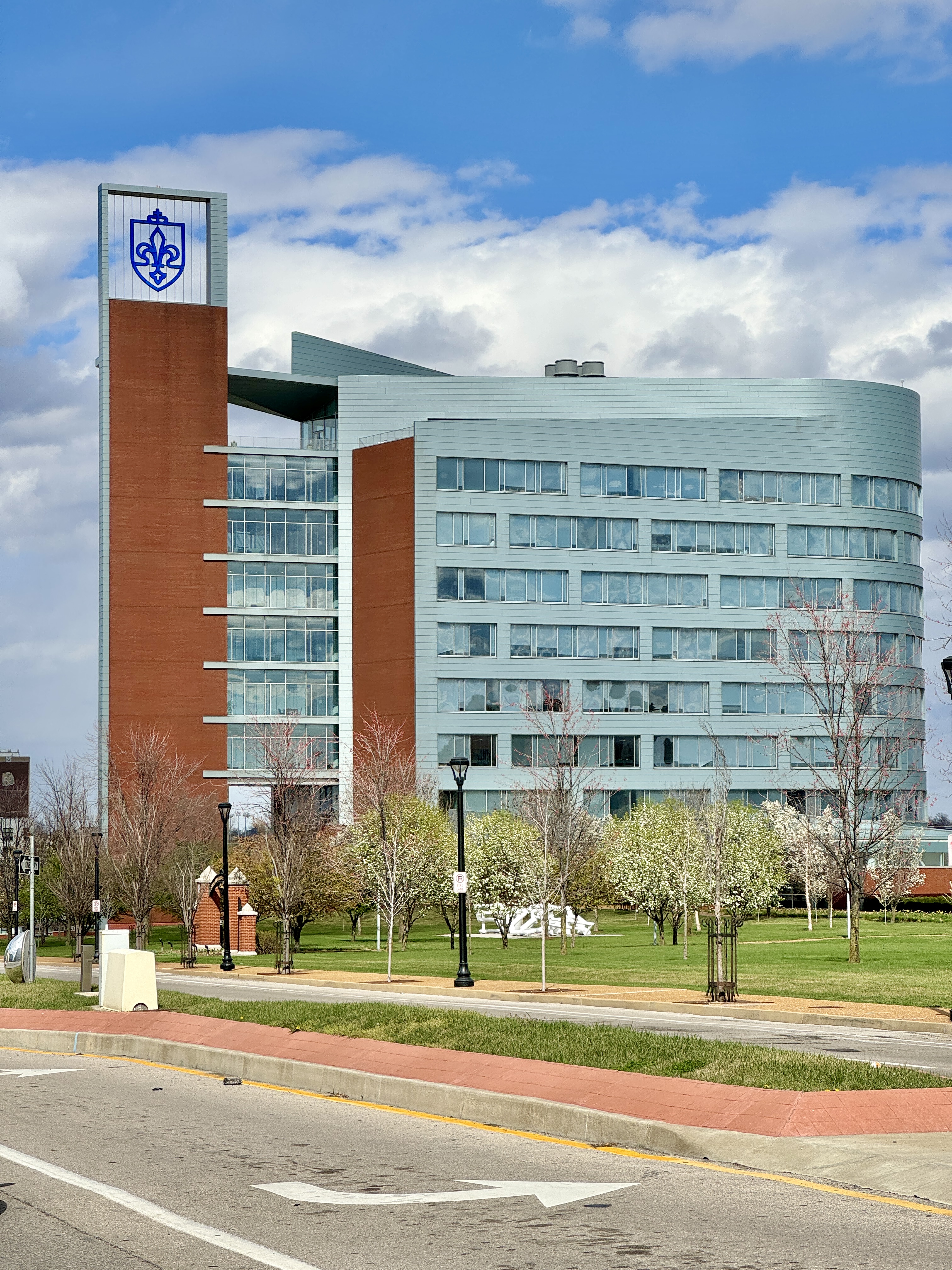
The Saint Louis Science Center began in 1963 as a planetarium. It is now a group of buildings that includes both a science museum and a planetarium on the southeastern corner of Forest Park in St. Louis, Missouri.
The institution’s present scale reflects several stages of development. The center has more than 750 exhibits across a complex measuring more than 300,000 square feet, placing it among the largest institutions of its type in the United States. Its buildings are divided by Interstate 64, with a skybridge providing a connection between them.
One part of the story began outside the city. In 1972, the Museum of Science and Natural History in Oak Knoll Park, in the St. Louis suburb of Clayton, started receiving funding from sales taxes through the Metropolitan Zoological Park and Museum District. That arrangement connected the museum to the region’s public cultural infrastructure.
In 1983, the museum purchased the planetarium from the city and closed it for remodeling. The renovated facility reopened on July 20, 1985, under the name Saint Louis Science Center. The change marked a transition from a standalone planetarium to a broader institution centered on science and natural history.
A second major shift came in 1991. On November 2 of that year, a new building opened on Oakland Avenue, south of Interstate 64 and across from the planetarium. The project was part of a $34 million expansion and increased the size of the Science Center sevenfold. The new structure was built on land that had previously held the headquarters of the Falstaff Brewing Corporation.
The arrangement visitors encounter is therefore the result of an extended institutional and physical evolution: a planetarium established in 1963, a museum with roots in Clayton, a city-owned facility later purchased by the museum, and a large expansion that linked separate buildings across a major highway.
For St. Louis, the Science Center is also a recognizable example of how cultural institutions can change through public funding, private acquisition, remodeling and construction. Its history connects Forest Park, the city’s Oakland Avenue corridor and the nearby suburb of Clayton. The center’s current identity rests not on a single building, but on the combination of those sites and the institutions that preceded it.
Source and reuse information This automatically generated backgrounder adapts text from “Saint Louis Science Center” on Wikipedia: https://en.wikipedia.org/wiki/Saint_Louis_Science_Center The adapted text is released under the Creative Commons Attribution-ShareAlike 4.0 International license (CC BY-SA 4.0): https://creativecommons.org/licenses/by-sa/4.0/. The source article’s linked references are provided below where available. This story has not been independently reviewed or fact-checked.
Further links listed by the Wikipedia page (not independently checked): - https://web.archive.org/web/20100125165028/http://www.mzdstl.org/History.htm - https://web.archive.org/web/20120404062839/http://www.slsc.org/LinkClick.aspx?fileticket=zSJcZfHQYQo=&tabid=667 - https://www.jstor.org/action/doBasicSearch?Query=%22Saint+Louis+Science+Center%22&acc=on&wc=on - https://source.wustl.edu/2012/11/a-in-outreach-neuroscience-students-share-enthusiasm-about-brain-science/ - https://www.riverfronttimes.com/newsblog/2013/06/24/st-louis-science-center-deflates-exploradome-to-make-way-for-expansion-video - https://www.slsc.org/omnimax-theater-will-be-transformed-with-next-generation-imax-with-laser/ Image rights Photograph description: Built in 2006-2007, this Contemporary building was designed by Cannon Design for Saint Louis University to serve as a medical science research facility. The building is clad in brick and metal panels, with ribbon windows, a skybridge linking the eastern stairwell to the rest of the building, and a teardrop-shaped footprint, giving the building a distinctive appearance. The building today serves as Creator: w_lemay. License: CC BY-SA 2.0 (https://creativecommons.org/licenses/by-sa/2.0). Original image page: https://commons.wikimedia.org/wiki/File%3AEdward_A._Doisy_Research_Center%2C_St._Louis_University%2C_Grand_Boulevard%2C_The_Gate%2C_St._Louis%2C_MO.jpg. The image was resized for display; no other changes were made.