Beyond the Bay · Saint Paul
What the 2020 George Floyd protests meant for the Minneapolis–Saint Paul region
The aftermath of the 2020 protests included peaceful demonstrations, several nights of severe civil unrest, widespread property damage and a large law-enforcement response across the Twin Cities metropolitan area.
By KLGBT News Desk ·
The aftermath of the George Floyd protests is a major chapter in the recent history of the Minneapolis–Saint Paul metropolitan area. The events began after Floyd, a 46-year-old Black man, died on May 25, 2020, during an arrest by Minneapolis police. Video recorded by a bystander showed Derek Chauvin pressing his knee against Floyd’s neck while three other officers assisted. The footage circulated widely in the news media and prompted public outrage.
Demonstrations began in Minneapolis on May 26. The initial protests were peaceful, according to the source material, but the situation changed over the following days. The most intense period of civil unrest took place during three nights beginning May 27 and continuing into the early hours of May 29. The broader aftermath described by the source covers civil disorder and its consequences in the Twin Cities metropolitan area, which includes Saint Paul.
The reported effects were extensive. An estimated 1,500 properties sustained damage, with total losses placed at approximately $500 million. The period also included 164 reported instances of arson and 604 arrests. Two people died in incidents connected to the unrest. These figures describe the scale of the disruption across the metropolitan region, although the supplied material does not provide a separate accounting for Saint Paul.
Minnesota Governor Tim Walz deployed the state’s National Guard in response to the civil disorder and the continuing protests over Floyd’s death. The deployment formed part of the government response during a period when demonstrations, property destruction and public-safety concerns were unfolding at the same time.
The events are described in public discussion using more than one label, including terms that emphasize either the riots or the uprising. Those differing descriptions reflect the competing ways the period has been remembered: as a protest movement responding to Floyd’s death, and as a stretch of civil disorder that produced significant damage, arrests and deaths.
For Saint Paul, the key context is regional. The supplied account does not isolate the city’s property losses, arrests or other outcomes from those of Minneapolis and the surrounding metropolitan area. It does establish that the protests and their aftermath belong to the shared history of the Twin Cities, beginning with events in Minneapolis and extending into a broader regional crisis between May 26 and June 7, 2020.
Source and reuse information This automatically generated backgrounder adapts text from “Aftermath of the George Floyd protests in Minneapolis–Saint Paul” on Wikipedia: https://en.wikipedia.org/wiki/Aftermath_of_the_George_Floyd_protests_in_Minneapolis%E2%80%93Saint_Paul The adapted text is released under the Creative Commons Attribution-ShareAlike 4.0 International license (CC BY-SA 4.0): https://creativecommons.org/licenses/by-sa/4.0/. The source article’s linked references are provided below where available. This story has not been independently reviewed or fact-checked.
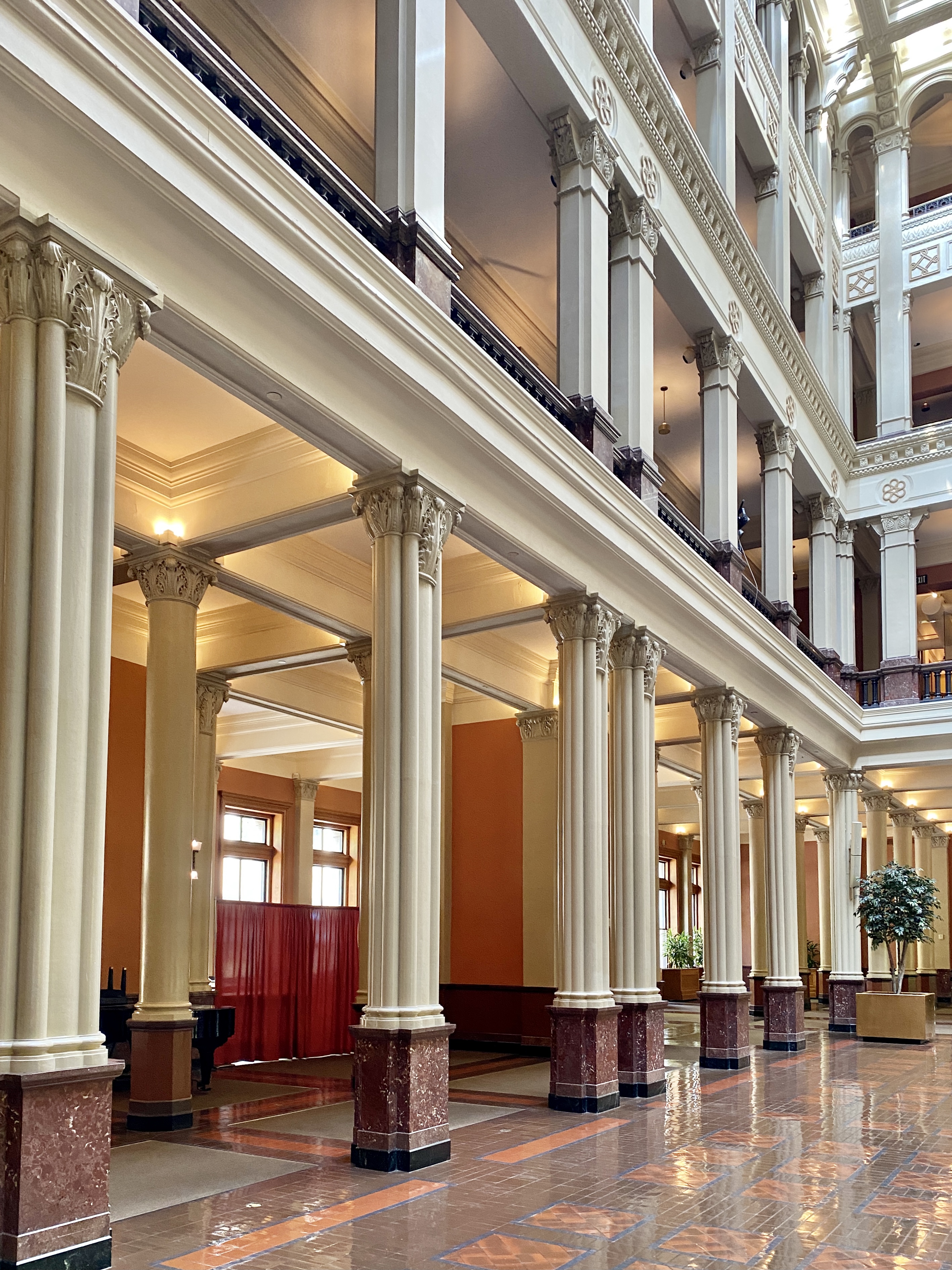
Further links listed by the Wikipedia page (not independently checked): - https://kstp.com/news/hennepin-county-medical-examiner-identifies-body-found-in-burned-pawn-shop-in-minneapolis/5900493/ - https://www.buzzfeednews.com/article/scottpham/floyd-protests-number-of-police-arrests - https://www.mprnews.org/story/2020/12/10/twin-cities-man-first-to-be-sentenced-for-arson-from-may-unrest - https://www.startribune.com/rochester-couple-suspected-in-torching-of-st-paul-school-stores-during-civil-unrest-are-caught-in-m/600024675/ - https://www.justice.gov/usao-mn/pr/illinois-man-pleads-guilty-arson-minneapolis-cell-phone-store - https://www.startribune.com/court-records-fbi-contradict-trump-s-claims-of-organized-antifa-led-riots-in-minneapolis-after-georg/573438811/ Image rights Photograph description: Built between 1894 and 1902, this Richardsonian Romanesque-style granite building was designed by Willoughby J. Edbrooke to serve as the United States Post Office, Courthouse, and Custom House for St. Paul. The building occupies an entire city block between 5th Street, 6th Street, Washington Street, and Market Street, and sits next to Landmark Plaza, Hamm Plaza, and Rice Park. The exterior of the Creator: w_lemay. License: CC BY-SA 2.0 (https://creativecommons.org/licenses/by-sa/2.0). Original image page: https://commons.wikimedia.org/wiki/File%3AAtrium%2C_Landmark_Center%2C_5th_Street%2C_Saint_Paul%2C_MN_-_51684336317.jpg. The image was resized for display; no other changes were made.