LGBTQ+ · San Francisco
Before Marriage Equality: San Francisco’s Place in the Long Legal Fight
San Francisco’s 2004 same-sex weddings became a defining moment in the United States’ path toward marriage recognition, following decades of unsuccessful lawsuits and growing LGBTQ political organizing.
By KLGBT News Desk ·
The history of same-sex marriage in the United States is often told through landmark court decisions. San Francisco’s role, however, shows that the struggle also unfolded through local government, public protest and the steady effort to make same-sex relationships visible in law.
The story reaches back to the 1800s, when Charity Bryant and Sylvia Drake formed a union that later became part of the historical record of same-sex relationships in the United States. Legal recognition was much farther away. Beginning in the early 1940s, lawsuits seeking recognition for same-sex relationships brought questions about marriage rights and related benefits into public view. Those early cases did not succeed, but they established a legal and political issue that would continue to develop for decades.
Marriage was not initially a central demand of the broader LGBTQ movement. That changed during the Second National March on Washington for Lesbian and Gay Rights in 1987, when marriage entered the movement’s national agenda. From there, the issue became increasingly prominent in American politics.
A major turning point came in Hawaii. In 1993, the Hawaii Supreme Court’s decision in Baehr v. Miike raised the possibility that the state’s ban on same-sex marriage could violate the state constitution. The ruling did not immediately create nationwide marriage equality, but it prompted a broad backlash. Both federal and state officials moved to restrict marriage to different-sex couples. At the federal level, that effort produced the Defense of Marriage Act.
San Francisco became central to the next phase. On February 12, 2004, Mayor Gavin Newsom directed City Hall to issue marriage licenses to same-sex couples. Del Martin and Phyllis Lyon became the first couple to marry in a ceremony recognized as the first legal same-sex marriage ceremony in the United States.
That event did not resolve every legal question surrounding same-sex marriage, and it was not itself the result of a successful discrimination lawsuit. Its significance was different: San Francisco’s government directly placed marriage equality at the center of the national debate. The ceremonies demonstrated how a local administrative decision could challenge restrictions that had been reinforced through federal and state policy.
For readers interested in successful LGBTQ discrimination lawsuits, this history offers an important caution. Legal change rarely comes from one case alone. Early lawsuits may fail while still building public attention; later court decisions can trigger political resistance; and local officials can create moments that reshape the national conversation. San Francisco’s 2004 action belongs to that larger sequence—a visible legal and political challenge to the exclusion of same-sex couples from civil marriage.
Source and reuse information This backgrounder adapts factual material from “History of same-sex marriage in the United States” on Wikipedia: https://en.wikipedia.org/wiki/History_of_same-sex_marriage_in_the_United_States The adapted text is released under the Creative Commons Attribution-ShareAlike 4.0 International license (CC BY-SA 4.0): https://creativecommons.org/licenses/by-sa/4.0/. This story has not been independently reviewed or fact-checked.
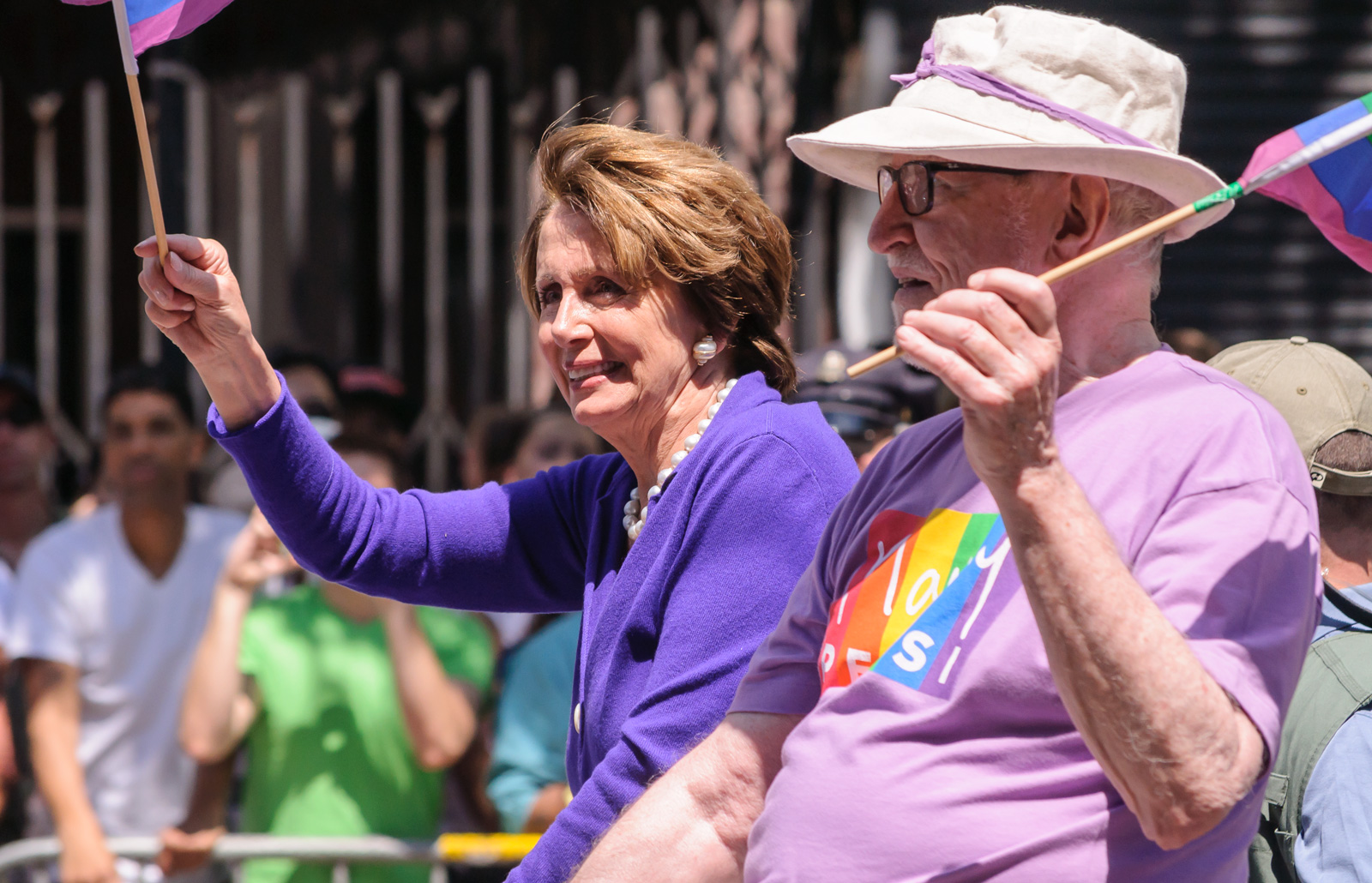
Further links listed by the Wikipedia page (not independently checked): - https://www.scribd.com/doc/247044630/112-590-Order-Lifting-Johnson-County-Stay - https://www.scribd.com/mobile/doc/251461351 - https://www.scribd.com/doc/253714680/1-14-cv-00208-59-Stay-Order - https://www.scribd.com/doc/254588133/15-10295-Alabama-Stay-Denied-11th-Circuit - https://web.archive.org/web/20090410054756/http://www.365gay.com/news/iowa-gay-marriages-delayed/ - https://web.archive.org/web/20110727225237/http://www.hrcbackstory.org/2009/12/mayor-adrian-fenty-signs-dc-marriage-bill/ Image rights Photograph description: I am visiting San Francisco for the Pride weekend - one that turned out to be the most historic of them all, thanks to the Supreme Court rulings that legal same-sex marriages cannot be denied federal benefits, and that Proposition 8, which had banned same-sex marriages in California in late 2008, is dead on a legal technicality. Congresswoman Nancy Pelosi is riding through the parade as a key elec Creator: InSapphoWeTrust from Los Angeles, California, USA. License: CC BY-SA 2.0 (https://creativecommons.org/licenses/by-sa/2.0). Original image page: https://commons.wikimedia.org/wiki/File%3AHon._Nancy_Pelosi%2C_San_Francisco_Pride_2013_(9214884982).jpg. The image was resized for display; no other changes were made.