LGBTQ+ · San Francisco
Folsom Street: From San Francisco Thoroughfare to Leather Community Landmark
Folsom Street connects several San Francisco neighborhoods and has played a significant role in the city’s gay leather and BDSM history, including as the home of the annual Folsom Street Fair since 1984.
By KLGBT News Desk ·
Folsom Street stretches across San Francisco from Bernal Heights to the Embarcadero, linking a series of neighborhoods with distinct identities and histories. The street begins at Alemany Boulevard in Bernal Heights and ends at the San Francisco Bay. Along the way, it passes through Bernal Heights, the Mission District, SoMa, Yerba Buena and South Beach.
Its route changes as it moves through the city. The southern portion generally runs north to south, then shifts toward the northeast near 13th Street. That physical connection between neighborhoods also places Folsom within the city’s LGBTQ+ cultural geography, particularly through its long association with leather and BDSM communities.
That history took shape in the 1960s. The Stud and Febe’s opened on Folsom Street in 1966, followed by other gay leather bars and businesses serving the same subculture. Together, those establishments helped establish a base for San Francisco’s growing gay leather community.
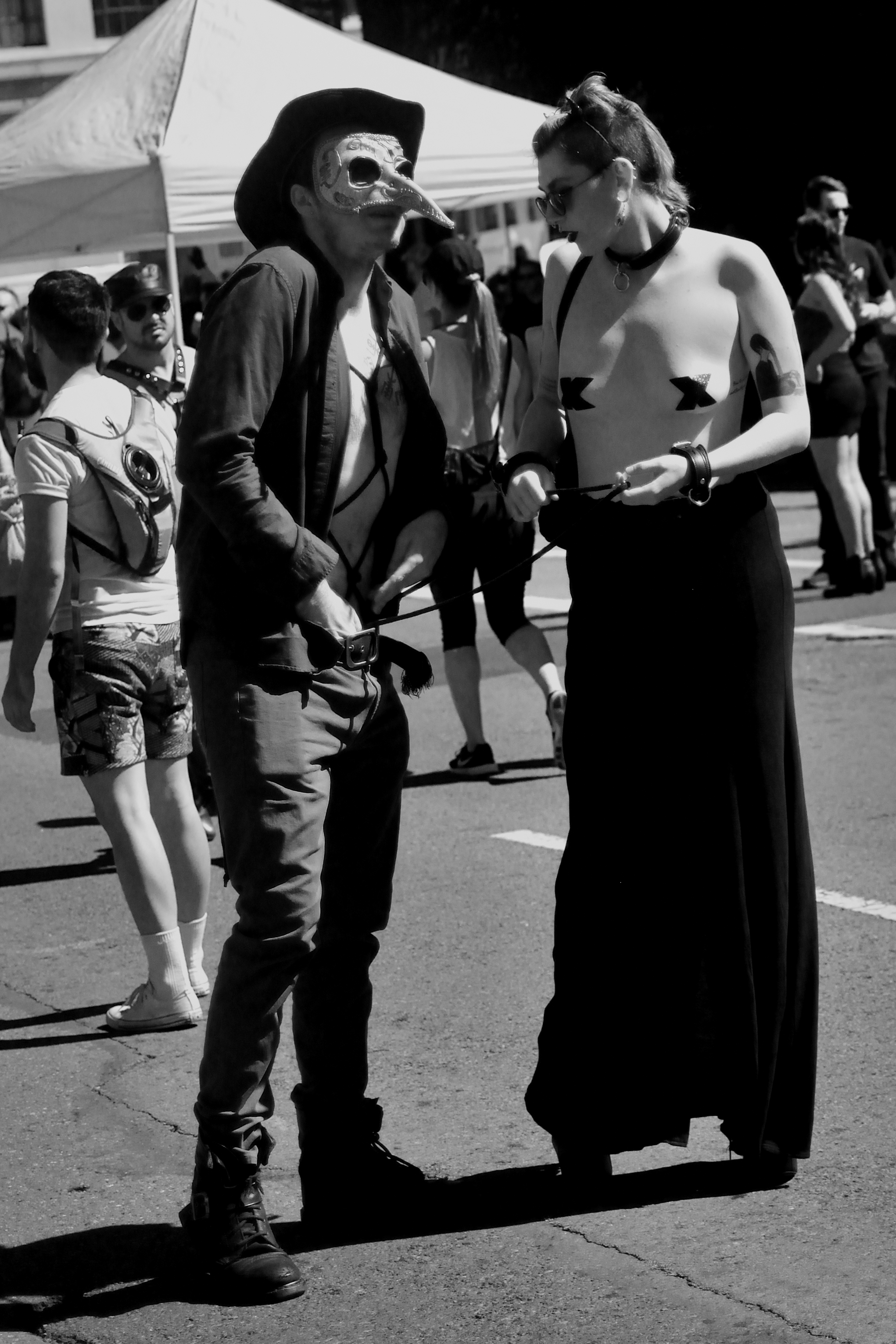
Folsom’s place in that history became especially visible through the Folsom Street Fair. The event has been held annually since 1984 on the South of Market section of the street, taking place in September and focusing on BDSM and leather subcultures. Before the fair began, the area had already become a center of San Francisco’s gay and lesbian BDSM community during the period from approximately 1975 to 1984.
The fair is organized by Folsom Street Events, which has also received recognition within the leather community. The organization was honored as a Large Nonprofit Organization of the Year at the Pantheon of Leather Awards in 2008 and again in 2012. In 2012, it shared that distinction with Cleveland Leather Annual Weekend.
Folsom Street’s significance therefore rests on more than its role as a major route through San Francisco. Its South of Market section became associated with businesses, gathering places and an annual event connected to gay leather, BDSM and LGBTQ+ cultural life. The street’s changing direction and neighborhood boundaries map onto a broader civic history: a corridor that physically joins parts of San Francisco while also serving as a longstanding reference point for communities whose presence helped shape the city’s public identity.
Source and reuse information This automatically generated backgrounder adapts text from “Folsom Street” on Wikipedia: https://en.wikipedia.org/wiki/Folsom_Street The adapted text is released under the Creative Commons Attribution-ShareAlike 4.0 International license (CC BY-SA 4.0): https://creativecommons.org/licenses/by-sa/4.0/. The source article’s linked references are provided below where available. This story has not been independently reviewed or fact-checked.
Further links listed by the Wikipedia page (not independently checked): - https://www.jweekly.com/2018/06/21/honoring-gay-leather-culture-with-art-installation-in-soma-alleyway/ - https://www.theleatherjournal.com/pantheon-awards/recipients - https://web.archive.org/web/20201228055005/https://www.theleatherjournal.com/pantheon-awards/recipients - https://web.archive.org/web/20180623193827/http://www.artandarchitecture-sf.com/ringold-alleys-leather-memoir.html# Image rights Photograph description: Folsom Street Fair, San Francisco, California. Creator: Tom Hilton. License: CC BY 2.0 (https://creativecommons.org/licenses/by/2.0). Original image page: https://commons.wikimedia.org/wiki/File%3AFolsom_Street_Fair_San_Francisco_2017_02.jpg. The image was resized for display; no other changes were made.