Culture · San Francisco
Frameline Keeps San Francisco’s Queer Film Tradition on the Big Screen
Founded in the Bay Area in 1976, Frameline’s annual festival has grown into the world’s oldest LGBTQ+ film festival and one of San Francisco’s largest recurring arts events.
By KLGBT News Desk ·
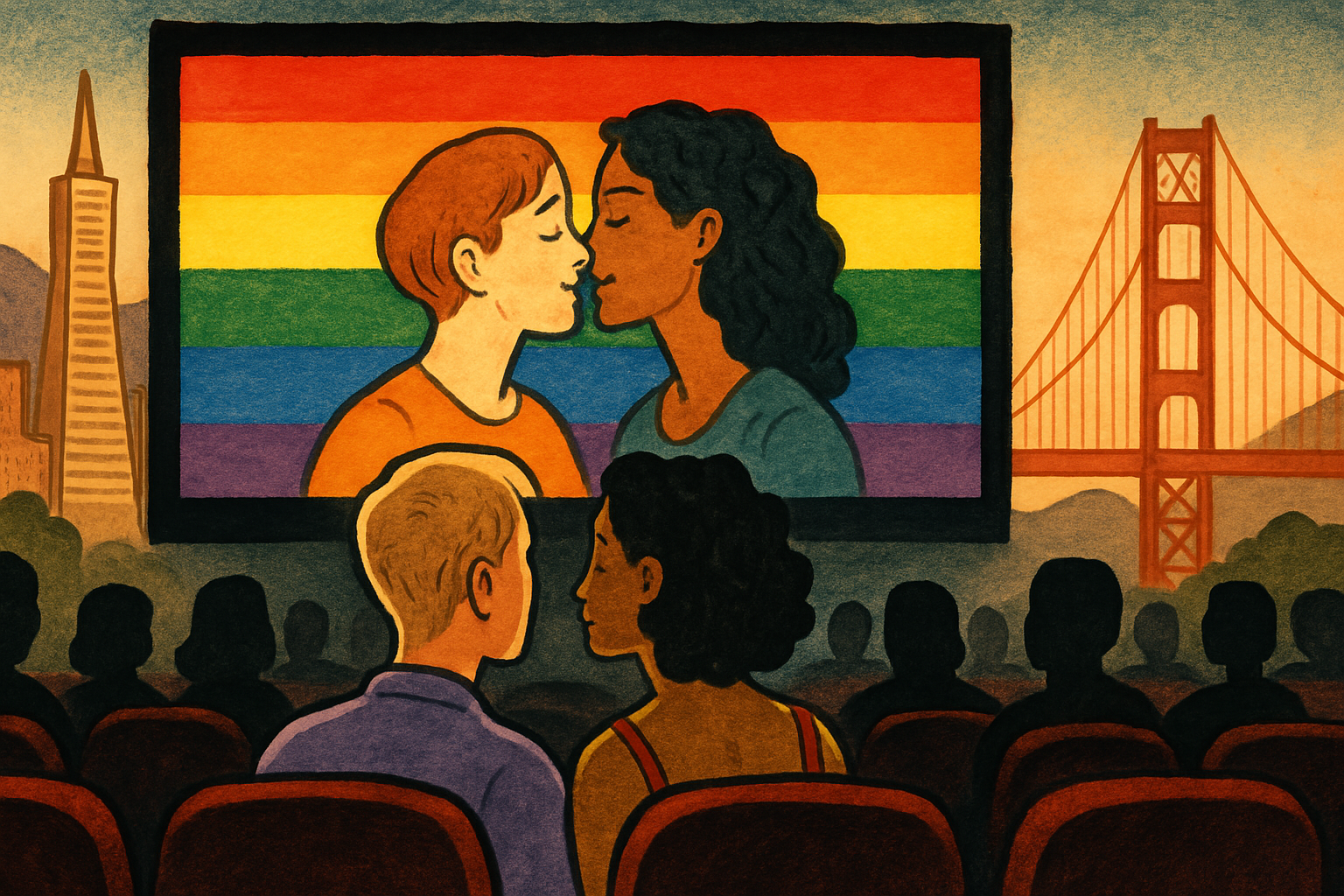
For nearly five decades, San Francisco has been home to one of the most significant recurring celebrations of LGBTQ+ cinema. The Frameline Film Festival, also known as the San Francisco International LGBTQ+ Film Festival, began in 1976 and has since become the oldest LGBTQ+ film festival in the world.
The event is organized by Frameline, a nonprofit media arts organization dedicated to using queer cinema as a vehicle for social change. Each year, the festival presents films made by and about LGBTQ+ people, giving audiences a forum for stories and perspectives that have often been overlooked by mainstream film institutions.
Frameline’s scale is notable as well as its history. Annual attendance has ranged from 60,000 to 80,000 people, making it the largest LGBTQ+ film exhibition event and the most heavily attended LGBTQ+ arts event in the San Francisco Bay Area. Its presence also connects the city’s long-standing queer cultural life with an international film audience.
The festival’s origins are closely tied to local community spaces. Its first edition was organized in 1976 and held the following year at the Gay Community Center on Page Street. At that time, it used names including Persistence of Vision and the Gay Film Festival of Super-8 Films. What began as a community-based showcase developed into an established institution while retaining its focus on LGBTQ+ filmmakers, characters and experiences.
The festival is held across 11 days in late June. Its closing night is scheduled to coincide with San Francisco’s annual Gay Pride Day, held on the month’s final Sunday, linking the film program with one of the city’s most prominent LGBTQ+ public celebrations. The Castro Theatre has traditionally served as the festival’s principal venue, reinforcing the event’s connection to the Castro’s role in San Francisco’s queer history and culture.
Frameline’s leadership has also evolved alongside the organization. Since 2024, Allegra Madsen has served as executive director after previously holding the organization’s programming director position.
Although its format and reach have changed over time, Frameline remains rooted in the same basic idea that animated its earliest screenings: queer communities should be able to see their lives represented on screen and gather around those stories together. In San Francisco, the festival is both an international cultural event and a continuing expression of the city’s LGBTQ+ community history.
Source and reuse information This backgrounder adapts factual material from “Frameline Film Festival” on Wikipedia: https://en.wikipedia.org/wiki/Frameline_Film_Festival The adapted text is released under the Creative Commons Attribution-ShareAlike 4.0 International license (CC BY-SA 4.0): https://creativecommons.org/licenses/by-sa/4.0/. This story has not been independently reviewed or fact-checked.
Further links listed by the Wikipedia page (not independently checked): - https://www.sfgate.com/entertainment/article/Gay-Film-Festival-to-Go-On-Despite-Director-s-3048864.php - https://issuu.com/frameline/docs/1st-sanfrancisco-international-lgbt-film-festival - https://www.filmmakermagazine.com/archives/issues/fall1996/fests/sanfran.php - https://brightlightsfilm.com/empty-closets-1999-san-francisco-international-lesbian-gay-film-festival/ - https://www.latimes.com/archives/la-xpm-1990-10-17-ca-2468-story.html - https://www.jweekly.com/2003/06/20/anti-israel-protest-at-film-fest-irks-local-gay-jews-consulate/ Image rights Original illustrative artwork created from story keywords. It is illustrative, not a documentary photograph.