Culture · San Francisco
Frameline’s Long Legacy in San Francisco’s Queer Film Culture
Established in 1977, San Francisco’s Frameline Film Festival is identified as the longest-running LGBTQ-focused film festival, part of a broader movement that connected cinema, community and activism.
By KLGBT News Desk ·
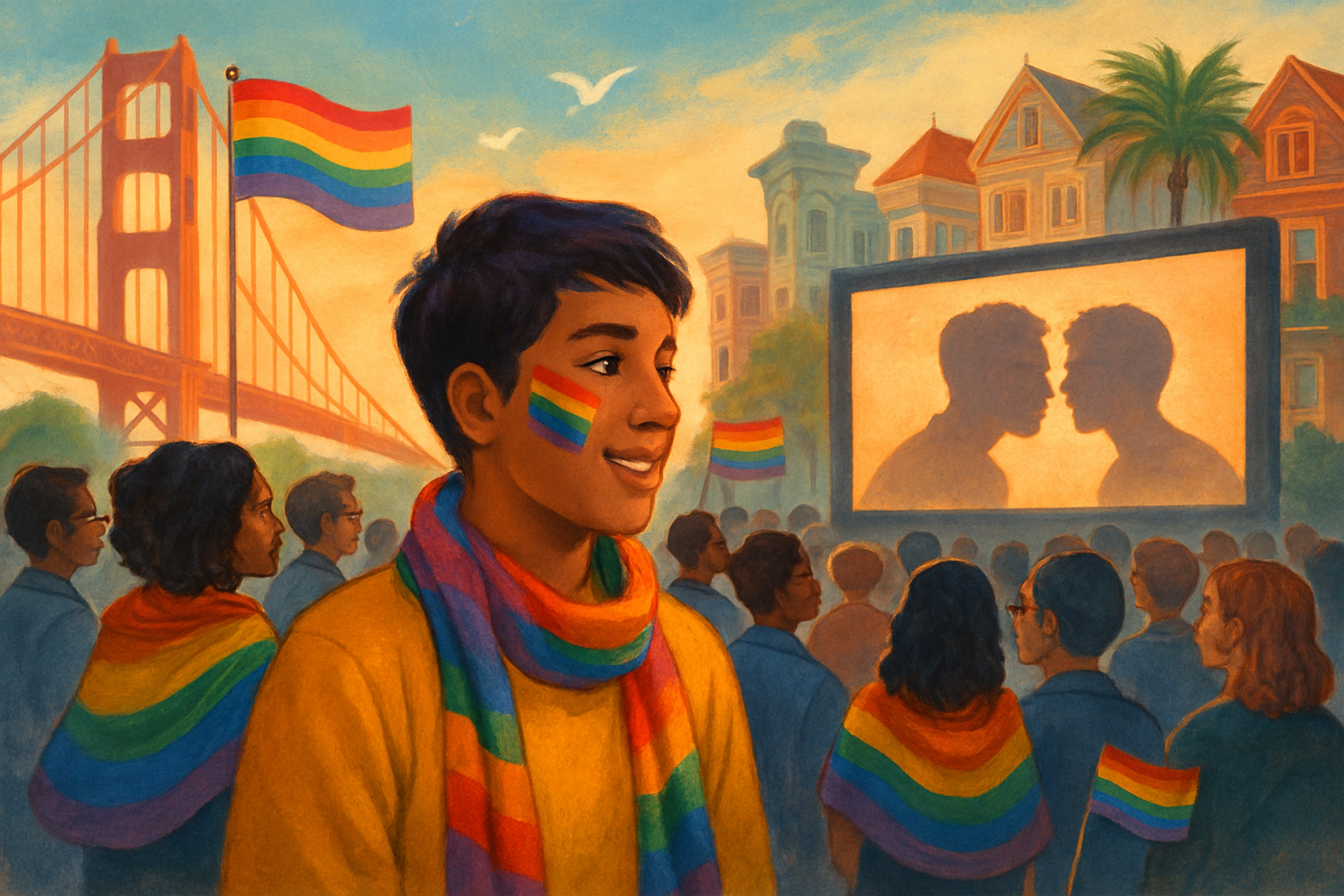
Long before queer stories became a more visible part of mainstream cinema, LGBTQ film festivals created spaces where those stories could be shown, discussed and celebrated. San Francisco has been central to that history through Frameline, established in 1977 and identified as the longest-running film festival with an LGBTQ focus.
The festival emerged during the broader LGBTQ movement in the United States, when community organizing was reshaping public conversations about identity, rights and representation. In that setting, a film festival could serve more than an entertainment function. It could give audiences access to films that might have difficulty reaching a mainstream audience while also helping people find one another through shared cultural experiences.
That combination remains central to the purpose of LGBTQ film festivals. These events frequently operate as community-building spaces and as forums for raising awareness about LGBTQ rights. Their programming focus can make room for perspectives and subjects that commercial film distribution has historically overlooked. For audiences, the festival setting offers a way to encounter queer lives and ideas collectively rather than in isolation.
Frameline’s origins also place San Francisco within the earliest phase of LGBTQ-focused film-festival history. During the 1970s, the first festivals of this kind were organized in the United States alongside the growing LGBTQ movement. For much of the period before the 1990s, similar events were largely informal screenings, particularly in Western countries.
The landscape began to change in the 1990s. Nongovernmental organizations formed to establish and promote queer film festivals, and the festivals became more commercialized. New events also appeared in regions including East Asia and Eastern Europe, broadening the international network of queer-focused cinema.
The movement has never depended on a single vocabulary. Festivals have used terms such as “gay and lesbian,” “queer” and “rainbow” to describe their focus, reflecting different histories, audiences and approaches to LGBTQ programming. That variety is part of the larger story: queer film festivals are not simply a genre category, but cultural institutions shaped by local communities and changing understandings of identity.
For San Francisco, Frameline’s place in this history links the city’s LGBTQ cultural life to a wider international development. Its founding illustrates how film can function simultaneously as art, public conversation and community infrastructure—especially when conventional venues have not made room for all kinds of stories.
Source and reuse information This backgrounder adapts factual material from “List of LGBTQ film festivals” on Wikipedia: https://en.wikipedia.org/wiki/List_of_LGBTQ_film_festivals The adapted text is released under the Creative Commons Attribution-ShareAlike 4.0 International license (CC BY-SA 4.0): https://creativecommons.org/licenses/by-sa/4.0/. This story has not been independently reviewed or fact-checked.
Further links listed by the Wikipedia page (not independently checked): - https://www.15min.lt/kultura/naujiena/renginiai/vilniaus-lgbt-festivalis-kreives-jau-po-dvieju-savaiciu-29-445019 - https://www.utahfilmcenter.org/dth2018/ - https://www.visitljubljana.com/en/b2b-press/news/europes-oldest-gay-and-lesbian-film-festival/ - https://www.shpride.com/films - https://www.wickedqueer.org/about-us - https://zenodo.org/record/3362408 Image rights Original illustrative artwork created from story keywords. It is illustrative, not a documentary photograph.