Culture · San Francisco
How a San Francisco Bookstore Worker Built a Lasting Lesbian Media Project
Founded in San Francisco in 1990, Curve began as a response to the scarcity of lesbian publications and grew into a global media project covering culture, politics, and everyday life.
By KLGBT News Desk ·
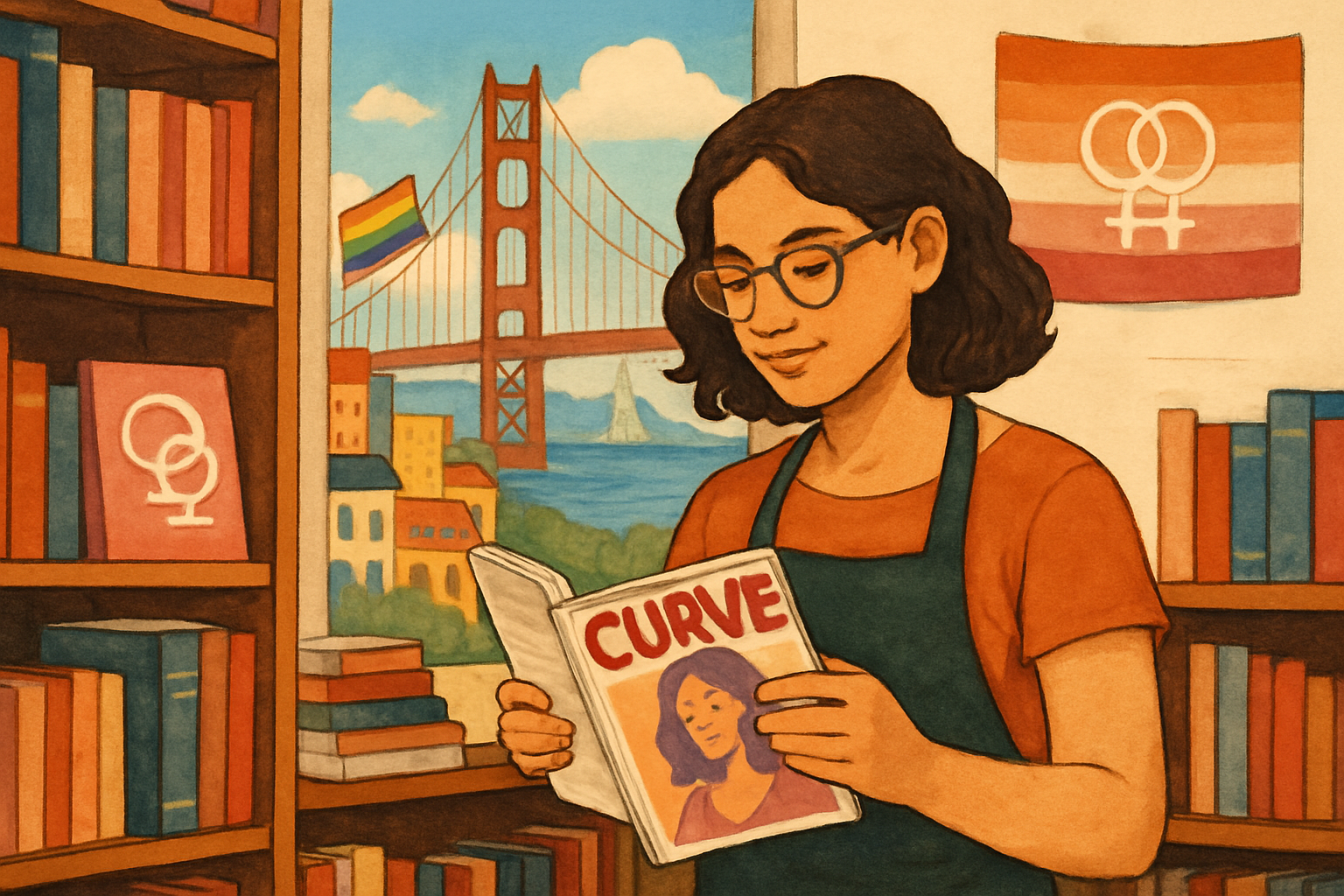
Before Curve became a global lesbian media project, it began with a problem that was easy to see in San Francisco bookstores and newsstands: there were few publications made specifically for lesbian readers.
Frances “Franco” Stevens encountered that gap while working at A Different Light Bookstore, a longtime LGBTQ literary landmark. In 1990, she decided to create a magazine of her own. The publication initially appeared under the name Deneuve, with Katie Sanborn serving as managing editor.
Getting the first issues into print required an unconventional financing strategy. Stevens applied for multiple credit cards and used the borrowed funds at a racetrack, where she won enough money to pay for the magazine’s first three issues. The first edition of Deneuve reportedly sold out in six days after reaching newsstands.
The magazine’s early editorial mix reflected the breadth of lesbian life and culture. It covered the local lesbian scene alongside fashion, fiction, music, film, and community rumors. Over time, its scope expanded to include news, politics, social issues, entertainment, popular culture, style, travel, and celebrity interviews.
The decision to put the word “lesbian” prominently on the cover also carried particular weight. Buying the magazine could effectively disclose a reader’s identity to people nearby, whether at a newsstand or at home. That visibility made the publication’s presence meaningful—and potentially complicated—for readers navigating public and private life.
As the magazine developed, it attracted mainstream advertising and broadened its reach beyond its San Francisco beginnings. Its evolution from Deneuve into Curve reflects both a change in name and an expansion of ambition: the project was not limited to one kind of story or one corner of LGBTQ media. It treated lesbian readers as an audience interested in politics and social issues as well as music, film, fashion, travel, and public figures.
For San Francisco’s LGBTQ media history, Curve’s origin story underscores the role local cultural spaces can play in launching influential publications. A bookstore worker saw an unmet need, found a way to produce a first issue, and built a magazine around the idea that lesbian readers deserved coverage designed with them in mind. What started on San Francisco newsstands ultimately became a broader media project with an international profile.
Source and reuse information This backgrounder adapts factual material from “Curve (magazine)” on Wikipedia: https://en.wikipedia.org/wiki/Curve_(magazine) The adapted text is released under the Creative Commons Attribution-ShareAlike 4.0 International license (CC BY-SA 4.0): https://creativecommons.org/licenses/by-sa/4.0/. This story has not been independently reviewed or fact-checked.
Further links listed by the Wikipedia page (not independently checked): - https://www.sfgate.com/bayarea/article/Thrown-for-a-Curve-3144414.php - https://www.ebar.com/news///241082 - https://www.advocate.com/arts-entertainment/entertainment-news/2007/05/05/michelle-rodriguez-hits-back-curve-magazine - https://www.adweek.com/digital/think-print-vs-digital-when-pitching-curve-magazine/ - https://www.buzzfeed.com/marcieb4f1ba695b/25-years-of-lesbian-culture-curve-magazine - https://slate.com/human-interest/2016/12/why-curve-lesbian-magazine-will-not-drop-the-l-word-from-its-tagline.html Image rights Original illustrative artwork created from story keywords. It is illustrative, not a documentary photograph.